
7 Best Vector Databases in 2026: Pinecone, Qdrant, Weaviate, Milvus, Chroma, Turbopuffer and pgvector Compared


Retrieval-augmented generation lives or dies on the database underneath it — and the seven products below split into three very different bets: fully managed convenience, open-source control, and storage-layer economics.
Every serious RAG pipeline, recommendation engine, or semantic search feature needs somewhere to store embeddings and query them fast. That's created a crowded field of vector databases, each making a different trade-off between operational simplicity, cost at scale, and how much infrastructure you're willing to own yourself. We looked at seven of the most-used options — Pinecone, Qdrant, Weaviate, Milvus/Zilliz Cloud, Chroma, Turbopuffer, and pgvector — and pulled pricing, licensing, and deployment details straight from each vendor's own site, docs, and GitHub repo.
How we picked these
We prioritized products with genuine adoption and a documented, checkable pricing or licensing model — either a public pricing page with real numbers, or an open-source license we could verify on GitHub. We excluded LanceDB, whose pricing page routes to a sales contact form with no published self-serve numbers, and we didn't independently verify Vespa in time for this piece, so neither appears below. Rankings reflect deployment flexibility, pricing transparency, and how distinct each product's actual use case is — not vendor size or marketing spend.
Quick comparison
| Company | Best for | Deployment | Pricing model |
|---|---|---|---|
| Pinecone | Zero-ops managed vector search | Fully managed SaaS + BYOC | Free tier; $20/mo flat; usage-based from $50/mo min |
| Qdrant | Open-source flexibility with a cloud path | OSS self-host, managed cloud, hybrid/private cloud | Free tier; usage-based; enterprise on request |
| Weaviate | Hybrid search with built-in embeddings/agents | OSS self-host or managed cloud | Free tier; from $45/mo; from $400/mo prepaid |
| Milvus / Zilliz Cloud | Billion-vector scale | OSS self-host or Zilliz managed/BYOC | Free tier; serverless from $0; dedicated from $197/mo |
| Chroma | Lightweight developer-first embedding store | OSS self-host or Chroma Cloud | Usage-based from $0; Team $250/mo + usage |
| Turbopuffer | Cheap, large-scale multi-tenant search | Managed SaaS only | Usage-based, $16/mo minimum |
| pgvector | Teams already running Postgres | Self-hosted or via any managed Postgres | Free extension; cost is your Postgres hosting bill |
1. Pinecone
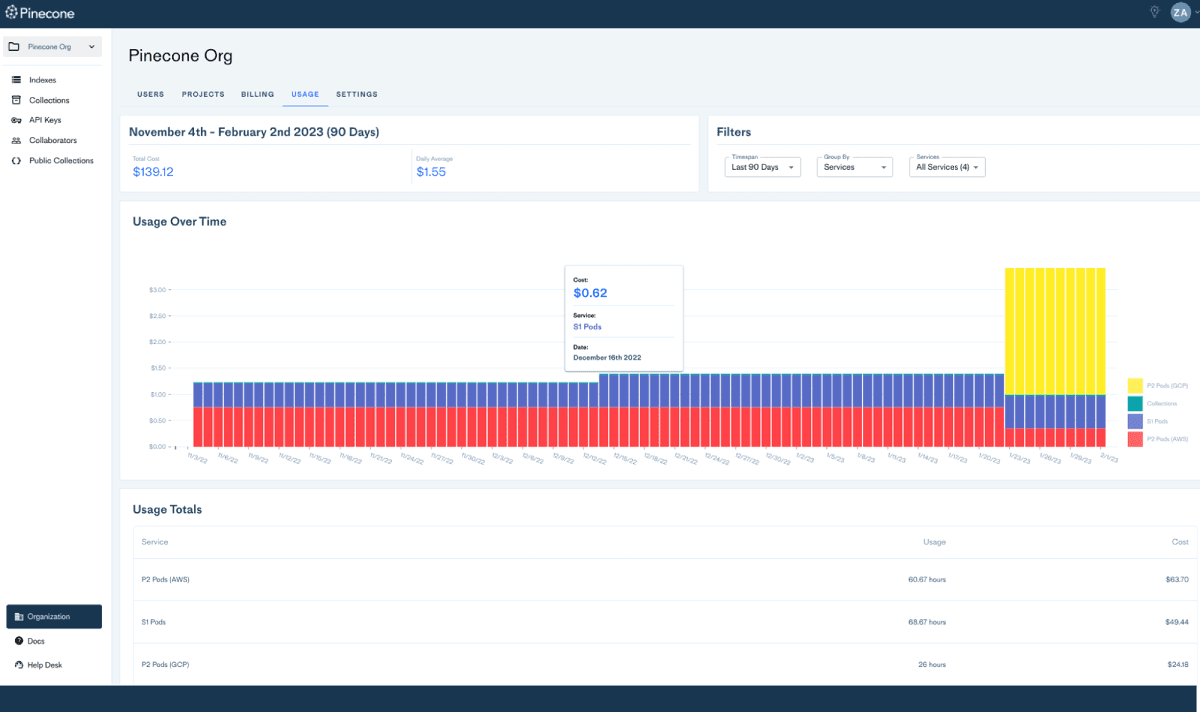
Pinecone is a fully managed, proprietary vector database — there's no self-hosted or open-source version. It's built around a serverless architecture that separates storage from compute, and it bundles its own embedding and reranking models (Pinecone Inference) alongside the core database and a RAG-focused "Assistant" product. Pricing runs from a free Starter tier through a $20/month flat Builder plan, a pay-as-you-go Standard tier with a $50/month minimum, and an Enterprise tier at a $500/month minimum that adds Bring-Your-Own-Cloud (BYOC), private endpoints, and HIPAA compliance.
Best for: teams that want to stand up production vector search without operating any infrastructure themselves.
Pros
- No infrastructure to manage — fully serverless, autoscaling by design
- Transparent, published pricing with a self-serve calculator
- Bundled embedding and reranking models reduce the number of vendors in a RAG stack
- BYOC option for organizations that need data to stay in their own cloud account
Cons
- No open-source or self-hosted option — you're locked into Pinecone's infrastructure and roadmap
- Costs can climb quickly once you're paying per read/write unit and per-token inference at real production volume
- Region availability on lower tiers is limited (Starter is AWS us-east-1 only)
2. Qdrant
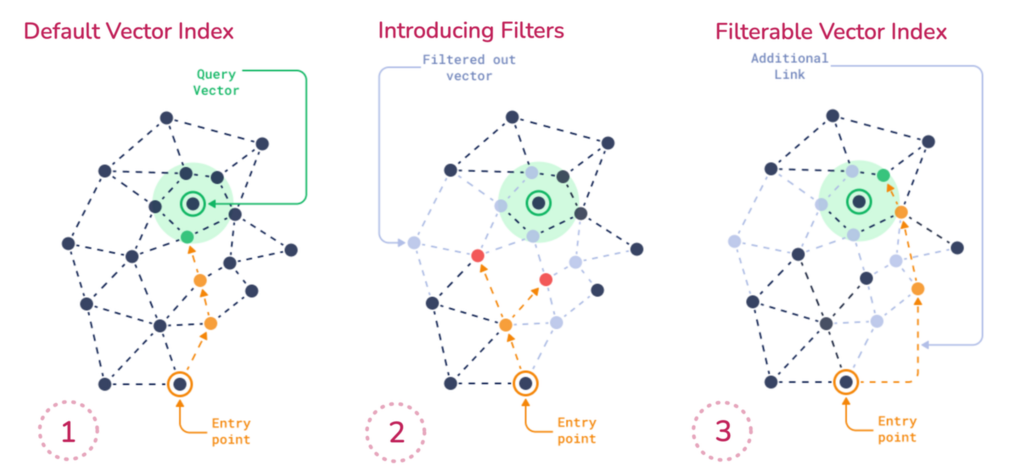
Qdrant is an Apache-2.0 licensed, open-source vector database written in Rust, with a managed cloud on top. You can run it entirely yourself for free, or move to Qdrant Cloud's tiers: a free single-node tier for testing, a usage-based Standard tier for production, and a minimum-spend Premium tier with SSO and private VPC links. Qdrant also offers Hybrid Cloud (their control plane managing clusters on your own infrastructure) and a fully isolated Private Cloud option for regulated workloads.
Best for: teams that want the option to self-host now and move to managed cloud later without a rewrite.
Pros
- Apache-2.0 license — genuinely open source, not source-available with a paywalled core
- Same codebase from free tier through enterprise, so migration between deployment modes is straightforward
- Hybrid Cloud and Private Cloud options cover strict data-residency requirements without giving up managed operations
- Free tier is a real, usable cluster (0.5 vCPU / 1GB RAM / 4GB disk), not just a trial credit
Cons
- Premium tier pricing is "on request" rather than published — you need a sales conversation to get a real number
- Self-hosting still means you own patching, scaling, and backups yourself
- Enterprise support response times (24/7) are only available at the Premium tier and above
3. Weaviate
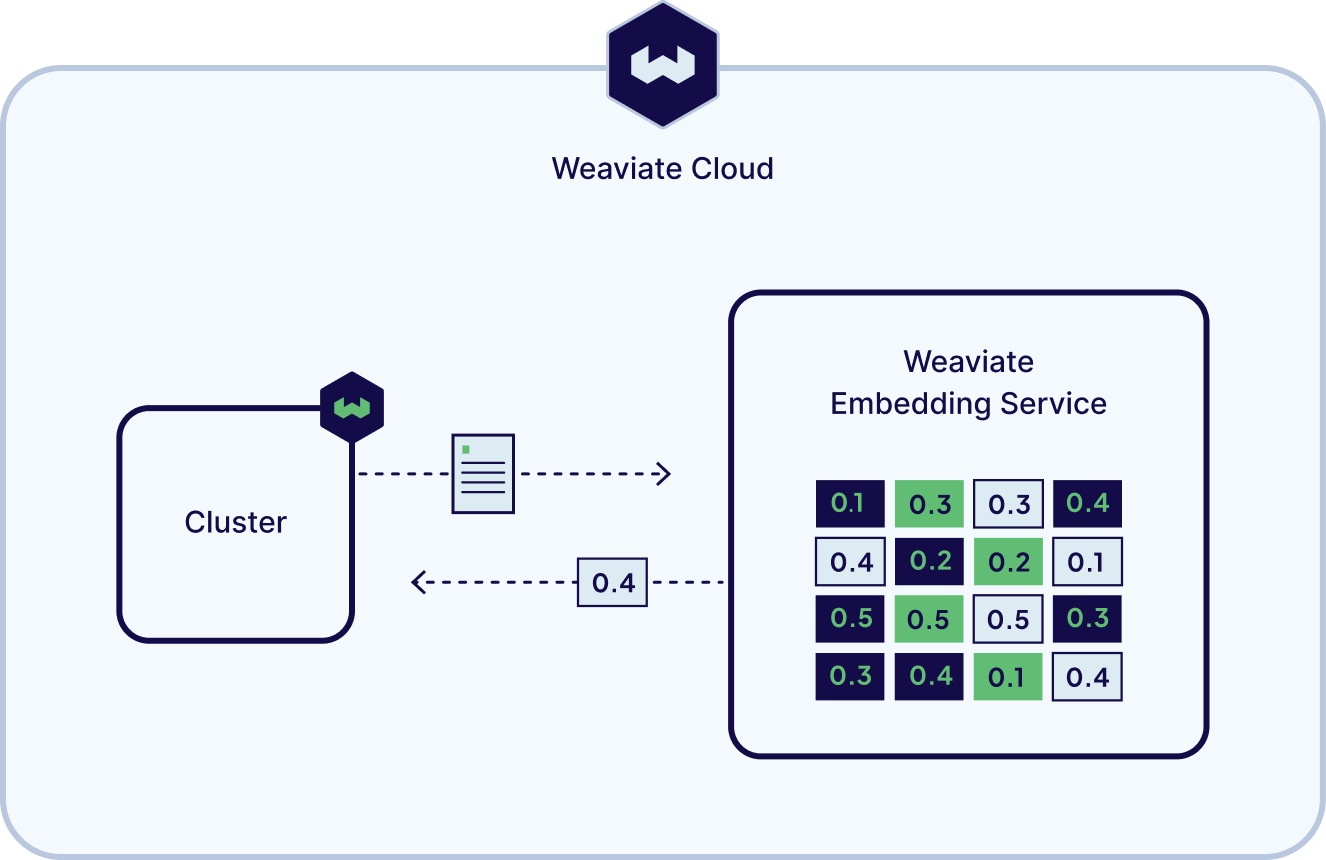
Weaviate is an open-source vector database (BSD-3-Clause licensed on GitHub) that ships with built-in hybrid search, a native embeddings service, and a "Query Agent" that turns natural-language questions into database operations. Weaviate Cloud's paid tiers start with a pay-as-you-go Flex plan from $45/month and move to a prepaid Premium plan from $400/month with a choice of shared or dedicated deployment and up to 99.95% uptime.
Best for: teams building RAG or agentic applications that want hybrid (vector + keyword) search and embedding generation built into the same product.
Pros
- BSD-3-Clause open source with a genuinely free self-hosted path
- Hybrid search and a query agent are native, not bolted-on integrations
- SOC 2 Type II audited, with HIPAA compliance available on Enterprise Cloud (AWS)
- Pricing calculator on the site lets you estimate cost before signing up
Cons
- Vector-dimension-based pricing is harder to estimate upfront than flat or simple usage tiers
- SSO/SAML and HIPAA compliance are gated behind the $400+/month Premium tier
- Free tier is capped fairly low (100,000 objects, 1 collection) for anything beyond prototyping
4. Milvus / Zilliz Cloud
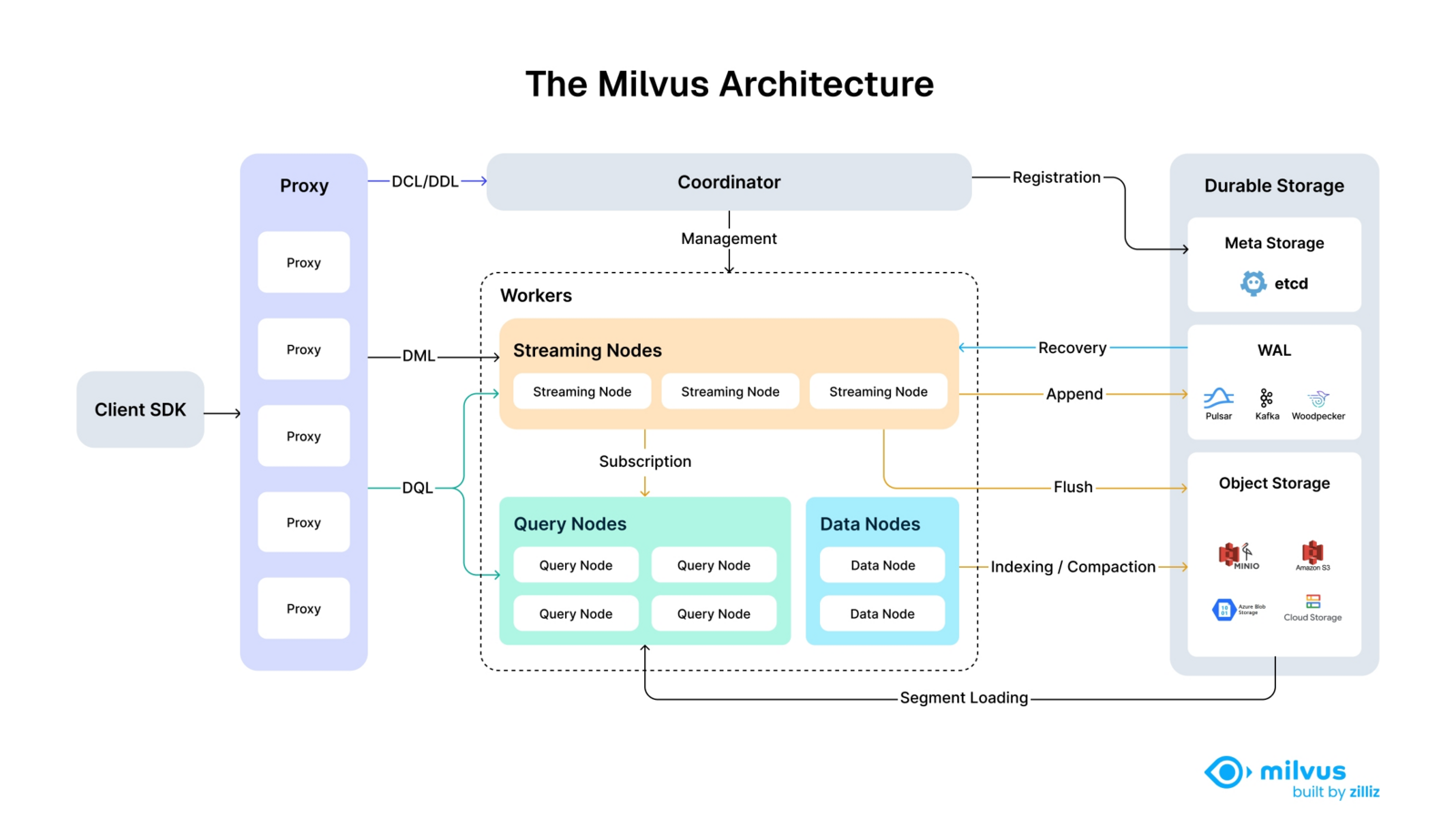
Milvus is an Apache-2.0 open-source vector database (45,700+ GitHub stars as of this writing) built for billion-scale similarity search, with Zilliz Cloud as its commercial managed counterpart. Zilliz Cloud's tiers span a free plan, a Standard serverless/dedicated tier starting near $126/GB per month for dedicated clusters, an Enterprise tier from $197/month with 99.95% uptime and audit logs, and a Business Critical tier for regulated industries, plus BYOC.
Best for: organizations with very large vector datasets (hundreds of millions to billions of vectors) that need dedicated, tunable cluster types.
Pros
- Apache-2.0 core with a large, active open-source community and GitHub presence
- Cluster types (performance-, capacity-, and tiered-storage-optimized) let you tune cost against latency needs directly
- SOC 2 Type II, ISO 27001, and HIPAA-ready options at the top tiers
- Free tier includes a real 5GB storage / 2.5M vCU allotment, not just a trial
Cons
- Pricing structure (compute units, vCUs, per-cluster-type rates) takes real effort to estimate accurately before committing
- Business Critical tier pricing is entirely "let's talk" with no published floor
- Self-managing open-source Milvus at scale is operationally heavier than most alternatives on this list
5. Chroma
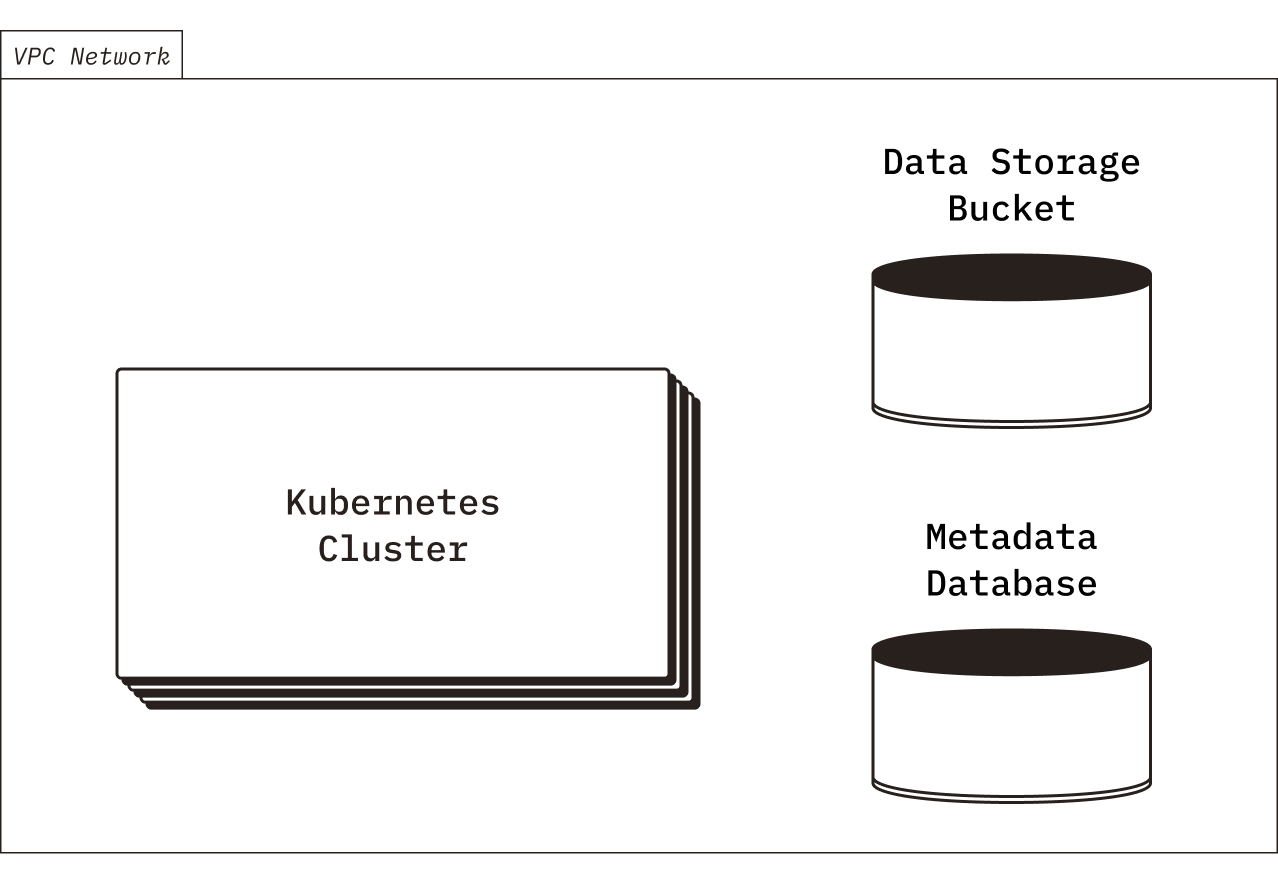
Chroma is an open-source embedding database (27,000+ GitHub stars) originally built for fast local development, now backed by a usage-based managed service, Chroma Cloud. Pricing is unusually granular and transparent: $2.50/GiB written, $0.33/GiB stored per month, $0.0075/TiB queried, and $0.09/GiB returned over the network, with a free Starter plan (plus $5 in credits) and a $250/month Team plan that adds volume discounts and SOC 2.
Best for: developers who want to start locally with an embedded database and move to a managed cloud without switching products.
Pros
- Fully open-source core, easy to run embedded in a single process for prototyping
- Pricing is broken down to the exact per-GiB/per-TiB rate, with a live calculator on the pricing page
- SOC 2 available at the Team tier, well below most competitors' enterprise-only gating
Cons
- Usage-based pricing across four separate dimensions (write, storage, query, network) is harder to forecast than a flat or tiered model
- Enterprise tier (single-tenant clusters, BYOC, SLAs) has no published pricing at all
- Younger managed product than Pinecone or Zilliz Cloud, with a shorter production track record at extreme scale
6. Turbopuffer
Note: no image included for this section — Turbopuffer's site does not publish a real product screenshot or architecture diagram, only a generic Open Graph card, so we're not substituting a stock or AI-generated image.
Turbopuffer is a proprietary, closed-source vector and full-text search database built directly on object storage (S3-style), which is what lets it advertise itself as "10x cheaper than alternatives." It's usage-based with no free tier: Launch starts at a $16/month minimum, Scale at $256/month (adding SSO, audit logs, and IP allowlisting), and Enterprise at a $4,096/month minimum plus a 35% usage premium for single-tenancy, BYOC, and private networking.
Best for: teams with large, cold, or multi-tenant datasets where object-storage-backed pricing beats always-on compute costs.
Pros
- Object-storage architecture makes storage costs materially cheaper for large or infrequently-queried datasets
- Combined vector and full-text (BM25) search in one product
- SOC 2 report and GDPR-ready DPA available even on the entry Launch tier
Cons
- No free tier at all — the cheapest path in costs $16/month minimum before you've stored anything
- Closed source — there's no self-hosted or open-source path if you want to leave the managed service
- Enterprise tier carries a steep 35% usage premium on top of an already-high $4,096/month floor
7. pgvector
Note: no image included for this section — pgvector is a PostgreSQL extension with no dedicated product UI or marketing screenshots to source an image from.
pgvector is an open-source PostgreSQL extension (PostgreSQL License, a permissive BSD-style license) that adds vector similarity search directly to a Postgres database. It has no standalone pricing of its own — it's free to install, and it runs wherever Postgres runs, including self-hosted instances and managed offerings like Amazon RDS, Supabase, and Neon. Your actual cost is whatever you're already paying (or would pay) for Postgres hosting.
Best for: teams that already run Postgres and want vector search without adding a new database to their stack.
Pros
- Genuinely free — no separate vector database bill, just your existing Postgres cost
- One fewer moving part in the stack: transactional data and embeddings live in the same database
- Runs on virtually any managed Postgres provider, so you're not locked into one vendor
Cons
- Approximate nearest-neighbor performance at very large scale generally lags purpose-built vector databases
- Index build and maintenance (IVFFlat/HNSW) still requires Postgres tuning expertise most teams don't already have
- No managed vendor is responsible for the vector workload specifically — support and scaling guidance depend entirely on your Postgres provider
How to choose
If you want to avoid operating infrastructure entirely and are comfortable with a proprietary product, Pinecone or Turbopuffer are the cleanest managed options — Pinecone for broader feature coverage (bundled embeddings, reranking, an assistant layer), Turbopuffer if your workload is large, cold, and cost-sensitive. If you want the option to self-host now and move to a managed service later without switching products, Qdrant, Weaviate, Milvus, or Chroma are all genuinely open source with that migration path built in. If you're already running Postgres and your scale doesn't demand a dedicated vector engine yet, pgvector removes an entire piece of infrastructure from your stack for free.
Frequently Asked Questions
Is pgvector good enough for production RAG, or do I need a dedicated vector database?
For moderate scale and query volume, pgvector in a well-tuned Postgres instance handles production RAG workloads fine. Teams typically move to a dedicated vector database once they need very high query throughput, billion-scale vector counts, or specialized ANN index tuning that Postgres extensions don't expose as easily.
Which of these is actually free to run in production, not just to try?
pgvector is free itself, though you still pay for Postgres hosting. Qdrant, Weaviate, and Milvus can all be self-hosted for free under their open-source licenses, though you take on the operational work. Turbopuffer and Pinecone have no free production tier — usage starts billing immediately.
What's the difference between "open source" and "open core" here?
Qdrant, Weaviate, Milvus, and Chroma all ship their core database under permissive OSS licenses (Apache-2.0 or BSD-3-Clause) verifiable on GitHub — you can run the full engine yourself for free. Pinecone and Turbopuffer are fully proprietary; there's no self-hosted version at any license.
Do any of these bundle embedding generation, or do I need a separate embeddings API?
Pinecone (Inference) and Weaviate (Embeddings) both offer native, usage-billed embedding generation inside the same product. Qdrant offers free inference with selected models on its Cloud Inference feature. Chroma, Milvus/Zilliz, Turbopuffer, and pgvector expect you to bring embeddings from an external model.
Why isn't TrueFoundry on this list?
TrueFoundry is an AI gateway and agent-runtime platform, not a vector database — it doesn't build or sell one, so it wouldn't be a fair comparison in this category.
Editor's note — sources: pinecone.io/pricing, qdrant.tech/pricing, weaviate.io/pricing, zilliz.com/pricing, trychroma.com/pricing, turbopuffer.com/pricing, github.com/pgvector/pgvector, github.com/milvus-io/milvus, github.com/qdrant/qdrant, github.com/weaviate/weaviate, github.com/chroma-core/chroma, milvus.io/docs/architecture_overview.md, qdrant.tech/articles/filtrable-hnsw, weaviate.io/blog/introducing-weaviate-embeddings, trychroma.com/engineering/distributed-chroma-byoc, pinecone.io/blog/pinecone-nexus-generally-available. All pricing and licensing figures verified directly against vendor pricing pages and public GitHub repositories as of August 2026.