
Apple's New Siri Runs on Google's Models
How Apple traded fifteen years of vertical-integration orthodoxy for a shipping date — and left Europe out of the launch entirely.

Apple's most important AI product runs on foundation models it built with Google. That sentence would have been unthinkable three years ago.
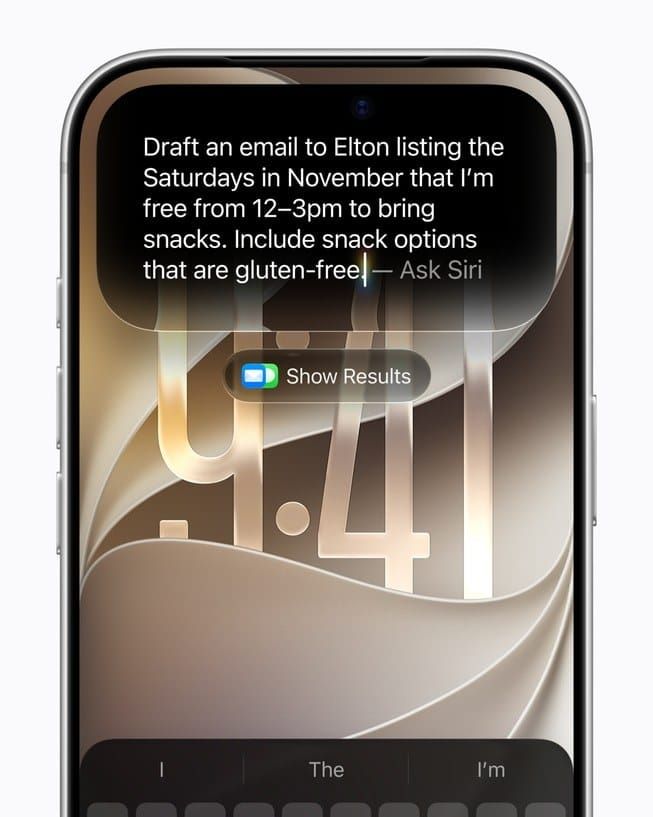
At 10 a.m. Pacific on Monday, Apple began pushing iOS 27 to iPhones, and with it the rebuilt assistant it calls Siri AI. The rollout landed across the company's whole platform lineup, which Apple confirmed the same morning. The feature list is roughly what Apple promised: onscreen awareness, personal context drawn from a user's messages and photos, and systemwide app actions that let the assistant draft an email or edit a photo set without the user opening anything. What Apple did not lead with sits in the technical notes near the bottom of its own announcement, where the company says the new Apple Foundation Models were "custom-built in collaboration with Google and its Gemini models."
That is the story. Apple Siri AI, the flagship of Apple's AI era, is powered by a model stack the company developed with its largest search rival and the defendant in the ad-tech and search cases that have defined the last two years of platform regulation.
What actually shipped
Siri AI is a beta, in English only, rolling out from Monday alongside iOS 27, iPadOS 27, macOS 27, watchOS 27 and visionOS 27. Apple says French, Japanese, Korean, Portuguese and Spanish arrive next month. The assistant needs an Apple Intelligence-capable device, which means iPhone 16 or later, plus the iPhone 15 Pro and 15 Pro Max — a hardware floor that excludes most of the installed base even though iOS 27 itself, as MacRumors notes in its compatibility rundown, reaches back to the iPhone 11.
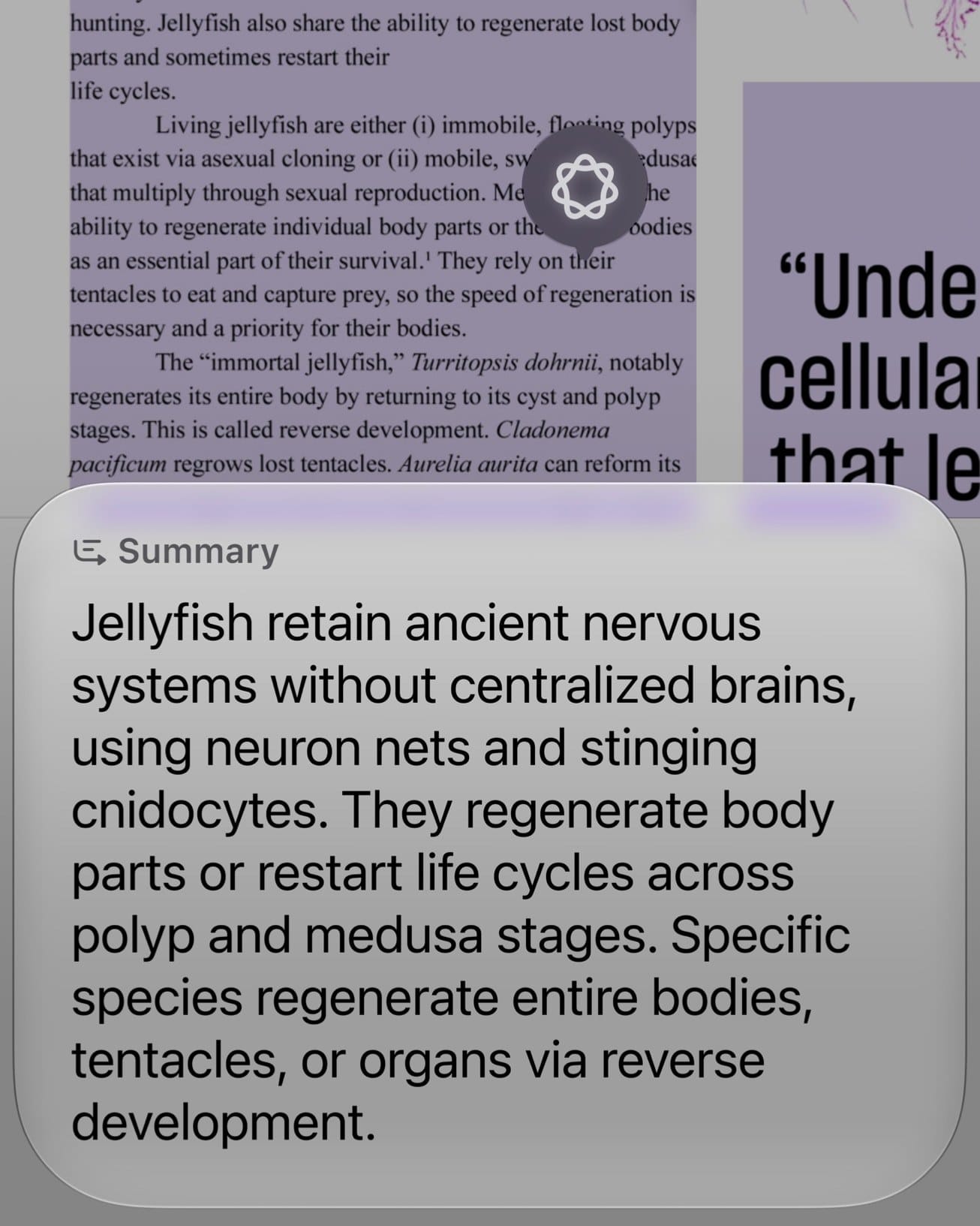
Three capabilities do the heavy lifting. Personal context lets Siri search across a user's own messages, email and photos to resolve a vague request into a specific one. Onscreen awareness lets it answer questions about whatever is currently displayed. And app actions extend beyond Apple's own software: Apple names WhatsApp and Audible as working today, with Microsoft Outlook, Notability and Tripsy coming.
The mechanism underneath matters more than the demos. Siri AI routes through what Apple calls a system orchestrator, tapping the Spotlight index and an App Toolbox that run on device. Heavier requests go to Private Cloud Compute, Apple's confidential-computing tier, where Apple maintains that personal data is neither stored nor accessible to Apple or anyone else, and that outside researchers can verify the claim. Developers expose capability to the assistant through App Intents — which is the quiet reason this launch is also a developer-platform launch. What an app declares as an intent is what Siri can see and do inside it.
The Google admission
Apple has spent fifteen years arguing that controlling the whole stack is what makes its products good. Silicon, OS, services, and — through the Neural Engine and on-device inference — increasingly the intelligence layer too. The Siri AI technical notes break that pattern in a single clause.
Read it precisely, because the precision cuts both ways. Apple is not saying Siri is Gemini. It says the latest Apple Foundation Models were custom-built with Google and its Gemini models, running on device and on Private Cloud Compute servers. That is a co-development arrangement, not a rebrand, and Apple retains the orchestration layer, the privacy architecture and the surface. But it is still an admission that Apple could not get to a competitive assistant on its own models alone, on the schedule it needed.
The strategic logic is defensible. Siri's rebuild slipped repeatedly, and as CNBC reported on the release, this is the assistant's most substantial overhaul since launch; a delayed Siri was becoming a referendum on whether Apple could compete in AI at all. Buying capability — in engineering collaboration rather than in an acquisition — converts an open-ended research risk into a delivery date. We have written before about how every AI giant now wants its own chip precisely to avoid this kind of dependency at the silicon layer. Apple has accepted it one layer up.
The cost is optionality. Apple now has a model dependency on a company whose search deal already accounts for a large, legally contested share of its services revenue, and whose ad-tech conduct is under active European scrutiny — a thread we followed when Brussels asked publishers whether Google's AI truce was real. Concentrating both search default and model supply with the same counterparty is a negotiating position that gets worse over time, not better.
Europe gets the OS, not the assistant
The second buried line is blunter. Apple states that Siri AI will not be available initially in the EU on iOS, iPadOS and watchOS, that features depending on it are also unavailable there, and that Apple is "working hard to find a path forward" preserving user privacy and security. Siri AI is also withheld in China pending regulatory requirements.
Apple is not explaining the EU decision in detail, so treat any single cause as analysis rather than reported fact. But the shape is familiar. An assistant whose value comes from reading across messages, mail, photos and onscreen content, then acting inside third-party apps, collides directly with interoperability and gatekeeper obligations that would require Apple to open those same pathways to rivals. Shipping the assistant in Europe means answering that question. Not shipping it defers the answer.
For European users the practical result is a two-tier product: the same phone, the same operating system, materially less capable software. For Apple it is a calculated bet that the regulatory cost of launching exceeds the competitive cost of waiting — a bet that only holds if Google, OpenAI and Samsung decline to fill the gap on Android and the web, where the same obligations apply but the architectural stakes are lower.
Who this moves
For developers, App Intents just became the highest-leverage surface area in the Apple ecosystem. An app that declares rich intents can be operated by the assistant without a user ever opening it; an app that does not becomes invisible at exactly the moment the assistant becomes the entry point. That is a redistribution of attention, and it favors whoever does the unglamorous schema work first.
For Google, this is a second structural foothold inside iOS on top of the search default. It also complicates the company's antitrust posture in an interesting direction: supplying a rival's flagship AI feature is evidence of competition in model markets and evidence of concentration in them, depending on which brief you are writing.
For OpenAI and Anthropic, the read is uncomfortable. The single largest consumer distribution prize in AI went to the company with a decade-long commercial relationship with Apple and its own TPU fleet, not to the labs with the strongest standalone assistants. Distribution, again, accrued to the incumbent.
For Apple's competitors in Europe, there is an unexpected opening. A flagship Apple feature is simply absent in one of the world's richest markets. That is the sort of gap that is cheap to attack and expensive to defend.
The takeaway
Three things are worth holding onto. First, vertical integration is a strategy, not an identity — Apple abandoned it at the model layer the moment the schedule cost exceeded the ideological cost, which is what disciplined companies do and what Apple watchers consistently underestimate. Second, the interesting dependency in AI is no longer compute, it is capability: Apple has plenty of silicon and still needed someone else's models. Third, regulation is now a product-scoping input, not a compliance afterthought. Apple did not ship a compliant version of Siri AI for Europe. It shipped no version.
The higher the integration, the louder the exception. Apple spent fifteen years teaching the industry that owning every layer is the moat. This week it demonstrated the corollary: when the moat becomes the delay, you build a bridge and hope nobody reads the footnotes.
Frequently Asked Questions
Does Apple's Siri AI use Google Gemini?
Partly. Apple states that the new Apple Foundation Models powering Siri AI were custom-built in collaboration with Google and its Gemini models, running on device and on Private Cloud Compute servers. Siri AI is not a rebranded Gemini — Apple retains the orchestration and privacy architecture — but the underlying model work was done jointly with Google.
Which devices support Siri AI in iOS 27?
Siri AI requires an Apple Intelligence-enabled device: iPhone 16 models or later, plus iPhone 15 Pro and iPhone 15 Pro Max. It also runs on iPads with M1 or later, iPad mini (A17 Pro), Macs with M1 or later, Apple Vision Pro, and Apple Watch Series 9 or later when paired with a supported iPhone.
Why is Siri AI not available in the EU?
Apple says Siri AI will not be available initially in the EU on iOS, iPadOS and watchOS, and that it is working to find a path forward preserving user privacy and security. Apple has not detailed the reasoning. Siri AI is also withheld in China while Apple works through regulatory requirements.
What languages does Siri AI support at launch?
Siri AI launched in beta in English only on September 14, 2026. Apple says support for French, Japanese, Korean, Portuguese and Spanish arrives the following month. The broader set of Apple Intelligence features supports a wider language list, but the rebuilt assistant itself began English-first.
Editor's note — sources: Apple Newsroom ("Siri AI, a profoundly more capable and personal assistant, is here"; "Major updates for Apple's software platforms are now available"), CNBC, MacRumors, 9to5Mac. Analysis of the EU decision and of Apple's strategic trade-offs is Edgewisely's own and is labeled as such in the text.