
SK Hynix Hands Back $28.6 Billion
How a record buyback from the world's key AI-memory maker became a referendum on the AI spending boom.

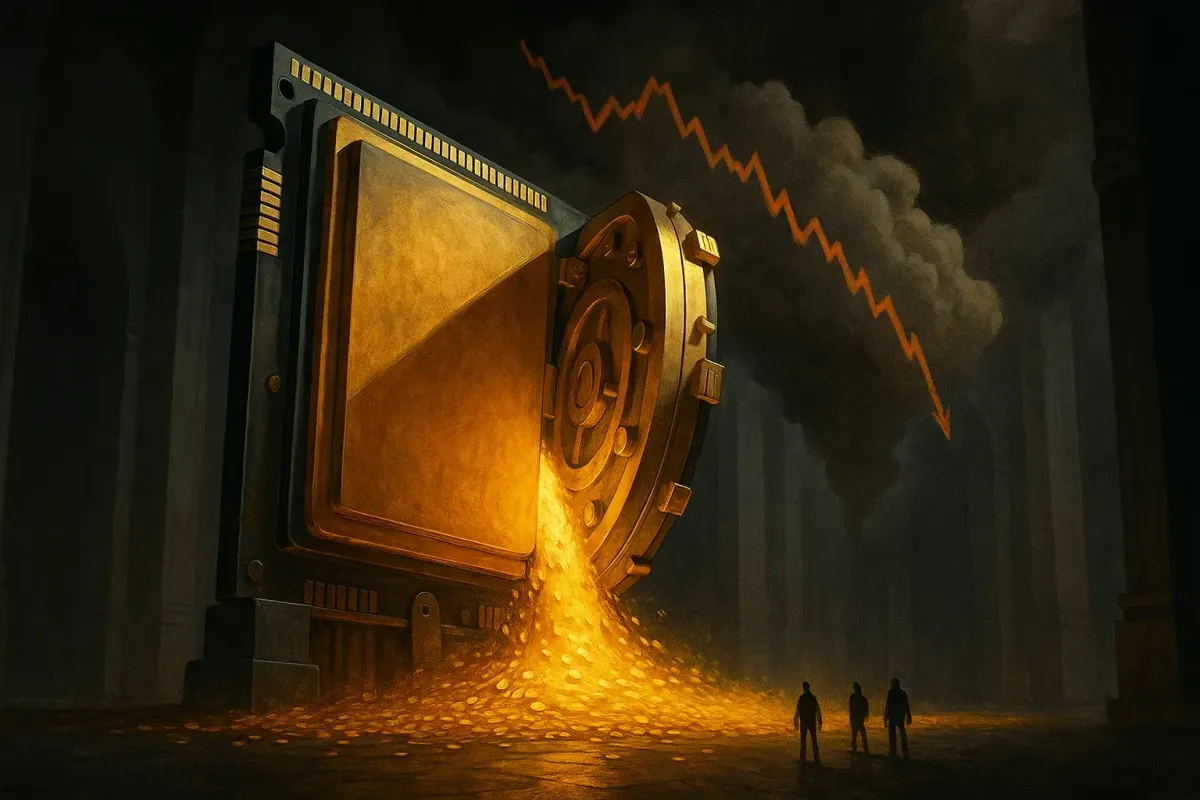
When a company sitting at the center of the AI build-out decides to return most of its cash to shareholders instead of hoarding it, the market has to ask what it knows.
On August 19, SK Hynix announced a share buyback that would be extraordinary in any industry and is startling in this one: up to 40 trillion won, roughly $28.6 billion, to repurchase and cancel as many as 24 million shares between August 20 and November 19, according to Bloomberg. The South Korean memory-chip maker supplies the high-bandwidth memory that sits beside Nvidia's GPUs in nearly every serious AI system. The SK Hynix buyback is the largest capital return in its history — and it lands at a moment when the market is anxious about exactly the boom that generated the cash.
The timing is the whole story. SK Hynix's stock had slid hard over the prior weeks as part of a broader chip-sector selloff, one driven by a specific fear: that spending by the big US cloud companies on AI infrastructure may be peaking faster than the revenue to justify it. Chip stocks shed more than $1 trillion in value in the late-July rout, CNBC reported. Into that unease, SK Hynix did not cut spending or hunker down. It announced it would give shareholders a record pile of cash — and its stock jumped on the news, per Yahoo Finance.
The confidence signal — and the contradiction
Read one way, the buyback is a flex. SK Hynix is telling the market that AI demand has thrown off so much cash that it can afford to return an enormous amount while still investing heavily to grow. The company said it would expand shareholder returns to more than 50% of the cumulative free cash flow it generates between 2025 and 2027, per Bloomberg. That is the posture of a company that believes the memory boom is durable enough to fund both generosity and expansion.
Read another way, it is a defensive move dressed as confidence. Companies buy back stock most aggressively when they believe their shares are underpriced — and SK Hynix launched this program precisely as its stock was falling in a selloff about AI overspending. A buyback of this scale, timed to a sinking share price, is also a way to put a floor under the stock and tell nervous investors the company disagrees with their pessimism.
The contradiction sharpens when you look at what SK Hynix is spending elsewhere. Earlier in the month, the company said it would invest 54 trillion won to build new memory-chip plants, and analysts have noted the buyback represents well over half of the net cash it reported in the second quarter, per 24/7 Wall St.. Returning most of your cash to shareholders while simultaneously ramping the largest capital program in your history is a balancing act. It works beautifully if AI memory demand keeps compounding. It looks reckless if the boom cools while the plants are still being built.
For each stakeholder, a different read
For SK Hynix, the buyback is a bet on its own indispensability. High-bandwidth memory has become a bottleneck in AI systems, and SK Hynix is the leading supplier — a position that has turned it from a cyclical commodity maker into something closer to a toll collector on the AI build-out. Returning cash signals it expects that toll to keep flowing. The exposure is that memory has always been the most cyclical corner of semiconductors, and confidence expressed through a buyback is hard to walk back if the cycle turns.
For investors, the move is a Rorschach test on the AI trade. Bulls see a cash machine so strong it can reward shareholders through a downturn. Bears see a company defending a falling stock and note that the biggest buybacks in history are often announced near the top, not the bottom. That both readings are plausible is precisely why the AI-hardware market feels so unsettled right now.
For the hyperscalers whose spending underwrites all of this, SK Hynix's confidence is a data point worth weighing. A key supplier committing to years of elevated shareholder returns is implicitly forecasting years of strong memory orders — which means strong AI infrastructure demand. If SK Hynix is right, the capex boom has room to run. If it is wrong, it will be among the first to feel the reversal.
For competitors like Samsung and Micron, the buyback raises the stakes on capital strategy. Memory defied the broader tech selloff in part because demand for AI memory has held up, and SK Hynix is now using its balance sheet aggressively. Rivals face pressure to match both the investment and the shareholder generosity, which is easy in a boom and punishing if it fades.
The takeaway for operators
There are three lessons here for anyone reading corporate signals in a boom.
First, watch what companies do with their cash, not just what they say about demand. Executives always sound confident. A capital-allocation decision — especially one this large and this public — reveals the belief behind the rhetoric. SK Hynix is betting real money that the AI cycle has more room. That is a stronger signal than any earnings-call adjective.
Second, the same action can be strength or fear depending on timing, and timing is the tell. A buyback announced from a position of calm reads as discipline. The same buyback announced as your stock falls in a sector-wide panic reads, at least partly, as defense. Confidence is cheapest to display exactly when the market has stopped believing you.
Third, the hardest strategy to sustain is spending big and returning big at once. SK Hynix is trying to fund a historic expansion and a historic buyback from the same cash flow. That works only if the boom cooperates. When a company commits to both generosity and growth, it has removed its own margin for error — and handed the AI cycle the power to decide whether the bet was brilliant or premature.
The buyback runs through November. The plants will take years. Somewhere in between, the market will learn whether the demand that filled SK Hynix's coffers was the start of a durable era or the peak of a very expensive one. For now, the company sitting closest to the AI boom's engine has told the world it is not worried. The world, judging by the selloff that preceded it, is not so sure.
Frequently Asked Questions
What is the SK Hynix buyback?
On August 19, 2026, SK Hynix announced a share repurchase and cancellation program of up to 40 trillion won, roughly $28.6 billion, covering as many as 24 million shares between August 20 and November 19. It is the largest capital return in the company's history and was paired with a pledge to return more than 50% of cumulative free cash flow generated between 2025 and 2027.
Why is the timing significant?
The buyback was announced as SK Hynix's stock slid in a broader chip-sector selloff driven by fears that US cloud companies' AI infrastructure spending may be peaking faster than the revenue to justify it. Launching a record buyback into that unease reads as both a confidence signal and a defense of a falling share price.
Why are analysts questioning the move?
The buyback represents well over half of the net cash SK Hynix reported in the second quarter, and the company is simultaneously investing 54 trillion won to build new memory-chip plants. Funding a historic expansion and a historic buyback from the same cash flow works only if AI memory demand keeps compounding.
What does SK Hynix make that matters for AI?
SK Hynix is the leading supplier of high-bandwidth memory, the fast memory that sits beside GPUs in AI systems and has become a key bottleneck in the AI build-out. That position has turned it from a cyclical commodity maker into a central beneficiary of AI infrastructure spending.
Editor's note — sources: Bloomberg · Yahoo Finance · 24/7 Wall St. · CNBC