
Top 7 AI Chip Companies in 2026
The top AI chip companies in 2026 — NVIDIA, AMD, Google TPU, Cerebras, Groq, SambaNova and Tenstorrent compared on performance, price and status.


The top AI chip companies in 2026 are NVIDIA, AMD, Google, Cerebras, Groq, SambaNova, and Tenstorrent. NVIDIA still dominates training and inference on the strength of CUDA and rack-scale NVLink; AMD is the credible number two; Google's TPUs run at genuine hyperscale but only inside Google Cloud. The challengers — Cerebras (now public), Groq, SambaNova, and Tenstorrent — compete on inference speed, memory capacity, or open hardware.
- NVIDIA posted $57.0B in Q3 FY2026 revenue (up 62%), with data center at $51.2B; Blackwell is "sold out."
- AMD counters on memory: the MI355X carries 288GB of HBM3E and runs the open ROCm stack instead of CUDA.
- Cerebras went public in May 2026 (Nasdaq: CBRS) at $185/share after a CFIUS review of its G42 ties; Groq raised $750M at a $6.9B valuation in September 2025.
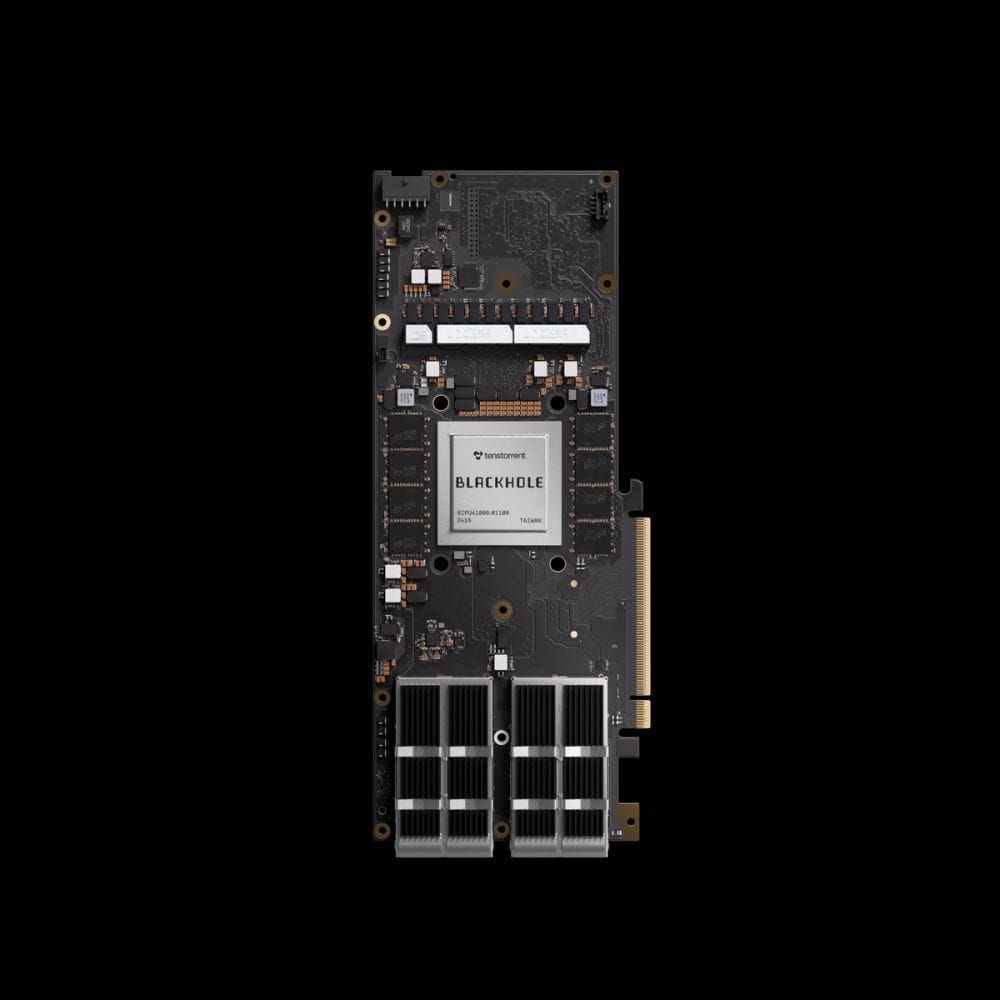
- Almost nobody publishes chip prices. The exception is Tenstorrent, which sells Blackhole PCIe cards for $999–$1,399.
AI chips are the specialized processors — GPUs, wafer-scale engines, LPUs, dataflow units, and custom ASICs — that train and run machine learning models. In 2026 the market is NVIDIA plus a field of challengers. NVIDIA and AMD sell merchant silicon anyone can buy; Google builds TPUs for its own cloud; Cerebras, Groq, SambaNova, and Tenstorrent each attack a specific weakness in the GPU model, from inference latency to memory capacity to software lock-in. This guide ranks the seven that matter, with what each builds, how you consume it, and the real trade-offs.
How we picked these
We ranked on deployment scale and maturity first, then architectural distinctiveness, software ecosystem, and verifiable funding or status. We separated merchant vendors (buy the silicon) from cloud-captive ones (rent only), and we flag that difference as a con where it limits you. Pricing is noted only where the vendor publishes it; analyst street prices are excluded. Benchmark claims are labeled as vendor claims. No vendor paid for placement.
Quick comparison
| Company | Best for | Architecture | How you consume it |
|---|---|---|---|
| NVIDIA | Training and inference at hyperscale | GPU + NVLink rack systems | Buy silicon/systems + cloud rental |
| AMD | Memory-heavy inference, open software | Instinct GPU (CDNA 4), ROCm | Buy silicon/systems + cloud rental |
| Proven hyperscale training/inference | TPU ASIC (systolic array) | Cloud-only (Google Cloud) | |
| Cerebras | Single-system scale, fast inference | Wafer-scale engine (WSE-3) | Buy CS-3 systems + inference cloud |
| Groq | Low-latency LLM inference | LPU (deterministic dataflow) | Cloud API + some on-prem |
| SambaNova | Large-memory on-prem inference | RDU (reconfigurable dataflow) | Buy racks + cloud API |
| Tenstorrent | Open, buyable, low-cost hardware | RISC-V + Tensix mesh | Buy silicon + IP licensing |
1. NVIDIA
NVIDIA sets the baseline for the entire category. It ships merchant GPUs and full rack systems: the current Blackwell B200 and GB200 NVL72, the Blackwell Ultra B300/GB300 ramping through late 2025, and the Vera Rubin generation on track for 2026. Its real moat is software — CUDA — plus NVLink and NVSwitch, which let the GB200 NVL72 act as 72 GPUs in a single memory domain. It handles both training and inference.
The numbers are the story. In Q3 FY2026 (quarter ended October 26, 2025), NVIDIA reported record revenue of $57.0B, up 62% year over year, with data center at $51.2B. CEO Jensen Huang said Blackwell sales are "off the charts" and cloud GPUs are "sold out." Anthropic agreed to adopt 1 gigawatt of Grace Blackwell and Vera Rubin systems.
Best for: teams that want the most mature, highest-performance training and inference stack and can get allocation.
Pros - The CUDA software ecosystem is years ahead of any rival. - NVLink/NVSwitch rack-scale interconnect has no direct equal. - Proven at hyperscale with demand that outstrips supply.
Cons - Price and margin premium over every competitor. - Supply is allocation-constrained; lead times are long. - CUDA creates real vendor lock-in.

2. AMD
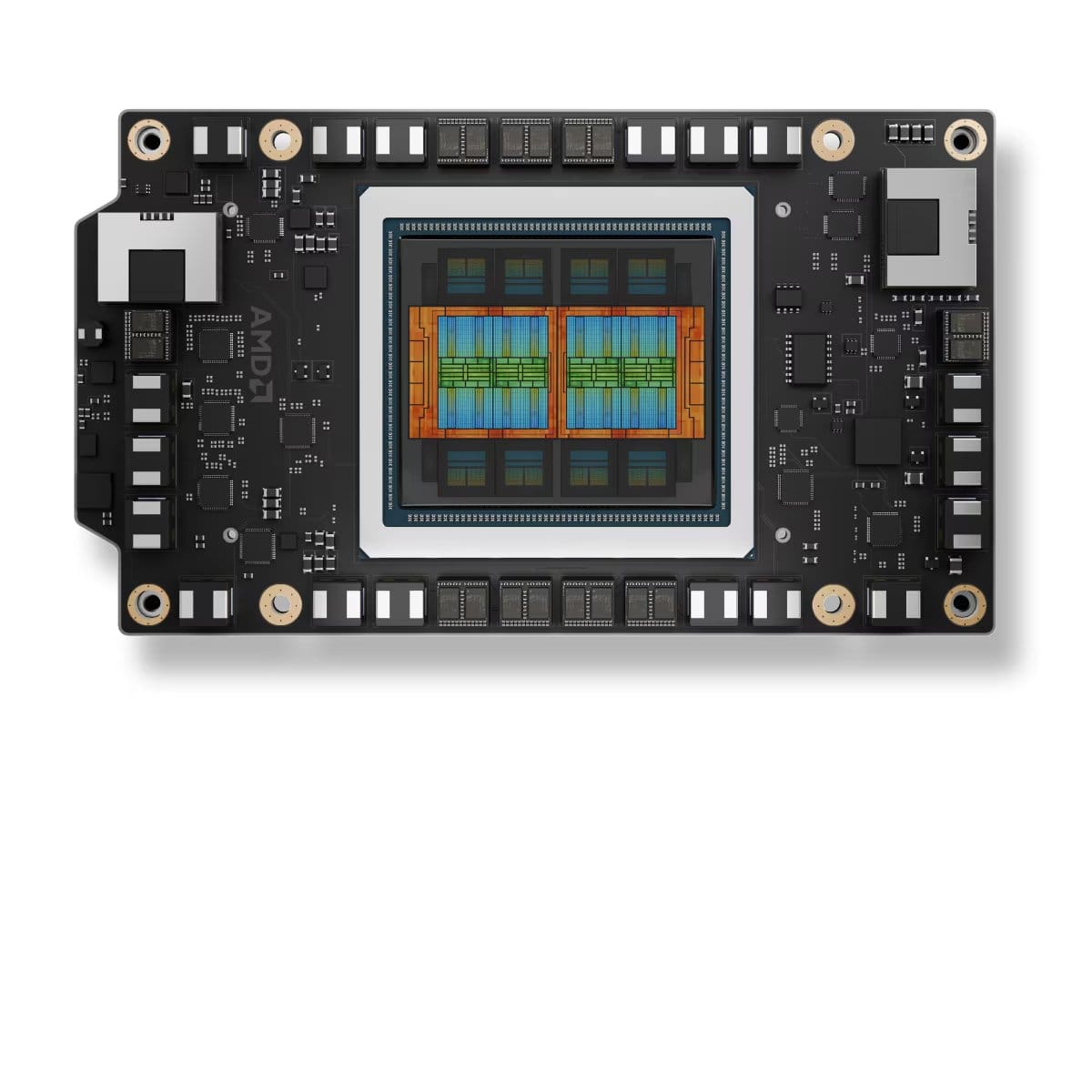
AMD is the credible number two in merchant AI silicon. Its Instinct line reached the MI350 series — the MI350X and MI355X on the CDNA 4 architecture, shipping in the second half of 2025 — with the MI400 series and a "Helios" rack system due in 2026. AMD's pitch is memory and openness: the MI355X carries 288GB of HBM3E at 8TB/s, and the stack runs on open-source ROCm rather than CUDA.
AMD is a public company with a multi-billion-dollar data-center GPU run rate and named deployments at Microsoft, Meta, and Oracle. It also announced a multi-year compute agreement with OpenAI in 2025; verify the exact terms before quoting them, as the headline figures are loosely reported.
Best for: teams that want high per-GPU memory and want to avoid CUDA lock-in.
Pros - Leading memory capacity and bandwidth per GPU (288GB HBM3E on MI355X). - Open ROCm software stack, no CUDA dependency. - Real hyperscaler wins establish it as a genuine alternative.
Cons - ROCm's software maturity still trails CUDA. - Rack-scale interconnect lags NVLink until Helios and MI400 arrive. - Smaller install base and third-party tooling ecosystem.
3. Google
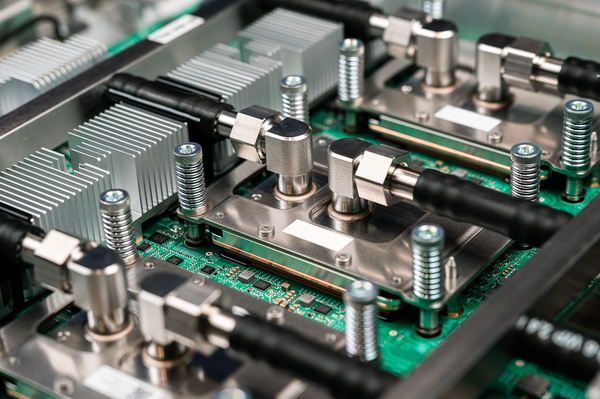
Google Cloud's TPUs are the most proven non-NVIDIA accelerators in production, co-designed with Broadcom. The latest, TPU v7 "Ironwood," was announced on November 6, 2025 as generally available "in the coming weeks," following v6e "Trillium." Google claims Ironwood delivers more than 4x the per-chip performance of Trillium, with superpods scaling to 9,216 chips over a 9.6Tb/s interconnect and an optical circuit-switched fabric.
The catch, and why it ranks third rather than higher as a "company" you can build on: Google does not sell TPUs. You can only rent them through Google Cloud. It trains Gemini internally and has signed Anthropic to access up to 1 million TPUs, alongside named customers like Lightricks and Essential AI.
Best for: teams already on Google Cloud that want proven, large-scale training and inference without buying hardware.
Pros - Proven at genuine hyperscale across multiple generations. - Anchor customers at scale (Anthropic's 1M-TPU deal, internal Gemini training). - Strong performance-per-watt and pod-scale networking.
Cons - Cloud-only — there is no silicon to buy and real GCP lock-in. - Software is JAX/XLA-centric, a learning curve for PyTorch-first teams. - Not a merchant competitor; you cannot deploy on-prem.
4. Cerebras Systems
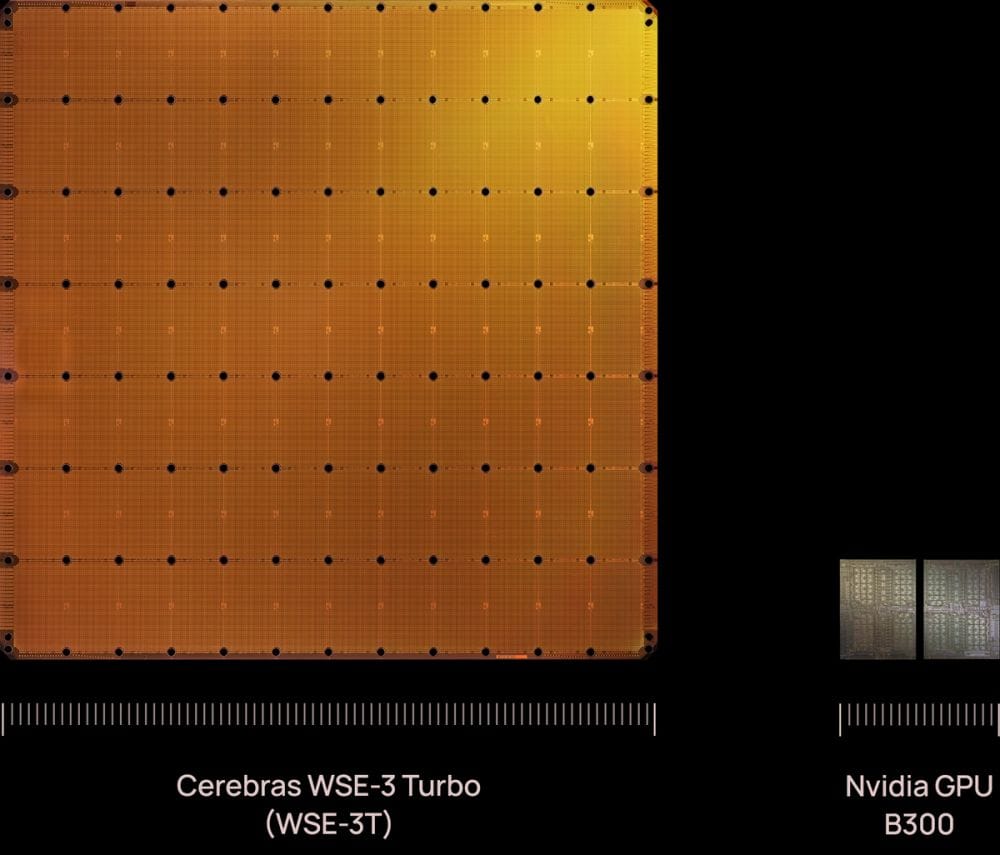
Cerebras builds the Wafer-Scale Engine 3 (WSE-3), a single chip the size of a dinner plate with 900,000 cores and 4 trillion transistors, plus the CS-3 systems and a Cerebras Inference cloud. Putting an entire wafer to work as one chip, with massive on-chip SRAM, sidesteps the memory bottleneck that forces GPU clusters to shard models — which is why Cerebras posts very high inference token rates and fast training without model-parallel partitioning.
Its status changed in 2026: after a 2024 IPO was delayed by a CFIUS review of its ties to G42 (a UAE firm that is both a major customer and shareholder), Cerebras completed its IPO in May 2026 at $185/share, raising about $6.38B gross and listing on Nasdaq as CBRS. The G42 concentration remains a disclosed risk.
Best for: labs and enterprises that want the fastest single-system training or inference without cluster sharding.
Pros - Unmatched single-system scale and latency from wafer-scale design. - Simpler programming — no model-parallel sharding across many GPUs. - Now public, bringing capital and financial transparency.
Cons - Heavy revenue and ownership concentration in G42 (a disclosed IPO risk). - Niche software ecosystem compared with CUDA. - High per-unit cost and specialized deployments.
5. Groq
Groq builds the LPU (Language Processing Unit), an inference-only accelerator, and serves it through GroqCloud. Its architecture is deterministic and statically scheduled — an "assembly line" with compute and SRAM on-chip, giving roughly 80TB/s of on-chip bandwidth against a GPU's ~8TB/s off HBM. The result is very low latency and high token throughput for serving large language models, though it does no training.
Groq raised $750M at a $6.9B post-money valuation in September 2025, led by Disruptive with BlackRock, Samsung, and Cisco participating. It sells primarily through its cloud API, with published per-token pricing, and has built data centers including one in Saudi Arabia for sovereign deployments. Its "2M+ developers" figure is company-stated.
Best for: teams serving LLMs that need the lowest possible inference latency.
Pros - Best-in-class inference latency and throughput. - Published per-token pricing and easy API onboarding. - Well capitalized after the $750M round.
Cons - Inference only — no training capability. - Low per-chip memory means many chips are needed for large models, affecting economics. - Adoption statistics are self-reported, not audited.

6. SambaNova Systems
SambaNova builds the Reconfigurable Dataflow Unit (RDU) — the SN40L chip — in DataScale/SambaRack systems and a SambaCloud API. Its dataflow architecture and three-tier memory (SRAM, HBM, and large DDR) let a single node hold many or very large models, a memory-capacity play aimed at agentic and multi-model inference running in air-cooled on-prem racks.
SambaNova laid off about 15% of staff in April 2025 and pivoted from training toward inference, repositioning as an inference utility after raising roughly $676M in 2021. It targets enterprises, government, and regulated on-prem buyers, and supports open engines like vLLM. Verify any current named customer before relying on it, as public traction is thinner than Groq's or Cerebras's.
Best for: regulated enterprises that want large-memory inference on-prem.
Pros - Very large on-node memory for big or multi-model inference. - Full-stack on-prem option suited to regulated buyers. - Supports open serving engines (vLLM, NVIDIA Dynamo).
Cons - Layoffs and a strategic pivot signal pressure. - Small software ecosystem versus CUDA. - Weaker public traction and mindshare than its peers.
7. Tenstorrent
Tenstorrent, led by chip veteran Jim Keller, builds Tensix-core accelerators paired with RISC-V CPU IP, and licenses both. Its current Blackhole PCIe cards and prior Wormhole line use a RISC-V plus Tensix mesh with Ethernet-native scale-out and a fully open-source software stack (tt-Metalium). The bet is openness and buyability rather than peak performance.
Tenstorrent raised a $693M+ Series D in December 2024 at roughly a $2.6B valuation, led by Samsung Securities and AFW Partners with Jeff Bezos and others participating. Crucially, it publishes prices: the Blackhole p100a is $999 and the p150a/p150b are $1,399. The known weakness is software maturity — reviewers describe the stack as rough compared with CUDA or ROCm.
Best for: developers and OEMs who want open, affordable, buyable AI hardware.
Pros - Transparent, low published pricing and genuinely buyable cards. - Fully open-source stack and RISC-V openness, no CUDA lock-in. - Strong backers (Samsung, Bezos, LG) and Jim Keller's track record.
Cons - Immature software versus CUDA and ROCm; reviewers cite a rough experience. - GDDR6 memory (not HBM) limits top-end large-model performance. - Small deployed base, mostly at developer and evaluation scale.
How to choose
- You need the most mature, highest-performance stack and can get allocation: NVIDIA.
- You want high per-GPU memory and no CUDA lock-in: AMD.
- You're on Google Cloud and want proven scale without buying hardware: Google TPUs.
- You want the fastest single-system training or inference: Cerebras.
- You're serving LLMs and latency is everything: Groq.
- You need large-memory inference on-prem in a regulated environment: SambaNova.
- You want open, cheap, buyable hardware to experiment with: Tenstorrent.
Also worth noting: Intel's merchant AI-accelerator roadmap is the weakest of the majors right now (Falcon Shores was cancelled in January 2025; it is pivoting to an inference GPU, "Crescent Island"), while Qualcomm, AWS Trainium, and Broadcom-designed custom ASICs are rising but either cloud-captive or not sold as branded merchant chips.
For deeper hardware comparisons, see our breakdowns of GB200 vs B200, NVIDIA L40S vs H100, and Jetson Thor vs DGX Spark, plus our guide to quantum computing companies.
Frequently Asked Questions
What is an AI chip?
An AI chip is a processor designed to accelerate machine learning workloads — mainly the matrix math behind training and running neural networks. It covers GPUs, custom ASICs like Google's TPU, wafer-scale engines, and inference-specific designs like Groq's LPU, all optimized for parallel throughput rather than general-purpose computing.
Who makes AI chips?
NVIDIA and AMD make merchant GPUs anyone can buy. Google, Amazon, and (soon) others make custom chips for their own clouds. Startups Cerebras, Groq, SambaNova, and Tenstorrent make specialized accelerators, and Intel, Qualcomm, and Broadcom are active in the data-center AI silicon market.
What are AI chips used for?
AI chips train and run machine learning models. Training builds a model from data, which demands enormous parallel compute; inference runs the finished model to generate outputs, which rewards low latency and high throughput. Some chips (NVIDIA, AMD, Cerebras) do both; others (Groq) specialize in inference.
How do companies reduce inference costs with AI chips?
They match the chip to the job. Inference-specialized designs like Groq's LPU or SambaNova's RDU can serve models at lower latency or cost per token than general-purpose GPUs for some workloads. Teams also use memory-rich chips to fit larger models on fewer nodes and avoid expensive multi-GPU sharding.
Does Google sell AI chips?
No. Google uses its TPUs internally to train models like Gemini and rents access through Google Cloud, but it does not sell the chips as hardware. To use a TPU you must run on Google Cloud, which is the main trade-off versus buying NVIDIA or AMD silicon outright.
Editor's note — sources: Revenue and shipping status: NVIDIA Q3 FY2026 results, AMD MI355X product page. Google TPU: Ironwood announcement (November 2025). Cerebras IPO: company press release (May 2026). Funding: Groq ($750M, September 2025), Tenstorrent Series D ($693M+, December 2024). SambaNova's shift to inference and April 2025 layoffs: DataCenterDynamics. Tenstorrent Blackhole pricing: tenstorrent.com/hardware/blackhole (observed November 2026). Intel roadmap (Falcon Shores cancellation, Crescent Island): Tom's Hardware, Intel newsroom. Pricing, benchmark and feature claims are current as of November 2026, attributed to vendors where noted, and may change.