
Top 7 Vector Databases for AI and RAG in 2026
The best vector databases in 2026 compared: Pinecone, Milvus, Weaviate, Qdrant, Chroma, pgvector and Redis, with features, licenses, pricing and honest pros and cons for AI and RAG.


A vector database stores and searches high-dimensional embeddings — the numeric representations behind semantic search, recommendations, and retrieval-augmented generation. The leading options in 2026 are Pinecone for fully managed simplicity, Milvus/Zilliz and Weaviate for open-source scale, and Qdrant for performance, with Chroma, pgvector, and Redis covering lighter and reuse-what-you-have cases. Here is how they differ.
TL;DR
- Pinecone is the managed market leader: zero-ops, serverless, but fully closed-source with no self-hosted path.
- Milvus (Apache 2.0, a graduated Linux Foundation project) and Weaviate (BSD-3-Clause, native hybrid search) lead the open-source tier.
- Qdrant is a Rust engine known for filterable search and an open, reproducible benchmark suite.
- pgvector adds vectors to Postgres you already run (23,200 GitHub stars); Redis adds sub-millisecond in-memory vector search but changed its license three times since 2024.
What a vector database is
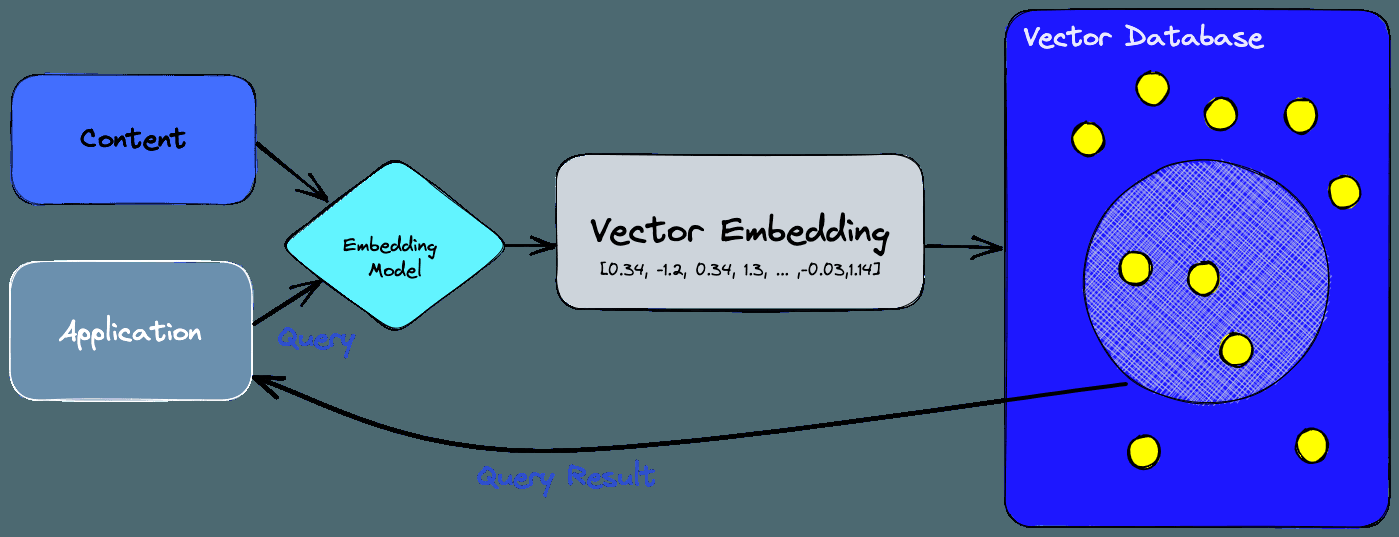
A vector database indexes embeddings and finds the nearest ones to a query vector, usually with an approximate nearest-neighbor (ANN) algorithm like HNSW. That is the retrieval step behind semantic search and most enterprise RAG systems: you embed documents, store the vectors, then fetch the closest matches to ground a model's answer.
Dedicated vector databases add filtering, metadata, horizontal scaling, and hybrid keyword-plus-vector search on top of that index. The alternative is bolting vector search onto a database you already run, which is where pgvector and Redis come in. The right choice depends on scale, whether you want to self-host, and how much operational burden you can absorb.
This is a different layer from the graph databases and time-series databases we have covered, and it feeds the models served by AI inference providers.
How we picked these
We weighted scale and recall at high vector counts; index flexibility (HNSW, IVF, DiskANN, quantization); hybrid search; deployment options (managed, self-hosted, open source, and license terms); operational burden; ecosystem integrations; and pricing transparency. We made no judgment about sponsorship or placement — none exists. Order reflects a defensible read of maturity and fit for the job, not alphabetical listing.
Quick comparison
| Company | Best for | Deployment | Pricing model |
|---|---|---|---|
| Pinecone | Zero-ops managed RAG | SaaS only (closed) | Free / usage / quote |
| Milvus / Zilliz | Billion-scale open source | OSS (Apache 2.0) + cloud | Free / pay-go / quote |
| Weaviate | Native hybrid search | OSS (BSD-3) + cloud | Free / usage / quote |
| Qdrant | Performance + filtering | OSS (Apache 2.0) + cloud | Free / usage / quote |
| Chroma | Prototype-to-prod RAG | OSS (Apache 2.0) + cloud | Free / usage |
| pgvector | Reuse existing Postgres | Postgres extension | Cost of Postgres |
| Redis | Sub-ms real-time search | OSS + cloud / enterprise | Free / Flex / quote |
1. Pinecone
Pinecone is a fully managed vector database with serverless separation of storage and compute, so you are not paying for idle clusters. It has added dedicated read nodes for latency-sensitive workloads and a Bring Your Own Cloud (BYOC) option that reached general availability in 2026, letting data stay in your own cloud account while Pinecone operates the service.
It is the most hands-off option here and the default for teams that want vector infrastructure to simply work. The trade-off is openness.
Best for: enterprise RAG teams that want zero-ops vector infrastructure.
Pros
- Storage/compute separation cuts idle cost versus always-on clusters.
- BYOC adds data-residency and compliance flexibility without full self-management.
- A mature SDK and integration ecosystem (LangChain, LlamaIndex) plus dedicated read nodes.
Cons
- Fully closed-source: no self-hosted path and full vendor lock-in.
- Pinecone's own docs note serverless index "freshness" can lag after large bulk inserts.
- Enterprise pricing is quote-based and hard to forecast at scale.
2. Milvus / Zilliz
Milvus is an open-source, distributed vector database built for billion-scale ANN search, with pluggable index types (HNSW, IVF, DiskANN) and GPU acceleration. It is Apache 2.0 and a graduated project under the Linux Foundation's LF AI & Data — a meaningful governance signal. Zilliz Cloud is the managed version from Milvus's founding company, offered as serverless pay-as-you-go and dedicated clusters.
If you need the largest scale without a proprietary engine, this is the reference choice.
Best for: teams needing massive-scale vector search with an open-source core and a managed fallback.
Pros
- Apache 2.0 with no field-of-use restrictions.
- Built for billion-scale search with multiple pluggable index types and GPU support.
- A dedicated company offers a managed path without forking the open-source code.
Cons
- Self-hosted distributed mode is operationally heavy, with etcd, object storage, and message-queue dependencies.
- The dual Milvus-OSS versus Zilliz-Cloud structure complicates support and pricing expectations.
- Zilliz Cloud dedicated and enterprise tiers are quote-based.
3. Weaviate
Weaviate is an open-source, AI-native vector database written in Go, with native hybrid search — combining HNSW vector search and BM25 keyword scoring in the core rather than as an add-on. It supports swappable vectorizer and reranker modules and vector compression (product, binary, and scalar quantization). The license is BSD-3-Clause; Weaviate Cloud provides the managed option.
Hybrid search being built in, not bolted on, is its clearest technical edge.
Best for: developers building hybrid keyword-plus-vector RAG with swappable embedding modules.
Pros
- Permissive BSD-3-Clause license with no usage restrictions.
- Native BM25-plus-vector hybrid search in the core engine.
- A modular architecture that decouples embedding and reranking from storage.
Cons
- Self-hosted multi-node clustering has a real learning curve.
- Managed Cloud enterprise pricing is quote-based above entry tiers.
- The module ecosystem adds configuration surface versus simpler single-purpose stores.
4. Qdrant
Qdrant is an open-source vector search engine written in Rust, known for filterable HNSW that avoids the accuracy collapse common when you pre- or post-filter results. It supports binary, scalar, and product quantization, and — unusually — publishes an open, reproducible benchmark suite on GitHub. The core is Apache 2.0, with Qdrant Cloud and a Hybrid Cloud option that keeps data in your infrastructure under Qdrant's control plane.
As of October 2026 it also lists Qdrant Edge in beta and Serverless as coming soon.
Best for: performance-focused teams wanting a lean engine with strong filtered-search guarantees.
Pros
- Documented filterable-HNSW design avoids the pre/post-filter accuracy trade-off.
- A fully open-sourced, reproducible benchmark methodology — rare transparency for the category.
- One Apache 2.0 core spans self-hosted, Cloud, and Hybrid Cloud.
Cons
- Qdrant's own FAQ concedes its vendor-run benchmarks are "probably biased."
- Newer lines (Edge, Serverless) are beta or unreleased, so non-core maturity is unproven.
- Enterprise and hybrid-cloud pricing is quote-based.
5. Chroma
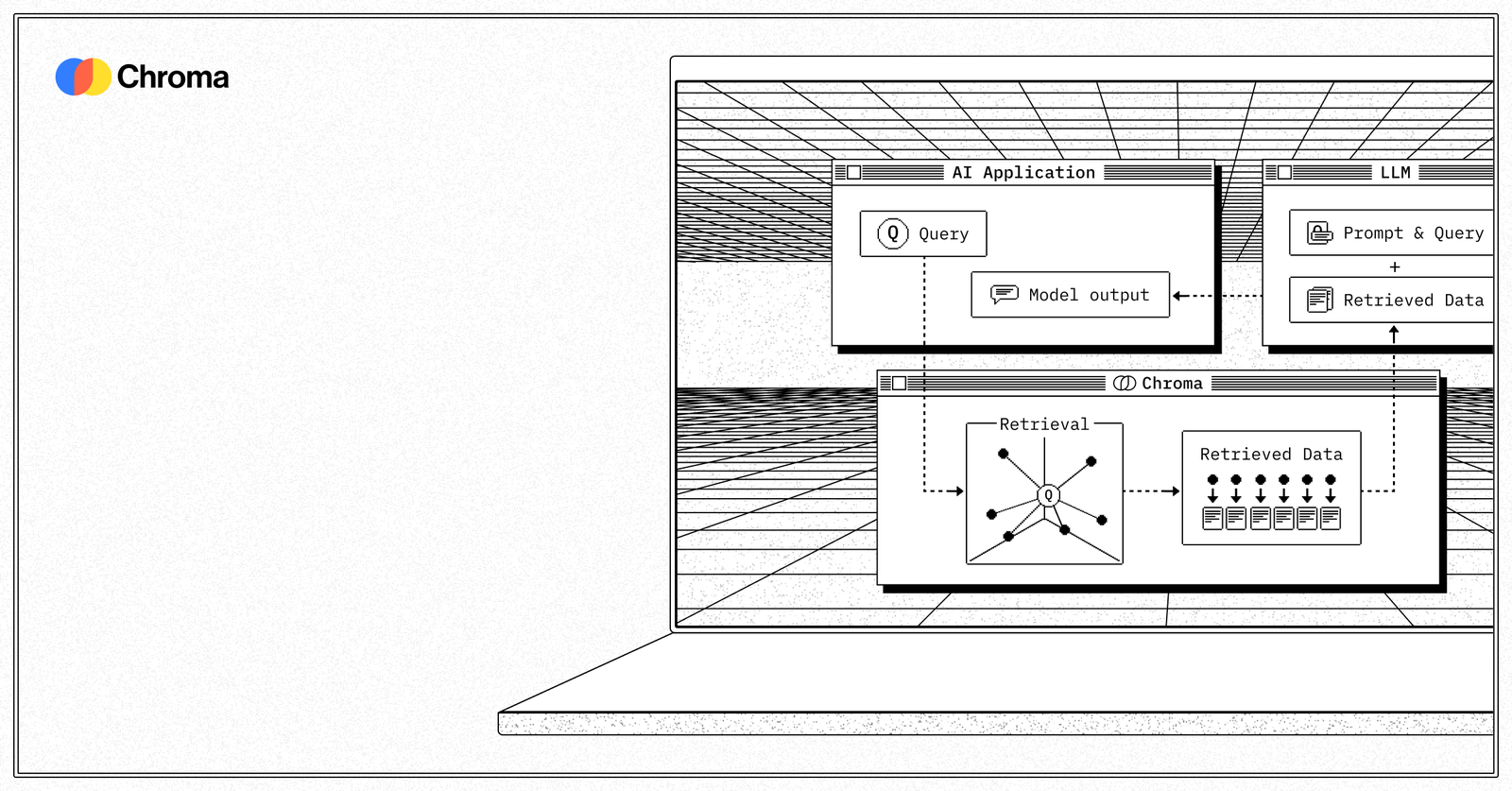
Chroma is an open-source embedding database built for low-friction RAG, with Python and TypeScript clients. It runs in-process for development and scales to a managed service, and Chroma Cloud — which reached general availability on a Rust-rewritten core — reuses the same client API as the open-source version, easing the local-to-production path. The license is Apache 2.0.
Its appeal is developer experience: pip install and you are running.
Best for: AI developers who want a lightweight store for prototyping that scales to managed cloud.
Pros
- Minimal-friction developer experience, popular for RAG prototyping.
- Apache 2.0, fully open source, with no restricted fields of use.
- Chroma Cloud reuses the open-source client API, smoothing migration.
Cons
- Chroma Cloud is a younger managed offering than Pinecone or Zilliz Cloud, with a shorter large-scale track record.
- The open-source single-node design historically trades off horizontal scale versus natively distributed engines.
- Cloud pricing transparency is limited to published entry tiers.
6. pgvector
pgvector is an open-source Postgres extension that adds a native vector type (plus halfvec and sparsevec) with exact search and approximate HNSW and IVFFlat indexes. It runs on any self-hosted Postgres and is bundled by every major managed provider, including AWS RDS and Aurora, Supabase, Neon, and Google AlloyDB. The license is the permissive PostgreSQL License, and it carries 23,200 GitHub stars as of October 2026.
It is not a separate database at all — which is exactly the point.
Best for: teams already on Postgres that want vector search without a new system.
Pros
- Zero extra infrastructure: vector search lives inside your existing Postgres.
- Permissive PostgreSQL License with no usage restrictions.
- Near-universal managed-Postgres support and 23,200 GitHub stars signal broad adoption.
Cons
- Not a purpose-built engine: recall and throughput at 100M+ vectors generally lag dedicated vector databases.
- Compute and storage are coupled to the whole Postgres instance.
- No built-in vector-specific multi-tenancy or serverless features — you build them in SQL.
7. Redis
Redis adds vector search to the in-memory store many teams already run, via the Redis Query Engine (HNSW and flat similarity over hashes and JSON) and the newer Vector Sets data type. The draw is latency: in-memory search returns results in sub-millisecond time.
Its licensing is the catch. Redis moved from BSD-3-Clause to source-available SSPLv1/RSALv2 in March 2024, then added AGPLv3 as a third option with Redis 8 in May 2025, restoring an OSI-approved open-source path. The result works but requires a careful compliance read.
Best for: teams already running Redis that want real-time vector search.
Pros
- Sub-millisecond in-memory latency for real-time vector lookups.
- Reuses infrastructure teams already operate, with no new system for basic needs.
- The AGPLv3 option in Redis 8 restores an OSI-approved open-source license path.
Cons
- Three co-existing license options (SSPLv1, RSALv2, AGPLv3) complicate compliance review.
- The in-memory design means the working set must largely fit in RAM — costly at very large corpus scale.
- Vector search is a capability on a general-purpose store, not a purpose-built engine, so feature depth trails dedicated vector databases.
How to choose
- You want zero operations and will pay for it: Pinecone.
- You need billion-scale and open source: Milvus, with Zilliz Cloud as the managed fallback.
- Hybrid keyword-plus-vector search is central: Weaviate.
- You care most about filtered-search performance: Qdrant.
- You are prototyping a RAG app: Chroma.
- You already run Postgres and are not at extreme scale: pgvector — the simplest answer for most teams starting out.
- You need real-time, sub-millisecond lookups and already run Redis: Redis, after reviewing the license.
For most teams, start with pgvector if you are on Postgres and move to a dedicated engine — Milvus, Weaviate, Qdrant, or managed Pinecone — when scale or recall demands it.
Frequently Asked Questions
What is a vector database?
A vector database stores high-dimensional embeddings and finds the ones most similar to a query vector, usually with an approximate nearest-neighbor algorithm. It powers semantic search, recommendations, and retrieval-augmented generation by letting applications search by meaning rather than exact keyword matches.
How do vector databases work?
Text, images, or other data are converted into embeddings by a model, then indexed — commonly with HNSW graphs — so similar vectors sit near each other. At query time the database embeds your query and returns the nearest vectors by cosine, dot-product, or Euclidean distance, often with metadata filtering applied.
Which vector database is best?
There is no single best. Pinecone leads for fully managed, zero-ops use; Milvus and Qdrant for open-source scale and performance; Weaviate for native hybrid search; and pgvector when you already run Postgres and are not at extreme scale. Match the tool to your scale and self-hosting needs.
Does RAG require a vector database?
Not strictly. Small or prototype RAG systems can use in-memory libraries like FAISS or a Postgres extension like pgvector. A dedicated vector database becomes worth it at scale, when you need filtering, hybrid search, horizontal scaling, and operational features that a library or bolt-on does not provide.
Is pgvector a real vector database?
pgvector is a Postgres extension, not a standalone database — it adds vector types and ANN indexes to Postgres. For many workloads that is sufficient and simpler. At very large vector counts, purpose-built engines like Milvus or Qdrant generally deliver better recall and throughput.
Editor's note — sources: Features, licenses, deployment models, and pricing structures are drawn from each vendor's official site, documentation, and GitHub as of October 2026, and attributed as vendor-stated where not independently verified. pgvector's 23,200 GitHub stars were confirmed directly; other star counts and funding figures are omitted where they could not be verified. The Redis license timeline reflects well-established public record.