
Top 7 eVTOL Companies Building Air Taxis in 2026
Joby, Archer, EHang, Beta, Vertical Aerospace, Eve and Wisk compared on certification progress, capital and aircraft capability - with Archer's Boeing deal reshaping the field.


Who this is for: investors, aviation operators and engineers tracking who is actually close to flying paying passengers. Two things reshaped the eVTOL field this year — Archer agreed in August to buy Boeing's Wisk, Insitu and SkyGrid in an all-stock deal, and the Gulf regulators overtook the FAA as the fastest route to commercial service.
The seven eVTOL companies that matter in 2026 are Joby Aviation, Archer Aviation, EHang, Beta Technologies, Vertical Aerospace, Eve Air Mobility and Wisk Aero. Only one of them — EHang — holds a full type certificate today, issued by China's CAAC for a two-seat autonomous aircraft. The rest are in certification programmes with the FAA, UK CAA, EASA or Brazil's ANAC, and the leaders are targeting first passenger flights in the UAE before their home regulators finish. This list ranks them on certification progress, capital position, and how large an operation each aircraft can realistically support.
How we picked these
Four criteria:
- Certification progress — measured in regulator-confirmed milestones (type certificates, means-of-compliance acceptance, formal test stages), not company press releases about first flights.
- Capital and runway — public filings, IPO proceeds, or a corporate parent deep enough to fund a decade-long certification programme.
- Aircraft capability — seats, range and payload, because a two-seat 30-km hop and a six-seat 160-km mission are different businesses.
- A credible route to revenue — an operating partner, a launch market, or a customer taking delivery.
We excluded companies that have ceased operations or entered insolvency, and dedicated cargo-drone makers with no passenger programme. Ranking runs from most advanced overall to earliest stage. Certification status is as of September 2026 and moves fast; check the regulator's own record before acting on any of it.
Quick comparison
| Company | Best for | Aircraft | Primary regulator |
|---|---|---|---|
| Joby Aviation | Nearest-term piloted passenger service | S4 (pilot + 4) | FAA, UAE GCAA |
| Archer Aviation | Scale, defense diversification | Midnight (pilot + 4) | FAA, UAE GCAA |
| EHang | Operating revenue today | EH216-S (2 seats, autonomous) | CAAC |
| Beta Technologies | Cargo and regional electric aviation | ALIA CTOL / VTOL | FAA |
| Vertical Aerospace | European certification standard | VX4 (pilot + 4) | UK CAA, EASA |
| Eve Air Mobility | Manufacturing depth via Embraer | Eve eVTOL (pilot + 4) | ANAC |
| Wisk Aero | Fully autonomous passenger flight | Generation 6 (4 seats) | FAA |
1. Joby Aviation
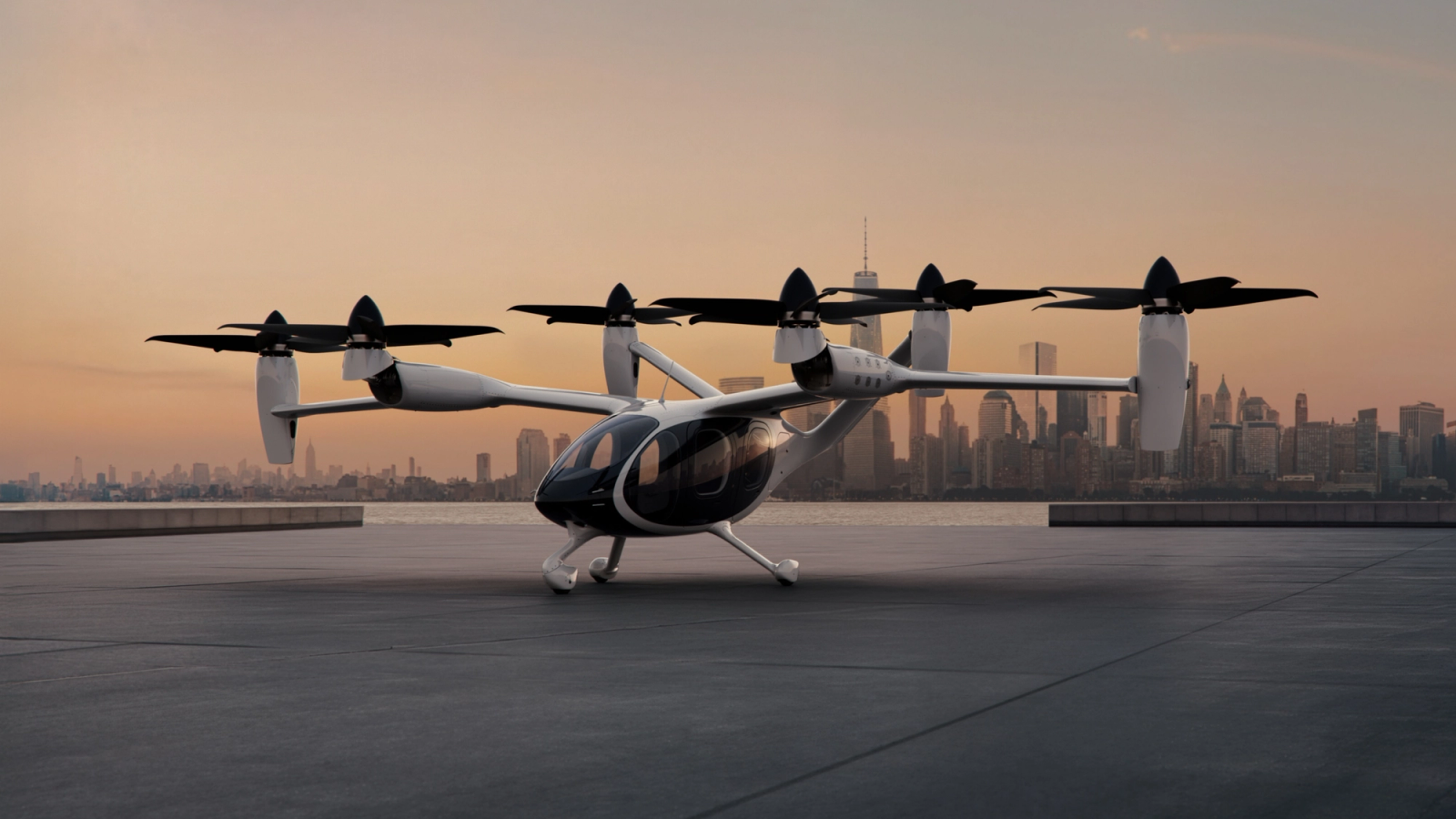
Joby Aviation is furthest along the FAA path. Its S4 aircraft carries a pilot and four passengers on six tilting rotors, and the company entered FAA Stage 4 type certification work in April 2026 — the second-to-last technical block before a US type certificate, covering Type Inspection Authorization flight testing with FAA pilots aboard conforming aircraft.
The commercial debut will not be American. Joby is working toward passenger service in Dubai under UAE GCAA approval, a faster path than FAA type certification, with a vertiport at Dubai International Airport as the first node of the network. Toyota is both an investor and a manufacturing partner.
Joby also acquired Uber Elevate in 2021, which is why its ride-hailing integration is further developed than most.
Best for: watching the first credible piloted air taxi service outside China.
Pros
- Furthest advanced of any winged eVTOL in the FAA type certification process.
- Dual regulatory strategy means UAE revenue can start before US certification closes.
- Toyota partnership brings automotive-scale manufacturing engineering, not just capital.
- Vertically integrated — builds its own motors, inverters and flight software.
Cons
- Still pre-revenue for passenger operations; every timeline to date has slipped at least once.
- Stage 4 is not the final stage, and TIA flight testing has historically taken longer than manufacturers project.
- Dubai is a small, weather-constrained launch market and tells you little about scaling to US cities.
- Heavy cash burn with no commercial service to offset it.
2. Archer Aviation
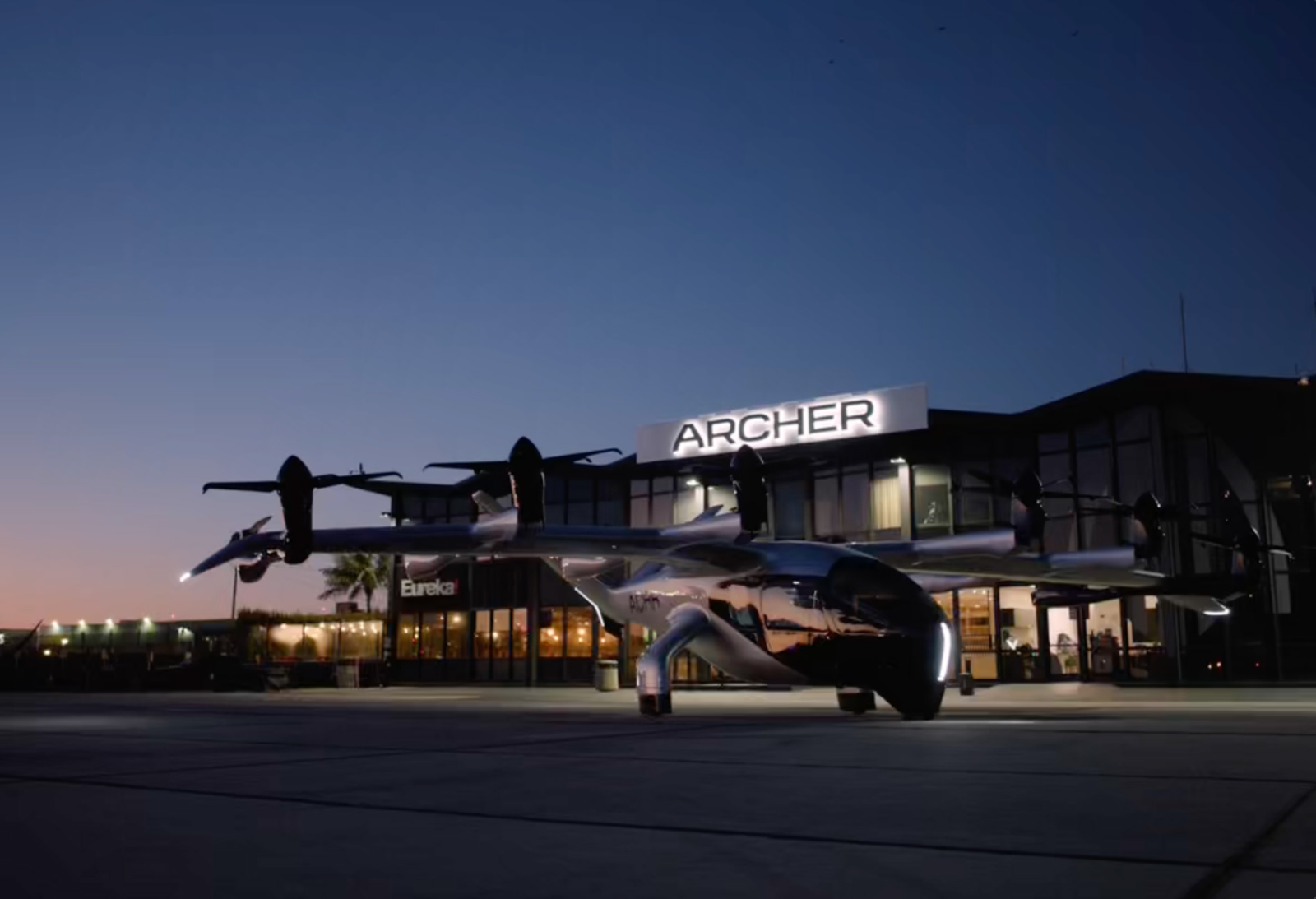
Archer Aviation builds Midnight, a pilot-plus-four aircraft designed for 20-to-50-mile trips with quick turnarounds. Archer says it reached 100% FAA acceptance of its means of compliance — the agreed methods for demonstrating the aircraft meets each certification requirement — and in May 2026 the UAE GCAA moved Midnight into a Restricted Type Certificate programme, a streamlined route to early commercial operations with Abu Dhabi Aviation as launch operator.
The bigger change is structural. On 9 August 2026 Archer signed an all-stock agreement to acquire Boeing's Wisk Aero, Insitu and SkyGrid, with Boeing taking Class A stock equal to 19.75% of Archer's outstanding Class A shares before closing, plus warrants and up to $55 million in a subsequent round. Insitu alone generates over $200 million in annual revenue, which gives Archer something no other eVTOL company has: a revenue business today.
Best for: exposure to eVTOL plus defense and uncrewed systems in one company.
Pros
- Full FAA acceptance of means of compliance, a concrete regulatory milestone rather than a flight-test claim.
- UAE Restricted Type Certificate path opens commercial operations earlier than full certification.
- The Boeing transaction adds autonomy (Wisk), airspace software (SkyGrid) and a revenue-generating uncrewed aircraft business (Insitu).
- Stellantis manufacturing partnership and a US assembly plant in Covington, Georgia.
Cons
- The Boeing deal is unclosed, pending antitrust review, and expected to complete only by end of 2026.
- Integrating three acquired businesses while certifying an aircraft is a serious execution risk.
- Boeing's stake and warrants are dilutive to existing shareholders.
- Restricted Type Certificates limit the scope of permitted operations — this is not equivalent to full certification.
3. EHang
EHang is the only company here with a finished certification. Its EH216-S holds a type certificate from the Civil Aviation Administration of China, awarded in October 2023, plus a standard airworthiness certificate and production certificate — the full set required for series manufacture and commercial passenger flight.
The aircraft is deliberately simple: a two-seat, sixteen-rotor multicopter with no pilot, no wing and no tilt mechanism. That design choice is why it certified first. It is also why it is a different product from the rest of this list — short-range sightseeing and point-to-point hops rather than the 50-mile airport-to-downtown mission Joby and Archer are aiming at.
EHang has published a suggested retail price of $410,000 for the EH216-S in markets outside China, which makes it the only eVTOL here with a public unit price.
Best for: operators wanting a certified autonomous aircraft available now.
Pros
- The only eVTOL in the world holding a full type certificate, airworthiness certificate and production certificate.
- Already generating revenue from aircraft deliveries and tourism operations in China.
- Published unit pricing at $410,000, unusual transparency in this sector.
- No pilot requirement removes the largest recurring cost in air taxi economics.
Cons
- Two seats and a short range make it unsuitable for the commuter missions the Western programmes target.
- CAAC certification does not transfer — FAA or EASA approval would be a separate multi-year programme.
- Concentrated almost entirely in the Chinese market, exposing it to a single regulatory and political environment.
- Multicopter architecture is inherently less energy-efficient in cruise than the winged designs here.

4. Beta Technologies
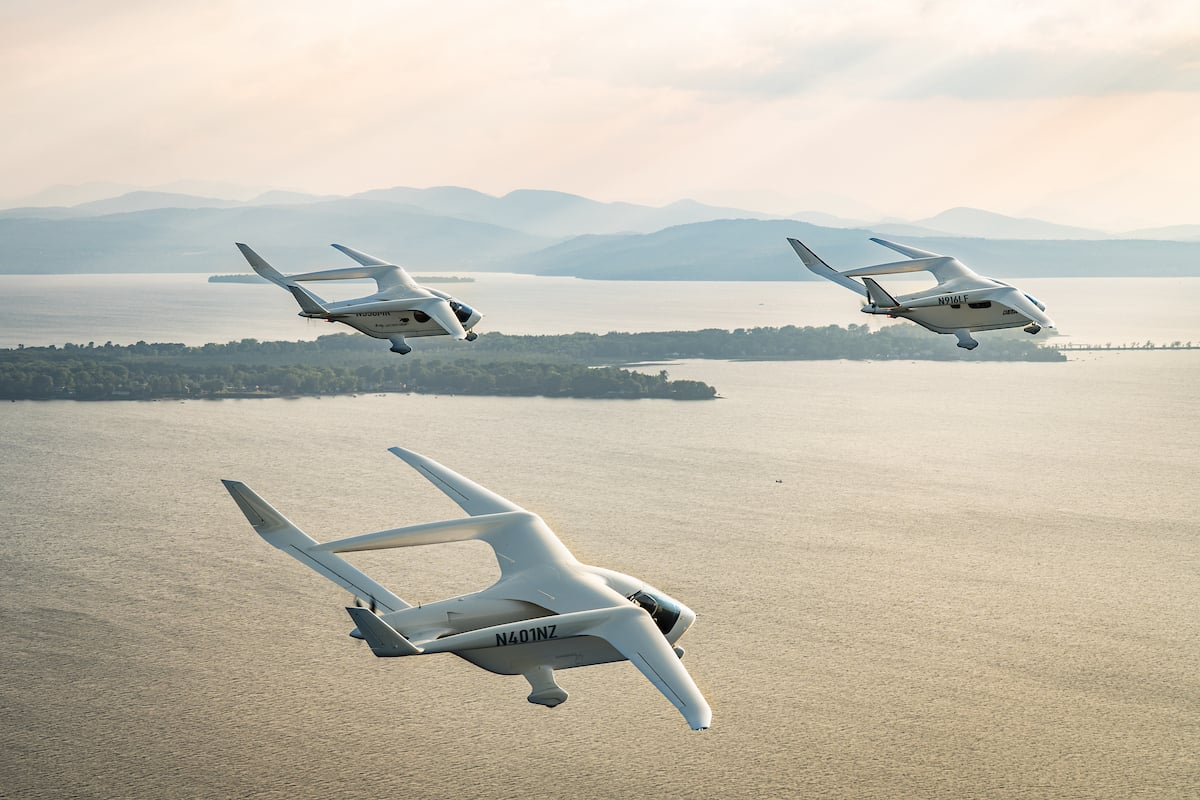
Beta Technologies took the least glamorous route and it is paying off. Rather than certifying a complex tilt-rotor first, Beta built ALIA in two configurations and is certifying the conventional-takeoff version — ALIA CTOL — ahead of the VTOL variant, targeting FAA Part 23 certification around the end of 2026 or early 2027, with VTOL certification targeted for late 2027 or early 2028.
That sequencing means Beta can sell an electric aircraft into cargo and regional routes while competitors are still in flight test. The company reports a backlog of more than 800 aircraft and over 190,000 nautical miles flown across its ALIA fleet. ALIA CTOL carries a pilot plus up to five passengers or cargo, with a demonstrated range of 336 nautical miles.
Beta completed its NYSE IPO on 4 November 2025, raising close to $1 billion at roughly a $7.44 billion valuation. It also builds and sells its own electric aircraft chargers, which are deployed across a growing US network.
Best for: electric aviation exposure that does not depend on VTOL certification arriving on time.
Pros
- Incremental certification path de-risks the programme — CTOL revenue can start before VTOL approval.
- Longest demonstrated range here at 336 nautical miles for ALIA CTOL.
- Roughly $1 billion raised at IPO gives it the strongest disclosed balance sheet among the pure-plays.
- Its charging network is a second product line and a moat for operators.
Cons
- The VTOL aircraft — the actual air taxi — is furthest from certification among the well-funded programmes.
- CTOL requires runways, so it does not address urban air mobility at all.
- Backlog figures are orders and options, which are cancellable and not the same as delivered revenue.
- Now public and subject to quarterly scrutiny on a programme that will take years more.
5. Vertical Aerospace
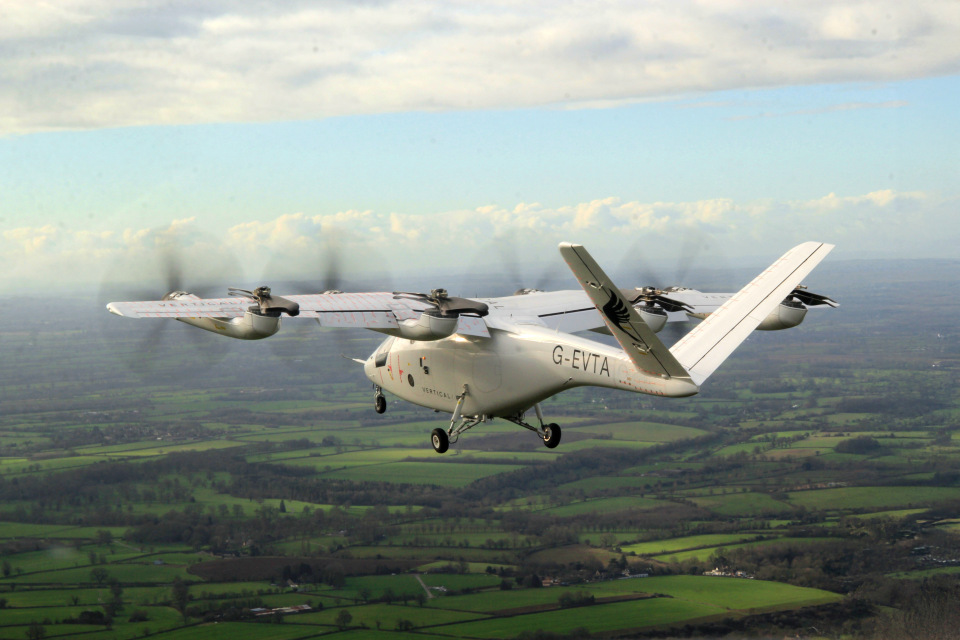
Vertical Aerospace is the European entry, certifying the VX4 — a pilot-plus-four winged eVTOL — under a Design Organisation Approval from the UK Civil Aviation Authority, with EASA running concurrent validation. In April 2026 the VX4 completed piloted thrustborne-to-wingborne transition at the company's Kemble facility, the manoeuvre that separates a working winged eVTOL from a large multicopter.
The company describes itself as the only operator flying a piloted winged eVTOL prototype under a CAA Design Organisation Approval. UK CAA and EASA certification bases are generally stricter than the FAA's for this aircraft class, which slows the programme but produces an approval that validates more readily into other jurisdictions.
Best for: a certification credential that travels well across European and Commonwealth markets.
Pros
- Piloted transition flight achieved — a milestone several better-funded competitors have not publicly matched.
- UK CAA Design Organisation Approval with concurrent EASA validation covers a large addressable market.
- Partnerships with established aerospace suppliers including Honeywell, GKN and Leonardo reduce bespoke engineering risk.
- Certifying to a stricter standard makes later validation into other regulators more straightforward.
Cons
- Materially less capital than Joby, Archer or Beta, and has raised repeatedly on dilutive terms.
- The stricter EASA and CAA basis means a later service entry than the US and UAE programmes.
- No announced launch operator or commercial service date comparable to Joby's Dubai plan.
- Fewer prototype aircraft flying, which limits flight-test throughput.
6. Eve Air Mobility
Eve Air Mobility is Embraer's eVTOL programme, spun out and publicly listed but still drawing on the parent's certification and manufacturing organisation. Its aircraft uses a lift-plus-cruise layout — dedicated vertical rotors plus separate pusher propellers — which avoids the mechanical complexity of tilting mechanisms at the cost of carrying dead weight in cruise.
Eve's primary certification path runs through Brazil's ANAC, with FAA and EASA validation planned concurrently. The company flew its full-scale prototype and is expanding the envelope toward wingborne flight through 2026, maintaining a 2027 service entry target.
The structural advantage is Embraer. Eve gets access to a manufacturer that has certified commercial aircraft repeatedly and runs a global service network — something no other company on this list has in-house.
Best for: betting on manufacturing and certification experience rather than first-mover speed.
Pros
- Embraer's certification track record and production capability behind the programme.
- Lift-plus-cruise architecture is mechanically simpler than tilt-rotor, with a more tractable safety case.
- Existing Embraer global services and support network is a genuine advantage for operators.
- Large disclosed letter-of-intent order book across multiple regions.
Cons
- Later in flight testing than Joby, Archer or Vertical; envelope expansion was still in progress through 2026.
- Lift-plus-cruise carries non-working rotors in cruise, costing range and efficiency versus tilt-rotor designs.
- ANAC as primary certifying authority means an added validation step for FAA and EASA markets.
- Order book is predominantly non-binding letters of intent.

7. Wisk Aero
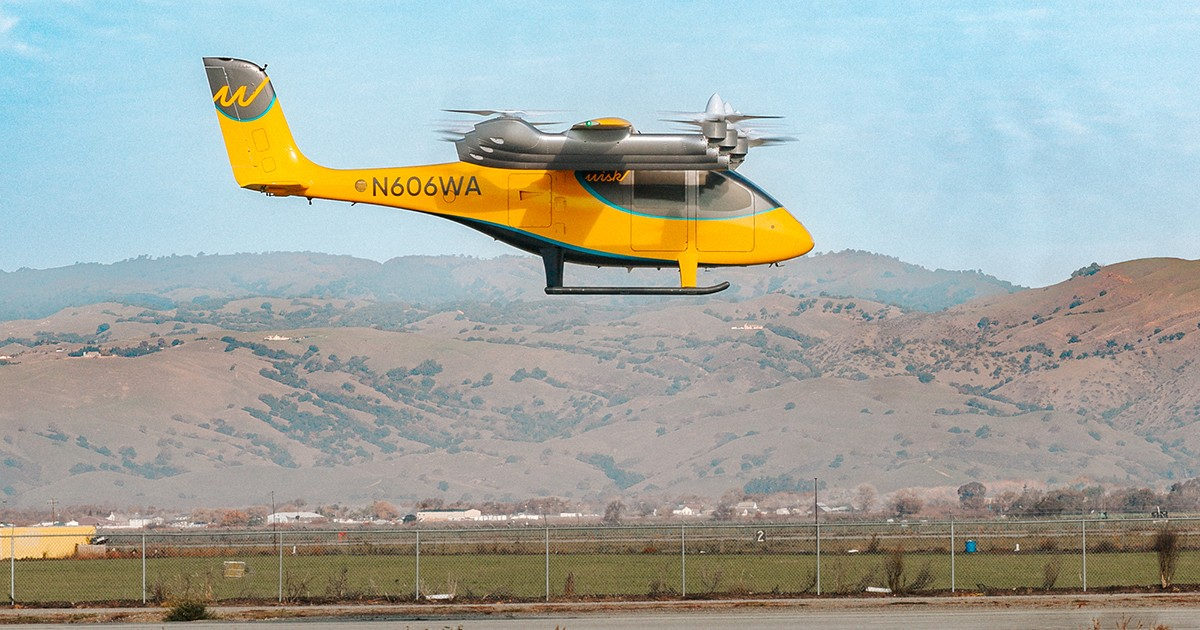
Wisk Aero is the only programme here designed from the start to fly with no pilot on board. Its Generation 6 aircraft seats four passengers, and in 2026 Wisk flew a second Gen 6 airframe, doubling its certification test rate. It describes the Gen 6 as the first candidate for certification of an autonomous passenger-carrying aircraft in the United States.
That autonomy-first choice makes its FAA path structurally different: the certification argument rests on the autonomy stack rather than on pilot performance, and there is no established precedent for approving it. Wisk participates in the FAA's eVTOL Integration Pilot Program, with the Texas Department of Transportation selected as a participant in March 2026 and Wisk as its principal private-sector partner.
Wisk was a Boeing subsidiary and is part of the all-stock package Archer agreed to acquire in August 2026, a transaction expected to close by year-end pending antitrust review.
Best for: tracking whether autonomous passenger flight can be certified at all.
Pros
- The only US programme flying a certification-candidate autonomous passenger aircraft.
- Removing the pilot removes the single largest recurring cost in air taxi unit economics.
- Doubled flight-test throughput in 2026 by operating a second Gen 6 airframe.
- Active participant in the FAA's eVTOL Integration Pilot Program alongside a state transport department.
Cons
- No regulatory precedent exists for certifying an autonomous passenger aircraft — the timeline is genuinely unknown.
- Its ownership is changing; the Archer transaction has not closed and roadmap priorities may shift afterward.
- Later to service than every piloted programme on this list, by design.
- Public consumer acceptance of pilotless passenger flight is untested outside China.
How to choose
What you should watch depends on what you are trying to decide.
- Want to see a working air taxi soonest? Joby in Dubai, then Archer in Abu Dhabi. Both are routed through UAE GCAA approvals, not the FAA.
- Want an aircraft you can buy and operate today? EHang. It is certified, priced and delivering — within the limits of a two-seat autonomous multicopter.
- Want electric aviation without VTOL certification risk? Beta Technologies. ALIA CTOL is a conventional aircraft with electric propulsion and a far shorter approval path.
- Operating in Europe? Vertical Aerospace, because a UK CAA and EASA approval is the credential that matters there.
- Prioritising manufacturing maturity over speed? Eve, for Embraer's certification and production depth.
- Assessing the long-term cost curve? Wisk. Nothing changes air taxi economics more than removing the pilot — if the FAA will approve it.
One caution applies to all seven: certification schedules in this sector have slipped repeatedly, and letters of intent are not orders. Weight regulator-confirmed milestones far above company announcements. For the ground-transport equivalent of this race, see our robotaxi company comparison; for the launch side of aerospace, our space launch roundup covers a market where the certification questions are already settled. Readers interested in the autonomy software underneath Wisk's approach may find our humanoid robotics roundup a useful contrast in how safety cases get built.
Frequently Asked Questions
What is eVTOL?
eVTOL stands for electric vertical takeoff and landing. These aircraft use distributed electric rotors to take off and land vertically like a helicopter, then — in winged designs — transition to horizontal flight for efficient cruise. The category covers everything from two-seat autonomous multicopters to five-seat piloted air taxis.
Which eVTOL company is the best?
There is no single answer, because the aircraft target different missions. EHang is the only company with a full type certificate and is delivering aircraft today. Joby and Archer are furthest along toward piloted air taxi service. Beta has the longest demonstrated range and the least certification risk.
Are eVTOLs safer than helicopters?
Regulators are certifying eVTOLs to safety targets comparable with commercial aircraft, which is stricter than the standard applied to most helicopters. Distributed electric propulsion means multiple rotor failures can be tolerated, unlike a single-rotor helicopter. But no eVTOL has enough passenger flight hours yet to prove this in service.
When will eVTOLs carry passengers?
EHang already carries passengers in China under CAAC certification. Joby and Archer are targeting first passenger flights in the UAE during 2026 under Gulf regulatory approvals. US commercial service depends on FAA type certification, which neither company had completed as of September 2026.
How much will an eVTOL cost?
EHang publishes a suggested retail price of $410,000 for the EH216-S outside China, the only public unit price in the sector. Western piloted aircraft are expected to cost substantially more, but Joby, Archer, Beta, Vertical, Eve and Wisk have not published unit pricing.
Editor's note — sources: Joby Aviation investor relations, Archer Aviation investor news, Boeing on the Archer transaction, EHang on its CAAC type certificate, EHang EH216-S pricing announcement, BETA Technologies, BETA Q2 2026 results filing, Vertical Aerospace, Eve Air Mobility, Wisk Aero. Certification status and figures verified September 2026 and subject to change.