
Top 7 Quantum Computing Cloud Platforms Worth Watching in 2026
IBM, Amazon Braket, Azure Quantum, IonQ, Quantinuum, Rigetti, and D-Wave — ranked on real hardware, honest tradeoffs, and what each platform actually lets you do today.


Quantum computing has quietly stopped being a research curiosity and started showing up on enterprise procurement lists. Not because anyone has found a killer app that beats classical computers at something a CFO cares about — that day hasn't arrived — but because the access model has matured faster than the hardware. You no longer need a physics PhD and a cryostat in your basement to run a circuit on a real quantum processor. You need a cloud account, a credit card or an enterprise agreement, and a reasonable amount of patience for queue times.
That shift has produced two very different kinds of company. Some, like Amazon and Microsoft, don't build qubits at all — they broker access to other people's hardware, the way a cloud marketplace brokers compute. Others, like IBM, IonQ, Quantinuum, Rigetti, and D-Wave, build and operate their own machines, and increasingly sell cloud access to them directly as well as through the brokers. The result is a landscape where the same physical processor might be reachable through three or four different consoles, each with its own pricing, its own SDK conventions, and its own claims about what "advantage" means.
We looked at seven platforms that enterprise teams, researchers, and quantum-curious engineering leaders are most likely to encounter in 2026: IBM Quantum, Amazon Braket, Microsoft Azure Quantum, IonQ, Quantinuum, Rigetti Computing, and D-Wave. This is not a ranking of qubit counts — qubit count alone tells you almost nothing about whether a machine can do useful work. It's a comparison of what each platform actually lets you do today, what it costs, and where the real limitations sit.
How we picked these
We prioritized platforms with a genuinely usable cloud access path in 2026 — not a research partnership announcement, not a "coming soon" waitlist. Each entry below had to have a live console or API, published or quotable pricing (even if it's "contact sales" for enterprise tiers), and at least one independently verifiable technical claim about its hardware or software, whether that's a fidelity number, a published benchmark, a named customer, or a peer-reviewed result. We deliberately included both hardware vendors and multi-vendor access brokers, because for most teams the real decision isn't "which qubit technology is best" — it's "which console do I want to log into," and the honest answer is often "whichever one your existing cloud contract already covers."
Ranking is ours, based on breadth of enterprise reach, hardware differentiation, and how much of each company's story is verifiable today versus aspirational. Reasonable people, including us on a different day, would order this list differently.
The 7 platforms, ranked
1. IBM Quantum
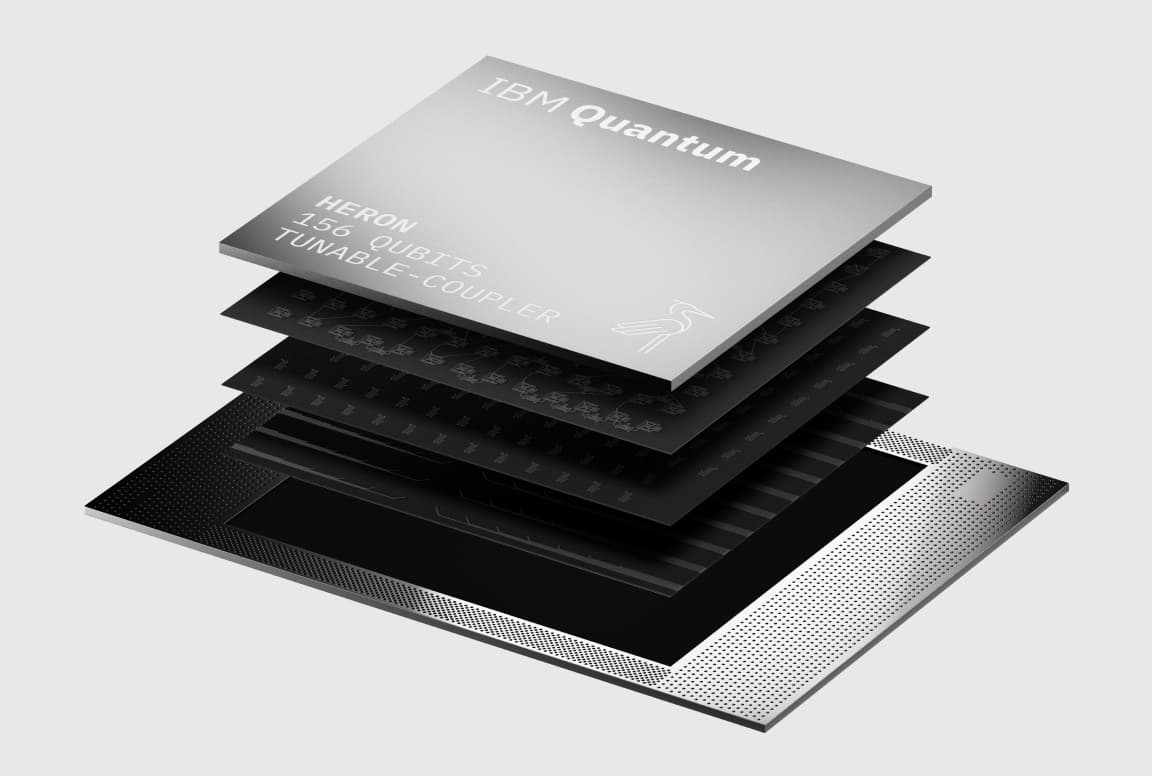
IBM has run a public quantum cloud program longer than anyone else on this list, and it shows in the breadth of what's available: a free tier (the Open Plan) for learning and small experiments, a large fleet of superconducting processors across the Heron family (133 and 156 qubits, depending on variant) and the newer Nighthawk chip (120 qubits, a square lattice designed for higher two-qubit connectivity and throughput up to 100kHz), and paid enterprise access to dedicated System Two installations in New York, Kobe, and San Sebastián, with a Chicago site tied to the new National Quantum Algorithm Center. IBM's own quality metric, EPLG (a layered-gate benchmark), sits around 3.7×10⁻³ on both Heron and Nighthawk. IBM has also published one of the more concrete fault-tolerance roadmaps in the industry, targeting a 200-logical-qubit, 100-million-gate machine called Starling by 2029.
Best for: teams that want the deepest bench of superconducting hardware, a genuine free tier to prototype on, and a long-term roadmap they can hold IBM accountable to.
Pros: largest and most diverse fleet of live processors of any single vendor; real free tier, not just a trial credit; published, dated fault-tolerance roadmap; strong open-source tooling (Qiskit) with a large community.
Cons: the free Open Plan's queue times and circuit limits make it unsuitable for anything beyond learning and small prototypes; dedicated System Two access is sold through direct enterprise conversations with no public price list, so budgeting requires a sales call; qubit counts, while high, still trail some competitors on raw two-qubit gate speed.
2. Amazon Braket
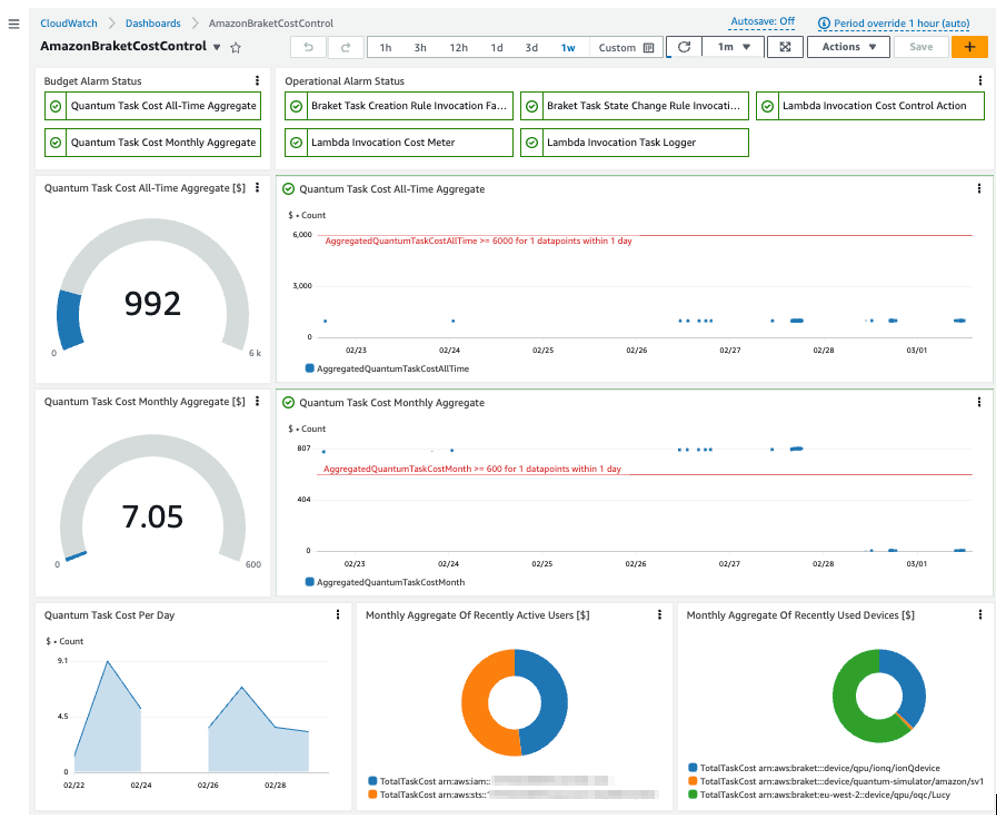
Braket's pitch is neutrality: instead of building its own qubits, AWS aggregates hardware from IQM, Rigetti, IonQ, and QuEra behind one console and one billing relationship, alongside its own classical simulators (SV1, DM1, TN1) for testing circuits before you pay for QPU time. Pricing is granular — a per-task fee, a per-shot fee, and simulator time billed per minute — which is flexible but also means costs can be hard to predict without discipline; AWS has responded to that complaint with tools like a spending-limit feature (added in 2026) and an open-source cost-control reference architecture that dashboards near-real-time spend by device and user. Braket Direct offers reserved hourly blocks on specific hardware for teams that need predictable access windows, and Braket Hybrid Jobs handles the classical-quantum orchestration loop that most real algorithms require.
Best for: teams already inside the AWS ecosystem who want to try multiple hardware vendors without separate contracts, or who need tight cost governance across many users.
Pros: access to several distinct hardware modalities (superconducting, trapped-ion, neutral-atom) through one account; mature classical simulators for pre-flight testing; genuinely useful cost-governance tooling, including the ability to auto-revoke task-creation permissions when a budget is hit.
Cons: Braket builds nothing itself — result quality is entirely a function of whichever third-party QPU you pick, and Braket's own roadmap is really "whichever partners AWS re-signs"; the per-task-plus-per-shot-plus-simulator-minute pricing model takes real effort to forecast at scale; you're one contract renegotiation away from a hardware partner disappearing from the marketplace.
3. Microsoft Azure Quantum
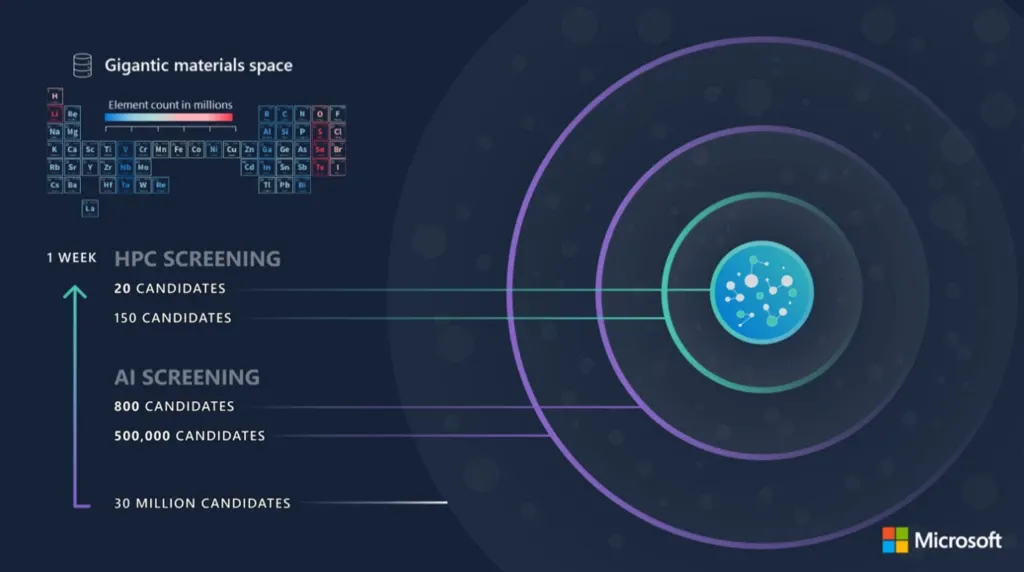
Azure Quantum follows the same broker model as Braket — hardware partners including IonQ, Quantinuum, Rigetti, Pasqal, and Atom Computing are reachable through one Azure subscription — but Microsoft has layered a more domain-specific product on top: Azure Quantum Elements, which combines AI models with quantum and quantum-inspired methods aimed specifically at chemistry and materials science, the use case Microsoft has bet is quantum's nearest-term commercial win. Microsoft has also invested directly in neutral-atom research through its partnership with Atom Computing, which has demonstrated 24 logical qubits (28 in a later configuration) using a different error-correction approach than the superconducting mainstream. Named enterprise customers experimenting with Quantum Elements include BASF, AkzoNobel, AspenTech, Johnson Matthey, and SCGC.
Best for: chemistry, materials, and pharma teams already on Azure who want AI-plus-quantum tooling rather than raw circuit access, and who value having quantum spend on the same invoice as the rest of their cloud bill.
Pros: Quantum Elements is a genuinely differentiated product, not just a hardware reseller page; broad multi-vendor hardware access including an unusual neutral-atom option; deep integration with Azure billing, identity, and compliance tooling enterprises already trust.
Cons: like Braket, Azure Quantum builds no hardware of its own, so its quality ceiling is set by partners it doesn't fully control; Quantum Elements' AI-plus-quantum framing is compelling marketing but the "quantum" contribution to any given result is often modest next to the classical AI component; capability is uneven across the partner roster, and getting genuine value requires real domain expertise, not just an API key.
4. IonQ
IonQ builds trapped-ion systems, a modality that trades slower gate speeds for very high native gate fidelity and all-to-all qubit connectivity, which simplifies certain algorithms considerably compared to the nearest-neighbor layouts common in superconducting chips. Its current generally-available systems, Forte and Forte Enterprise, run at 36 qubits; a fifth-generation system called Tempo, targeting roughly 100 qubits, is slated for late 2026. IonQ is reachable directly and through both Braket and Azure Quantum. Financially, IonQ has been the fastest-growing pure-play quantum company on this list: Q2 FY2026 revenue reached $80.1 million, up 287% year-over-year, with customer relationships including AWS and AstraZeneca cited in its public filings.
Best for: teams who want trapped-ion's connectivity and fidelity advantages today, or who are tracking IonQ specifically because of its revenue trajectory and roadmap commitments.
Pros: all-to-all qubit connectivity simplifies many circuit designs; strong, independently reported revenue growth suggests real commercial traction, not just research funding; available through multiple cloud brokers as well as directly, so there's no single point of vendor lock-in.
Cons: trapped-ion gate operations are inherently slower than superconducting equivalents, which matters for anything sensitive to wall-clock time; current GA systems top out at 36 qubits, meaningfully behind IBM's and Rigetti's qubit counts, with the larger Tempo system still a 2026 promise rather than a shipped product; a lot of IonQ's investment case rests on revenue growth off a still-small base, which is a different kind of risk than hardware risk.
5. Quantinuum
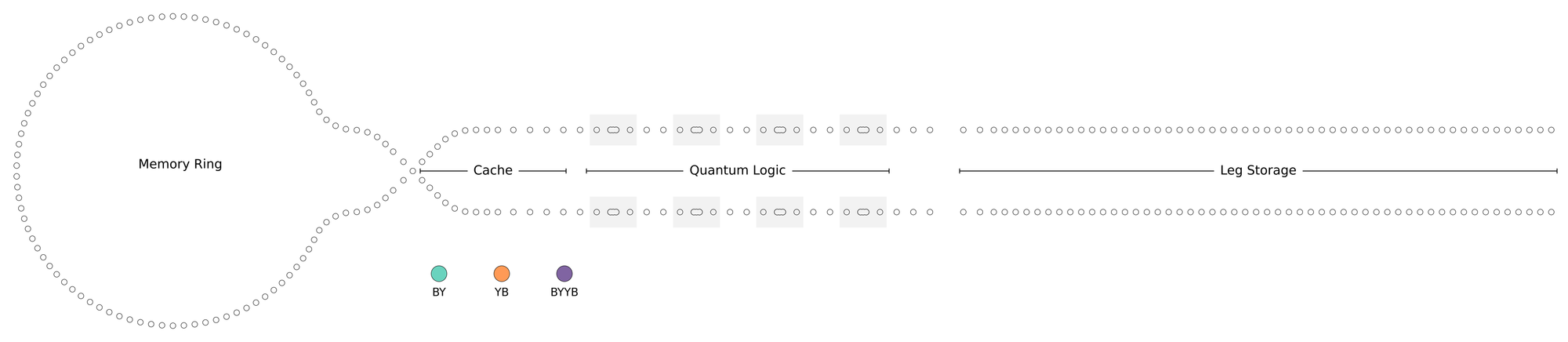
Quantinuum, formed from the merger of Honeywell's quantum business and Cambridge Quantum, runs the highest published two-qubit gate fidelity on this list: 99.921% on its Helios system, a 98-qubit trapped-ion machine. That number isn't just a press-release claim — it was validated through a peer-reviewed collaboration involving Sandia National Laboratories and published in Nature, which is a meaningfully higher evidentiary bar than most quantum hardware claims clear. Quantinuum has also attracted strategic partnerships and investment from Nvidia, JPMorgan, and others, and has an ongoing collaboration with Oracle and Quanta Computer on cloud delivery.
Best for: teams for whom gate fidelity, not qubit count or speed, is the binding constraint — error-sensitive algorithm research, or organizations that want the most independently scrutinized hardware claims available.
Pros: the highest published, peer-reviewed two-qubit fidelity of any platform here; serious institutional backing and strategic partnerships beyond typical VC funding; access available both directly and through Azure Quantum.
Cons: access skews more toward enterprise sales conversations than instant self-serve signup compared to IBM's or Braket's consoles; trapped-ion gate speed is, as with IonQ, slower than superconducting alternatives; at 98 qubits, Helios trails the largest superconducting fleets on raw scale, so the fidelity advantage comes with a size tradeoff.
6. Rigetti Computing
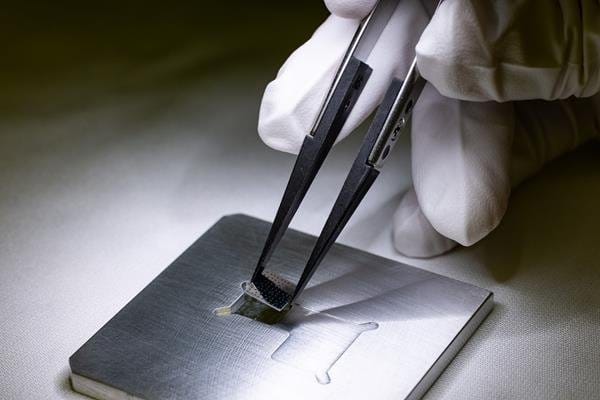
Rigetti's differentiator is architectural: rather than fabricating one large monolithic chip, it links smaller "chiplets" together, and its newest generally-available system, Cepheus-1-108Q, comprises 12 interconnected nine-qubit chiplets — triple the qubit count of its predecessor, Cepheus-1-36Q. The company reports 99.1% median two-qubit gate fidelity at roughly 60-nanosecond gate speed and 99.9% median single-qubit fidelity. Cepheus-1-108Q is reachable through Rigetti's own Quantum Cloud Services platform and through Amazon Braket. Rigetti has also committed to a UK expansion, with plans for a system exceeding 1,000 qubits by the end of the decade, backed by up to $100 million in announced investment.
Best for: teams specifically interested in the chiplet scaling approach as a bet on how superconducting quantum computing reaches higher qubit counts, or who want superconducting speed with a second independent hardware option beyond IBM.
Pros: a genuinely distinct scaling architecture (chiplets rather than monolithic chips) that gives it an independent path to higher qubit counts; fast gate speeds typical of superconducting systems; available through both its own platform and Braket, widening access.
Cons: 99.1% two-qubit fidelity trails Quantinuum's peer-reviewed 99.921%, and Rigetti's own fidelity figures haven't (as of this writing) been validated through comparable third-party peer review; the company has a more volatile financial and stock history than most peers on this list; the promised 1,000+ qubit system is a multi-year, end-of-decade target, not a current capability.
7. D-Wave
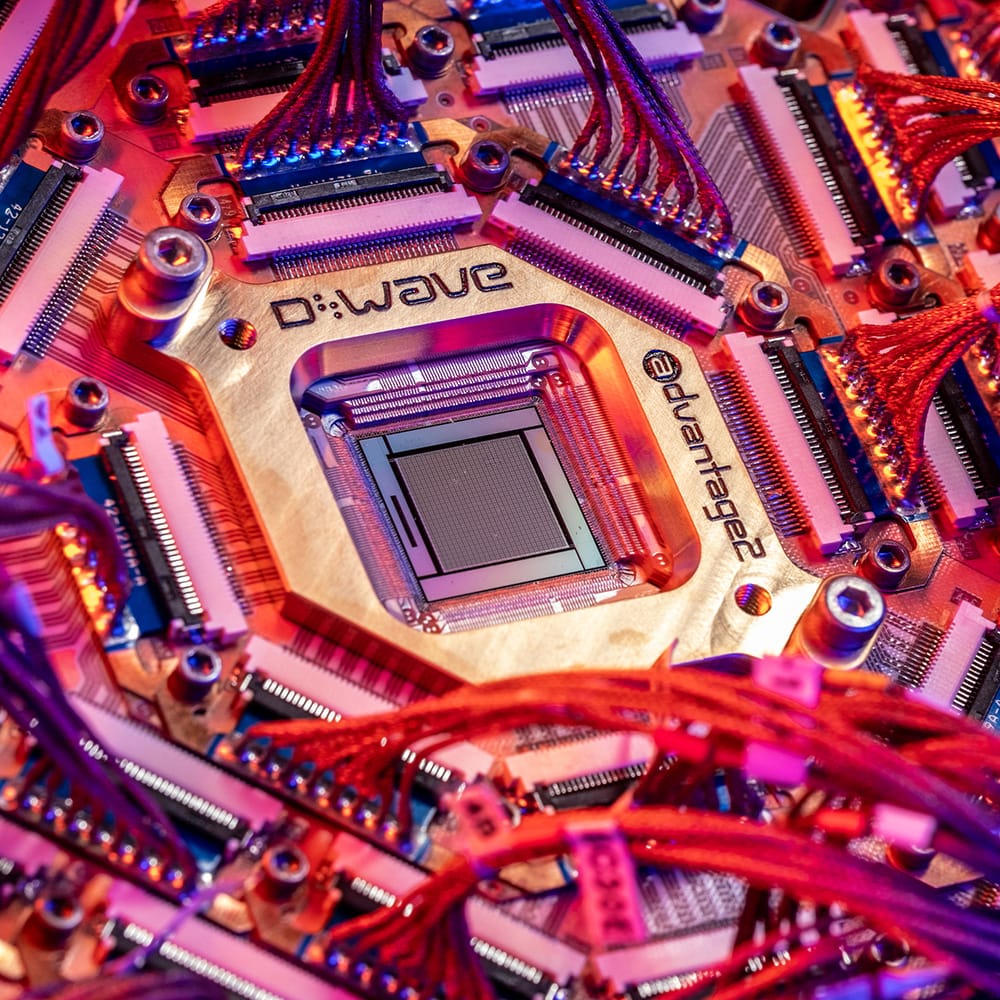
D-Wave is the outlier on this list because it isn't really competing in the same category as the other six. Its commercial product, the Advantage2 system, is a quantum annealer — purpose-built for optimization problems, not general-purpose gate-model computation — delivered through the Leap cloud service, alongside Stride, a hybrid solver that splits work between quantum and classical resources for industrial-scale problems. D-Wave has the longest list of named enterprise customers on this list actually running production workloads today, including Mastercard, BASF, Ford Otosan, NTT DOCOMO, Shionogi, Pattison Food Group, and the Jülich Supercomputing Centre. It also sells on-premises Advantage2 systems for organizations that want the hardware in their own facility, and has begun early gate-model research using a dual-rail architecture aimed at error-aware exploration.
Best for: organizations with a genuine, well-defined optimization problem — scheduling, routing, resource allocation — who want a production system with a real customer track record today, not a research roadmap.
Pros: the longest track record of named enterprise customers running real production optimization workloads of anyone on this list; a hybrid solver (Stride) that removes much of the algorithm-engineering burden from the customer; on-premises deployment option for organizations that need it in-house.
Cons: annealing solves a narrower class of problems than gate-model quantum computing — it cannot run algorithms like Shor's factoring or general quantum simulation, so buying D-Wave means committing to the optimization use case specifically; its gate-model ambitions are still early-stage research, not a shipping product; comparing D-Wave to the other six platforms on this list is genuinely apples-to-oranges, which is worth knowing before you shop it against them.
How to choose
Start with the problem, not the processor. If you have a concrete optimization problem today — scheduling, routing, resource allocation — D-Wave's annealing platform has more production mileage behind it than anything else on this list, and it's worth testing before you touch gate-model hardware at all. If you're doing general algorithm research, error-correction experimentation, or just want the broadest menu of hardware without new vendor contracts, Amazon Braket or Azure Quantum let you sample IBM's, IonQ's, Rigetti's, and other partners' machines through infrastructure you likely already have a relationship with. If fidelity is the binding constraint on your circuits, Quantinuum's peer-reviewed numbers are currently the strongest claim in the industry. And if you want the deepest single-vendor bench, a real free tier to learn on, and a dated roadmap to hold someone accountable to, IBM remains the default starting point for most teams new to the space.
Frequently asked questions
Is quantum computing actually useful for business today?
For a narrow set of optimization problems, yes — D-Wave's customer list includes production deployments at companies like Mastercard and BASF. For general-purpose gate-model quantum advantage on problems classical computers can't already solve well, the honest answer in 2026 is: not yet, for almost anyone. Most enterprise engagement right now is prototyping, benchmarking, and building internal expertise ahead of the hardware catching up.
What's the difference between annealing and gate-model quantum computers?
Annealing systems, like D-Wave's, are built to find low-energy solutions to specific optimization-shaped problems. Gate-model systems, used by IBM, IonQ, Quantinuum, and Rigetti, apply a sequence of quantum logic gates and can in principle run a much broader class of algorithms, including the ones most quantum-advantage research targets. They are not interchangeable, and a platform built for one doesn't substitute for the other.
Do I need to pick one hardware vendor, or can I try several?
You can try several without separate contracts by going through Amazon Braket or Microsoft Azure Quantum, both of which broker access to multiple hardware providers under one account. Going direct to a vendor like IBM, IonQ, Quantinuum, Rigetti, or D-Wave usually gets you closer to that vendor's own tooling and support, but locks you into their console.
Why isn't Google or PsiQuantum on this list?
We limited this roundup to platforms with a live, generally reachable cloud access path in 2026 with published or quotable pricing. Some notable quantum hardware efforts are further from a comparable self-serve or enterprise-sales cloud product at the time of writing, which is a fast-moving situation worth revisiting.
The takeaway
The interesting story in quantum computing right now isn't a qubit-count arms race — it's a quiet split in business models. Half the companies on this list don't build hardware at all; they've bet that owning the console and the billing relationship matters more than owning the cryostat. The other half are betting the opposite: that whoever ships the most reliable qubits first captures the value, regardless of who's selling the cloud access around it. Both bets could be right at once, the way AWS and Intel both mattered in the last computing era without competing directly. What's actually changed in 2026 is that a team with a real problem and a modest budget can now test that bet themselves, on real hardware, in an afternoon — which is a very different starting point than "quantum computing" implied even three years ago.