
Top 7 AI Code Review Tools for 2026
The 7 best AI code review tools for 2026, compared: CodeRabbit, Copilot, Qodo, Greptile, Graphite, Codacy, Bito — features, pricing and limits.

The best AI code review tools in 2026 are CodeRabbit, GitHub Copilot code review, Qodo, Greptile, Graphite, Codacy, and Bito. These tools read your pull requests, flag bugs and security issues inline, summarize changes, and suggest or apply fixes — cutting the manual review load without replacing human judgment. CodeRabbit leads on depth; Copilot wins on zero-setup distribution inside GitHub.
TL;DR
- CodeRabbit is the most feature-complete dedicated reviewer (inline comments, autofix, merge gating) at $24–$72/user/mo; free for open source.
- GitHub Copilot code review is native to GitHub PRs with zero setup, but from June 1, 2026 it consumes AI credits and, on private repos, your Actions minutes.
- Qodo offers the broadest version-control coverage and real on-prem/air-gapped deployment; Greptile and Bito lean on full-codebase and cross-repo context.
- Every tool here flags false positives. Treat AI review as a first pass that triages, not a replacement for a human approver.
AI code review tools use large language models to analyze a pull request against the surrounding codebase, then post inline comments, severity labels, change summaries, and one-click fixes before a human ever looks. The leaders split into two camps: dedicated reviewers that index your whole repo for deeper context (CodeRabbit, Qodo, Greptile, Bito), and platform-native features bolted onto where you already work (GitHub Copilot, Graphite, Codacy). They sit alongside, not instead of, the AI coding assistants that write the code in the first place. This guide ranks the seven that matter, with real pricing, deployment details, and the limitations each vendor would rather you skip.
How we picked these
We ranked on review capability, codebase-awareness, deployment flexibility, published pricing, and verifiable adoption — not marketing claims. Dedicated reviewers with repo-wide context and strong funding or customer rosters rank above incumbents that win mainly on distribution. We weighted honest cons equally: opaque pricing, single-vendor lock-in, narrow version-control support, and immaturity all pulled scores down. Pricing and features are as of November 2026 and come from vendor pages; anything not vendor-published is flagged in the text.
Quick comparison
| Tool | Best for | Deployment | Pricing model |
|---|---|---|---|
| CodeRabbit | Deepest dedicated line-by-line review | SaaS; self-host on Enterprise | Per-seat, $24–$72/user/mo |
| GitHub Copilot | GitHub-native teams wanting zero setup | SaaS (GitHub) | Bundled in Copilot plans; usage-based credits |
| Qodo | Enterprise, on-prem/air-gapped, broad VCS | SaaS + single-tenant/on-prem | Credit-based, pooled; Enterprise custom |
| Greptile | Deep bug detection via repo indexing | SaaS | $30/dev/mo + $1 per extra review |
| Graphite | Review inside a stacked-PR workflow | SaaS (GitHub) | Free / $20 / $40 per user/mo |
| Codacy | AI review bundled with SAST + quality gates | SaaS (cloud-only) | Free dev tier; Team from $18/dev/mo |
| Bito | Cost-conscious, cross-repo-aware teams | SaaS + self-host (Pro+) | From ~$12/seat/mo; Enterprise custom |
1. CodeRabbit
CodeRabbit is the most complete dedicated AI reviewer. It posts line-by-line inline comments, generates pull-request summaries, chats about the diff, and offers one-click autofix and pre-merge quality gates. Its "learnings" feature adapts to your past feedback so it stops repeating comments you've already dismissed, and it reviews in the IDE and CLI as well as the PR. It also runs a security "Deep Scan" and flags low-quality AI-generated code. Among standalone reviewers, nothing else covers this much surface.
Best for: Teams on GitHub or GitLab that want the deepest automated review plus merge gating.
Pros
- Reviews with full-repo context and persistent "learnings" that cut repeat comments over time.
- Broad surface area: PR review, IDE, CLI, Slack triage, security Deep Scan, and autofix in one tool.
- Named enterprise customers (Indeed, Adyen, JFrog, Swiggy) and a $60M Series B (September 2025) signal runway.
Cons
- Per-seat pricing climbs quickly across the Essentials/Team/Advanced tiers ($24–$72/user/mo as of Nov 2026).
- Self-hosting is locked to the Enterprise tier only.
- Recent plan renaming and usage-based overages make cost harder to forecast.
2. GitHub Copilot code review
GitHub Copilot now includes a dedicated pull-request reviewer, separate from its autocomplete. Add Copilot as a reviewer — or auto-review every PR — and it returns inline comments with suggested changes, High/Medium/Low severity labels, an overall assessment, and "Fix with Copilot" remediation through a cloud agent. You can tune effort across three levels and request reviews from GitHub.com or the gh CLI. Its advantage is distribution: it lives in the PR interface every GitHub team already uses, and admins can enable it org-wide, including for members without a Copilot seat.
Best for: Any team already on GitHub that wants zero-setup PR review.
Pros
- Zero integration work — it runs inside the native GitHub PR flow.
- Suggested changes plus "Fix with Copilot" cloud-agent remediation and severity triage.
- Backed by Microsoft/GitHub, with org-wide enablement for non-licensed members.
Cons
- GitHub-centric: Azure Repos is only in preview, and there's no GitLab or Bitbucket support.
- From June 1, 2026, code review consumes AI credits and, on private repos, your included GitHub Actions minutes — a cost shift critics call "paying twice."
- Less codebase-wide, architectural depth than indexing-based specialists; no self-host.
3. Qodo
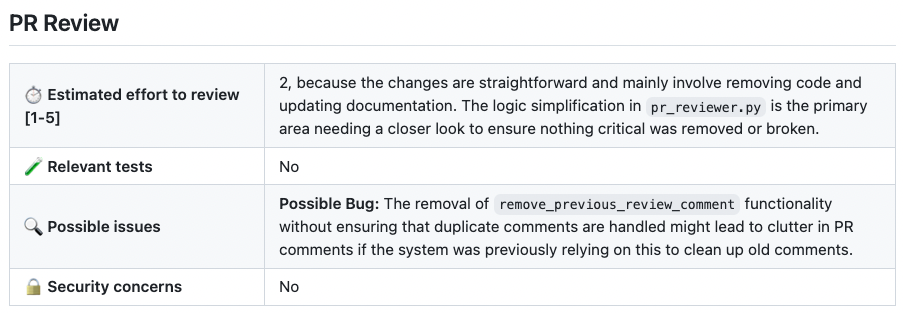
Qodo — formerly CodiumAI, renamed in September 2024 — pairs agentic "Multi-Agent Code Review" with AI test generation and rules-based governance. Its reviewer enforces your organization's standards on every PR across the IDE, CLI, and Git, and its open-source heritage is the widely used PR-Agent (MIT license, ~13.6k GitHub stars), now maintained as a legacy community project. Qodo's standout is reach: it is one of the few tools here with a genuine on-prem and air-gapped option plus the broadest version-control support.
Best for: Enterprises needing review, test generation, and governance with self-hosting and wide VCS coverage.
Pros
- Widest version-control coverage, including Azure DevOps and Gerrit, with real on-prem/air-gapped deployment.
- Combines review with AI test generation and standards enforcement, not review alone.
- The open-source PR-Agent (MIT) lets teams self-run a reviewer at no cost.
Cons
- Credit-based pricing ($0.015/credit, pooled) is opaque; per-pack dollar prices aren't published, making budgets hard to forecast.
- No permanent free tier beyond a 14-day trial and an open-source program.
- Brand and product churn (CodiumAI → Qodo, PR-Agent now "legacy") can confuse buyers.
4. Greptile
Greptile builds its review on full-codebase indexing and mines your engineers' past GitHub and GitLab comments to learn house style. It reads configuration files like CLAUDE.md for personalization, emits copyable fix-prompts alongside one-click fixes, and ships an MCP server so coding agents such as Cursor or Devin can pull its rules. Greptile positions itself on deep bug detection rather than breadth, and it raised a $25M Series A led by Benchmark in September 2025.
Best for: Teams prioritizing high-signal bug catching with whole-repo context.
Pros
- Full-repo indexing plus comment-mining to match your team's established conventions.
- MCP server and fix-prompt export plug review directly into coding agents.
- Benchmark-led funding with named customers including Substack, Brex, and PostHog.
Cons
- A $1-per-review charge over the 50/month base can surprise high-volume teams and drew public pricing criticism in 2026.
- Narrower version-control support (GitHub and GitLab; no confirmed Bitbucket or Azure DevOps).
- The youngest and smallest of the funded set; its bug-catch rates are vendor-reported and unverified.
5. Graphite
Graphite is a stacked-pull-request platform whose AI reviewer — now merged with chat into "Graphite Agent" — suggests fixes directly in the diff and lets you go from feedback to commit in one conversation. The distinction is where review happens: inside a stacked-diff and merge-queue workflow rather than as a standalone bot. It's backed by a $52M Series B led by Accel (March 2025), with Anthropic's Anthology Fund and Shopify Ventures participating, and names Shopify, Snowflake, Figma, and Perplexity as customers.
Best for: Teams adopting stacked diffs who want review inside that workflow.
Pros
- Review is integrated with stacked PRs and a merge queue, not bolted on.
- The agent suggests in-diff fixes and supports a feedback-to-commit loop in chat.
- Strong backing (Accel, Anthropic, a16z) and marquee customers.
Cons
- GitHub-only — no GitLab, Bitbucket, or Azure DevOps.
- Value is tied to adopting Graphite's stacking workflow, a heavier buy-in than a standalone reviewer.
- No stated self-host option; the reviewer is one piece of a broader paid platform.
6. Codacy
Codacy is an established code-quality and security platform — static analysis, linters, coverage, secrets and SAST scanning — that layered an "AI Reviewer" on top. The result pairs AI pull-request feedback and fix suggestions with deterministic quality gates and policy, so review sits alongside traditional scanning in one place. For teams that want governance and compliance rather than an LLM reviewer alone, that breadth is the draw.
Best for: Teams wanting AI review bundled with mature SAST and quality gates.
Pros
- AI review layered on mature static analysis, linting, coverage, and merge gates.
- A genuinely free Developer tier plus free scanning for public and open-source repos.
- Clear, published per-seat pricing (Team from $18/dev/mo, billed yearly, as of Nov 2026).
Cons
- Cloud-only — no on-prem Codacy or on-prem Git support per its current FAQ.
- Azure DevOps support is waitlisted, not generally available.
- The AI reviewer is newer and less differentiated than indexing-native specialists.
7. Bito
Bito is an AI code-review agent that reviews pull requests against wider system context — code, commits, issues, docs, and Slack — through what it calls an "AI Architect." It maps services, APIs, and dependencies across repositories to flag cross-repo blast radius and validates PRs against Jira or Confluence specs. That cross-repo, architecture-aware analysis is its differentiator, and it undercuts rivals on price with a real self-host option from its Professional tier up.
Best for: Cost-conscious small and mid-size teams wanting self-hostable, cross-repo-aware review.
Pros
- Cross-repo dependency and blast-radius mapping, plus Jira/Confluence spec validation.
- Lowest entry price in this list (from ~$12/seat/mo) with on-prem Docker self-hosting from Professional up.
- Covers GitHub, GitLab, and Bitbucket.
Cons
- Smallest funding ($5.7M seed) and the thinnest public adoption proof here.
- Line-based usage caps (5,000 lines/seat, then $5 per extra 1,000) add metering complexity.
- No permanent free tier, and little independent benchmarking of review quality.
How to choose
Match the tool to your stack and your appetite for setup. If you're all-in on GitHub and want nothing to configure, start with Copilot code review — just budget for the June 2026 credit and Actions-minute billing. If you want the deepest dedicated review and run GitHub or GitLab, CodeRabbit is the safe default. If you're an enterprise with on-prem, air-gapped, or Azure DevOps/Gerrit requirements, Qodo is the only one here that genuinely fits. Teams chasing maximum bug-catch signal should trial Greptile against CodeRabbit on the same repo and compare noise. If you've already adopted stacked diffs, Graphite keeps review in that flow. Want AI review plus SAST and compliance in one platform? Codacy. On a tight budget or with heavy cross-repo dependencies, Bito. AI review also complements, rather than replaces, the rest of your toolchain — a dedicated SAST scanner and your CI/CD pipeline still do their jobs. Whatever you pick, keep a human approver in the loop: every tool here produces false positives, and none should hold merge authority alone.
Frequently Asked Questions
How does AI code review work?
An AI reviewer ingests a pull request's diff plus surrounding context — often the whole repository via indexing — and uses a large language model to flag likely bugs, security issues, and style violations. It posts inline comments, a change summary, and suggested or one-click fixes, then a human decides what to accept before merging.
What are the best AI code review tools?
CodeRabbit offers the deepest dedicated review, while GitHub Copilot code review wins on zero-setup GitHub integration. Qodo leads for enterprise and on-prem needs, Greptile for bug-detection depth, Graphite for stacked-PR workflows, Codacy for bundled SAST, and Bito for affordable cross-repo analysis. The right pick depends on your version-control system and deployment constraints.
Can AI replace human code reviewers?
No. AI code review tools catch many bugs and handle repetitive checks faster than people, but they also produce false positives and miss context a human teammate understands. Treat them as a high-coverage first pass that triages pull requests; keep a human as the approver who holds merge authority and judges intent.
How much do AI code review tools cost?
Pricing ranges from free tiers for open source to roughly $12–$72 per developer per month in 2026. Greptile charges $30/dev plus $1 per review over 50; Graphite runs $20–$40; Codacy starts at $18. GitHub Copilot bundles review into paid Copilot plans with usage-based credits. Enterprise and on-prem plans are quote-based.
Are AI code review tools accurate?
They are useful but imperfect. Indexing-based tools like Greptile and CodeRabbit catch more real bugs by reading the whole codebase, but every vendor's accuracy and false-positive claims are self-reported and unverified by independent benchmarks. Expect noise, tune the tool to your conventions, and measure results on your own repositories before trusting it widely.
Editor’s note — sources: Pricing, funding and feature details were taken from each vendor’s own site and documentation as of November 2026 — CodeRabbit, Qodo (formerly CodiumAI), Greptile, Graphite, Codacy and Bito — plus the GitHub changelog on Copilot code review’s June 2026 billing change. Funding rounds (CodeRabbit’s $60M Series B, Greptile’s $25M Series A, Graphite’s $52M Series B, Qodo’s $40M Series A) are from vendor and press announcements. Vendor accuracy and bug-detection claims are self-reported and not independently benchmarked.