
Top 7 Brain-Computer Interface Companies in 2026
Neuralink, Synchron, Blackrock Neurotech, Paradromics, Precision Neuroscience, Onward Medical and Science Corporation compared on human evidence, regulatory status and real limitations — where no BCI is yet approved anywhere.


For investors, clinicians and engineers tracking a field where the headlines have raced far ahead of the regulatory record — and where, as of September 2026, no company anywhere in the world has an approved brain-computer interface.
The leading brain-computer interface companies in 2026 are Neuralink, Synchron, Blackrock Neurotech, Paradromics, Precision Neuroscience, Onward Medical and Science Corporation. Together they account for the overwhelming majority of humans who have ever used an implanted neural interface — a population still numbering in the low dozens. Every device on this list is investigational. Not one has FDA approval or clearance as a brain-computer interface, and the two market authorisations that do exist in this group cover devices that are not, strictly speaking, brain interfaces at all.
What changed recently is real, though. Paradromics announced the first real-time free speech decoded from its chronic implant on 14 September 2026. Synchron closed a $200m Series D. And Science Corporation received a CE mark in July 2026 for a retinal implant it markets under the BCI banner.
How we picked these
This category is unusually easy to write badly, because the vocabulary is routinely misused. So the criteria here are deliberately narrow:
- Depth of human evidence. Number of people implanted, publicly stated by the company or documented in a trial registry — not aggregator estimates.
- Regulatory reality. An FDA Breakthrough Device Designation is expedited-review status, not approval. An IDE is permission to start a trial. Only 510(k), De Novo, PMA, HDE or a CE mark constitute market authorisation. This article keeps those distinct.
- Genuine neural interfacing. Does the device record and decode neural signals, or only stimulate?
- Published evidence. Whether results have cleared peer review or exist only as press releases.
- Funding durability and concentration of capital sources.
- Honest risk accounting. Surgical burden, durability, bandwidth ceilings.
Ranking runs from deepest human brain-interface evidence to thinnest, weighted by regulatory progress. Several well-funded companies are excluded deliberately. INBRAIN Neuroelectronics has completed an impressive graphene-array first-in-human study, but every human exposure lasted a single operation. Motif Neurotech received an FDA IDE in April 2026 and has performed zero chronic human implants. Companies applying AI to diagnosis and treatment rather than to implants are covered separately in our healthcare AI roundup and among AI drug discovery companies. Neurable sells consumer EEG headphones with no medical clearance and is not a clinical BCI developer. Claims are stated as of September 2026.
Quick comparison
| Company | Best for | Approach | Regulatory status |
|---|---|---|---|
| Neuralink | Highest channel count, most human data | Penetrating intracortical, 1,024 electrodes | Investigational; two Breakthrough designations |
| Synchron | Least surgical burden | Endovascular stent-electrode, no craniotomy | Investigational; Breakthrough designation 2020 |
| Blackrock Neurotech | Longest human track record | Penetrating Utah Array, percutaneous pedestal | Investigational; Breakthrough designation 2021 |
| Paradromics | Speech restoration bandwidth | Penetrating, 421 electrodes, fully wireless | Investigational; IDE approved Nov 2025 |
| Precision Neuroscience | Reversible, non-penetrating placement | Subdural thin-film surface array | 510(k) for ≤30-day mapping electrode only |
| Onward Medical | Nearest to a paying customer | Spinal stimulation + epidural ECoG brain implant | De Novo for ARC-EX; BCI investigational |
| Science Corporation | Strongest clinical dataset | Subretinal photovoltaic implant | CE mark for PRIMA; brain program preclinical |
1. Neuralink
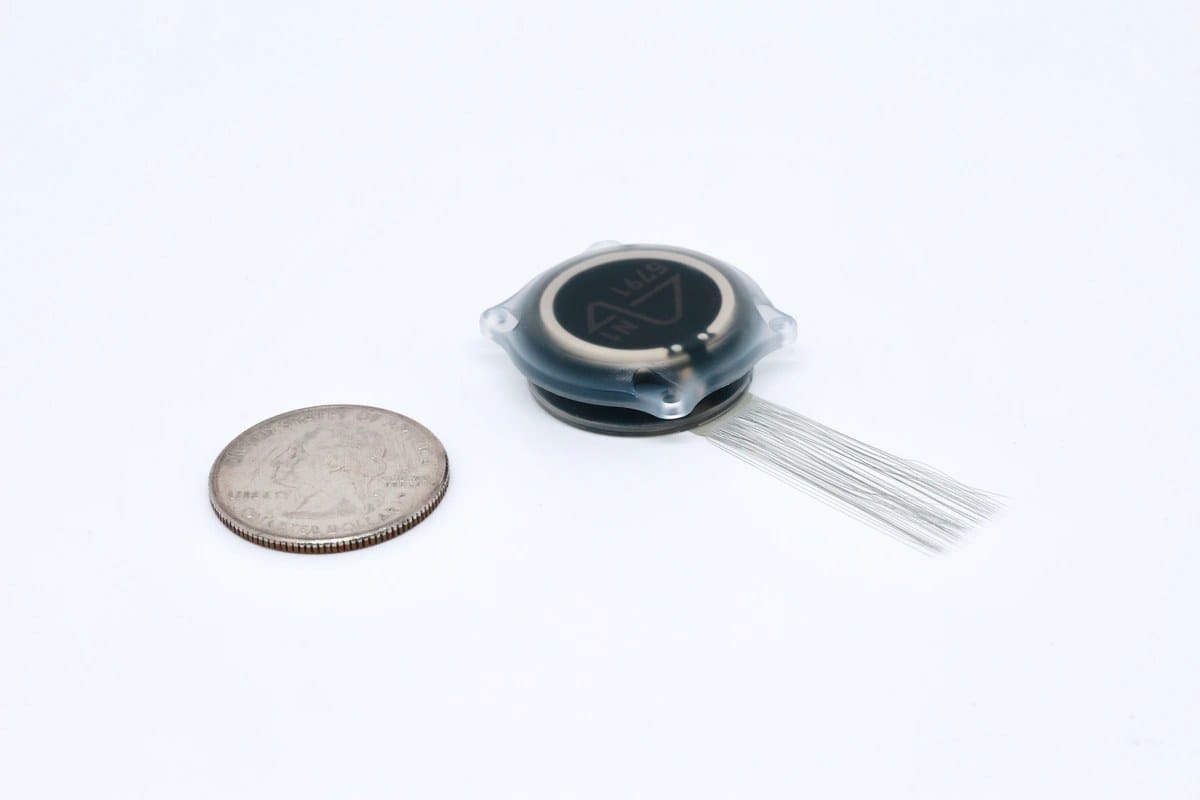
Neuralink builds the N1 implant, marketed as Telepathy: a penetrating intracortical device with 1,024 electrodes distributed across 64 flexible threads, inserted individually into motor cortex by a surgical robot. It is fully implanted, wireless and sits flush with the skull, with no percutaneous connector — a design constraint that puts it closer to the edge AI power envelope than to a datacentre one. The procedure requires a craniotomy and opens the dura.
The company announced 21 participants in a January 2026 post, with implants running across six registered trials in the US, Canada, the UK and the UAE, including a speech study that began in October 2025. It raised a $650m Series E in June 2025. It holds Breakthrough Device Designations for Blindsight (September 2024) and speech (May 2025). Neither is an approval.
Best for: high-bandwidth cursor and device control where maximum channel count justifies maximum surgical risk.
Pros - 1,024 electrodes is the highest channel count in clinical use, by a wide margin - Fully implanted and wireless, with no transcutaneous infection vector - Roughly twice the participant count of any competitor, across four countries - Six registered trials give it the broadest clinical footprint in the field
Cons - Thread retraction remains unresolved. The company's own January 2026 wording — higher signal quality in "18 of the subsequent 20 participants" — means two of twenty still saw degraded signal after mitigations - Zero peer-reviewed clinical publications. Every performance claim originates in company blog posts and videos, with no independent replication - The company states it still sees performance variance correlated with anatomy and disease stage — an unsolved problem, in its own words - Hardware is changing mid-programme, with plans to move from 1,000 to 3,000 electrodes, so current results may not transfer - FDA inspectors documented quality-control problems at its animal facility in 2023, and no company blog update has been published since January 2026
2. Synchron
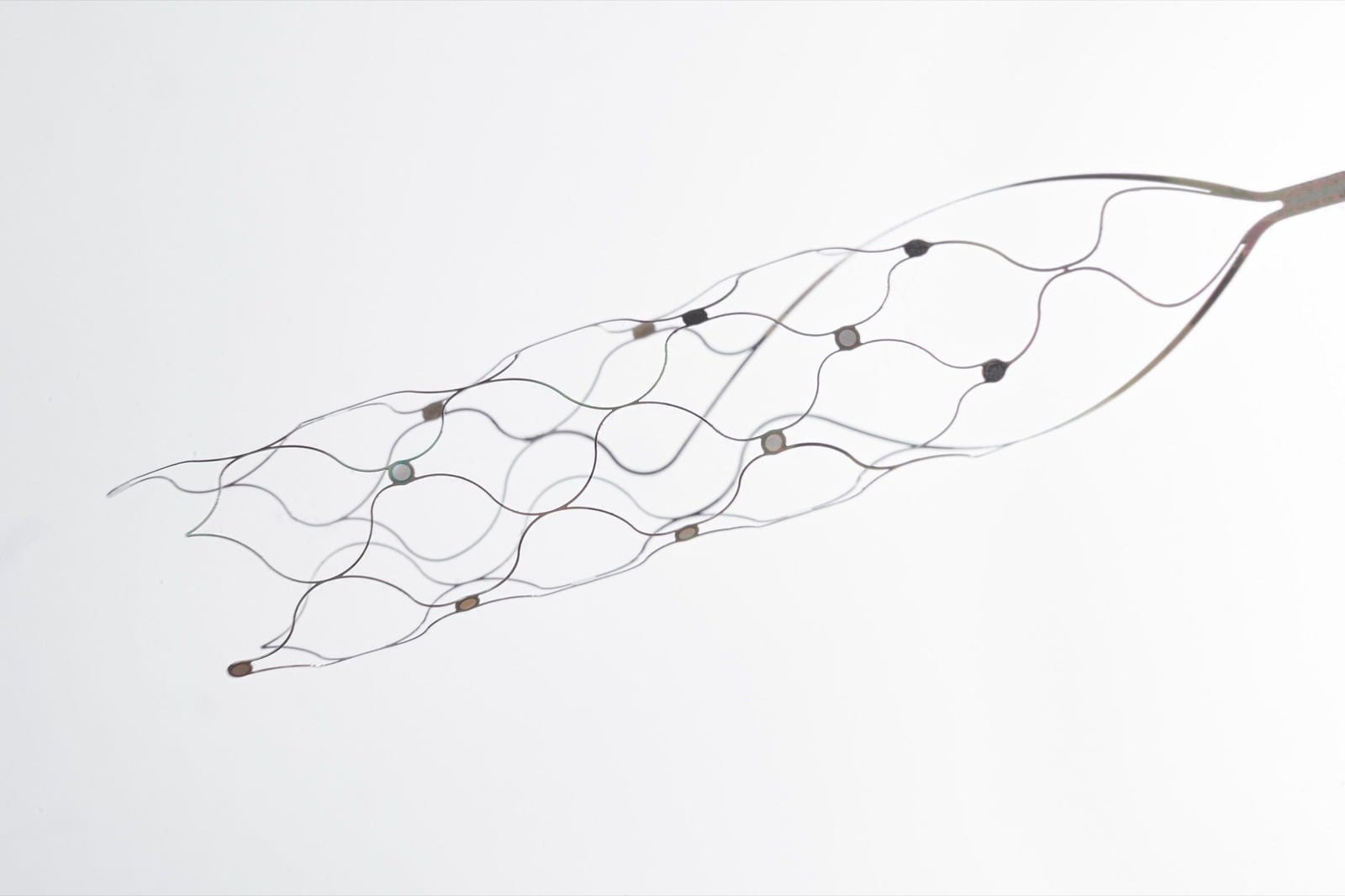
Synchron takes the opposite bet on invasiveness. Its Stentrode is an endovascular stent-electrode array delivered by catheter through the jugular vein into a vessel adjacent to motor cortex, recording through the vessel wall. No craniotomy, no cortical penetration. It pairs with a wireless transmitter implanted in the chest.
The company stated ten patients implanted as of its November 2025 Series D announcement, across trials in the US and Australia. Its COMMAND early feasibility study reported all six US patients meeting the primary safety endpoint at twelve months. It raised $200m led by Double Point Ventures, bringing total funding to $345m, and received FDA Breakthrough Device Designation in August 2020.
Best for: patients and clinicians for whom open brain surgery is the blocking objection.
Pros - No craniotomy; the delivery procedure is familiar to interventional neurologists - Earlier long-term safety data was published in JAMA Neurology, a rarity in this field - COMMAND was the first FDA-approved IDE trial of a permanently implanted BCI - $345m raised and integration work with Apple's BCI human interface device protocol
Cons - Ten patients in roughly seven years is slow accrual for a company positioning for commercialisation - COMMAND results were presented at a surgical congress in 2024 but remain unpublished in a peer-reviewed journal two years on - A registered second Australian study, SWITCH II, was withdrawn with zero patients enrolled - Recording through a vessel wall imposes a hard bandwidth ceiling; the company itself has described needing a next-generation "high-channel" interface, and demonstrated function is switch-like control rather than high-degree-of-freedom decoding - An endothelialised stent in a cerebral sinus is not straightforwardly removable, and the approach carries thrombosis and antiplatelet-therapy considerations cortical implants do not
3. Blackrock Neurotech
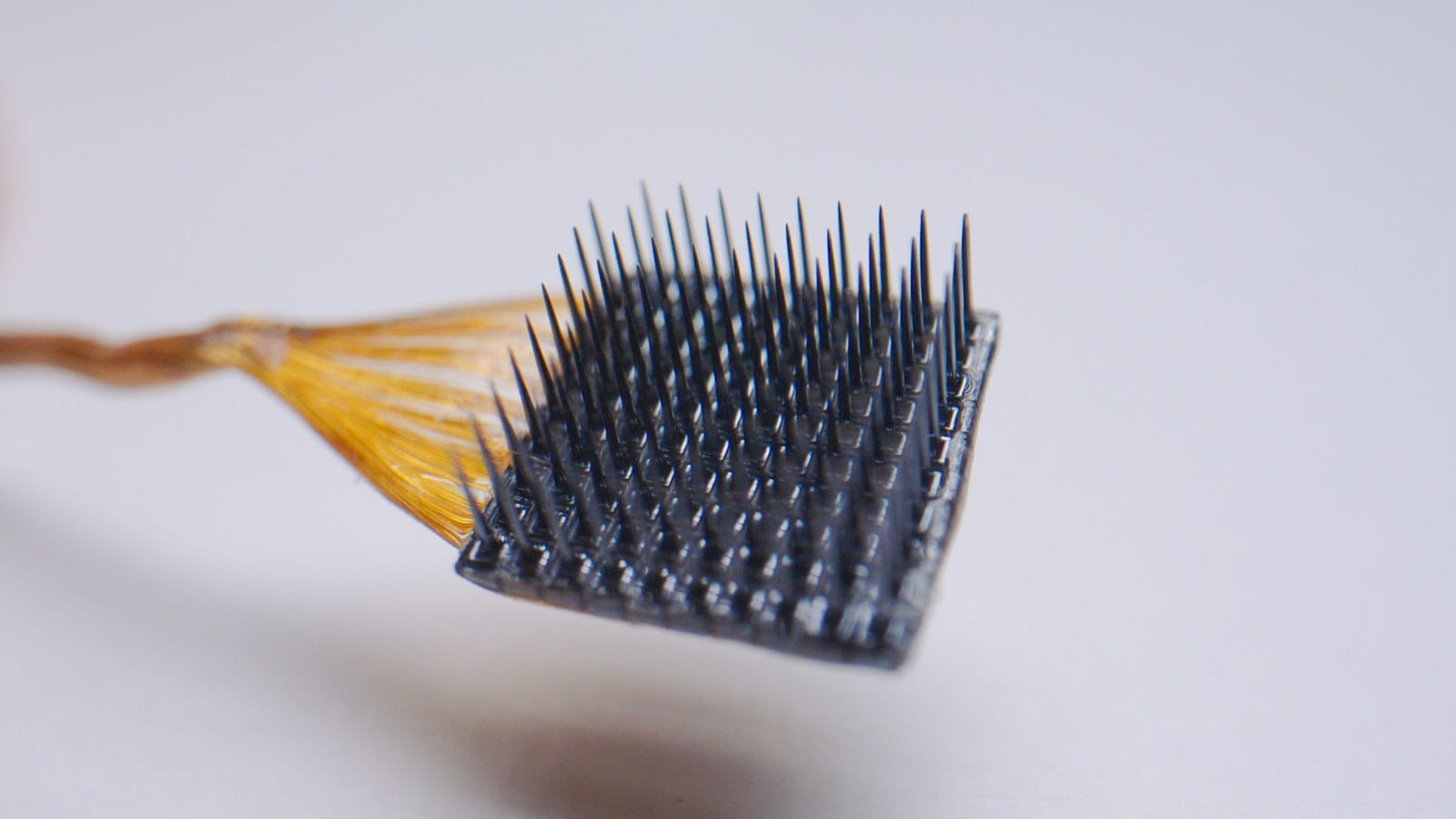
Blackrock Neurotech makes the Utah Array, the device behind most of the academic BCI literature of the past two decades. It is the most invasive approach here: a silicon substrate carrying 100 to 128 microneedles that penetrate up to 1.5mm into cortex, with clinical use relying on a percutaneous skull pedestal — a permanent breach of the skin. Its MoveAgain system received Breakthrough Device Designation in November 2021.
The company publishes no authoritative patient count, citing only "19+ years of human studies." The hard number comes from the literature instead: a 2025 analysis of the BrainGate trials examined 20 arrays across the first 14 participants over two decades. Tether invested $200m in April 2024. Note that the company has no relationship to the asset manager BlackRock Inc.
Best for: research groups that need proven, well-characterised hardware with decades of published data behind it.
Pros - By far the longest human track record in the field, with a deep peer-reviewed literature - Demonstrated capabilities beyond cursor control, including prosthetic control with restored tactile sensation via intracortical microstimulation - Widely deployed across academic centres, so results are independently generated rather than company-reported - $200m investment gives it capital independent of the usual venture cycle
Cons - No commercial product roughly five years after its CEO publicly targeted 2022 commercialisation - The percutaneous pedestal is a chronic infection vector and a hard barrier to unsupervised home use; no fully implanted wireless commercial version exists - The published signal yield is sobering: spikes on roughly 35.6% of electrodes on average across 20 arrays - Company FAQ language describing the array as "approved for human use under the FDA's Breakthrough Device Designation" misstates what that designation is - Majority funding from a stablecoin issuer is an unusual and volatile capital base for a medical-device company, and the 10,000-channel Neuralace announced for 2024 has no evidence of availability
4. Paradromics
Paradromics builds Connexus, a penetrating array of 421 microelectrodes reaching 1.5mm below the cortical surface to capture single-neuron firing, connected by a tunnelled lead to a transceiver in the chest that transmits through intact skin via a near-infrared optical link. It is designed around speech restoration rather than cursor control — a decoding problem with more in common with AI voice generation than with a computer mouse.
Its first chronic implant took place at the University of Michigan on 17 June 2026. On 14 September 2026 the company announced that participant had achieved real-time free speech, including an unscripted phone call. The FDA approved its IDE for the Connect-One study in November 2025, and approved a supplement in August 2026 expanding access to personal computing devices.
Best for: speech and communication restoration, where single-unit resolution matters most.
Pros - Fully implanted and wireless, with no percutaneous connector - Single-unit resolution at 421 channels, more than most non-penetrating approaches can reach - Demonstrated intraoperative removal of the array intact in under 20 minutes, a genuine reversibility signal - Three trial sites and a six-year follow-up design, which is unusually long for an early feasibility study
Cons - The headline speech result rests on a single chronic participant roughly three months post-implant, announced by press release rather than peer-reviewed publication - An early feasibility study with initial enrolment of two is the earliest rung of the device pathway; no pivotal trial exists - The >200 bits per second figure the company cites is explicitly preclinical, not clinical throughput - Three implanted components each carry independent infection and failure modes on top of a craniotomy - Participants requiring regular MRI are excluded outright — a material lifetime constraint in progressive neurological disease — and total disclosed funding is modest against Synchron's $345m, with an undisclosed strategic investment from Saudi Arabia's NEOM fund
5. Precision Neuroscience
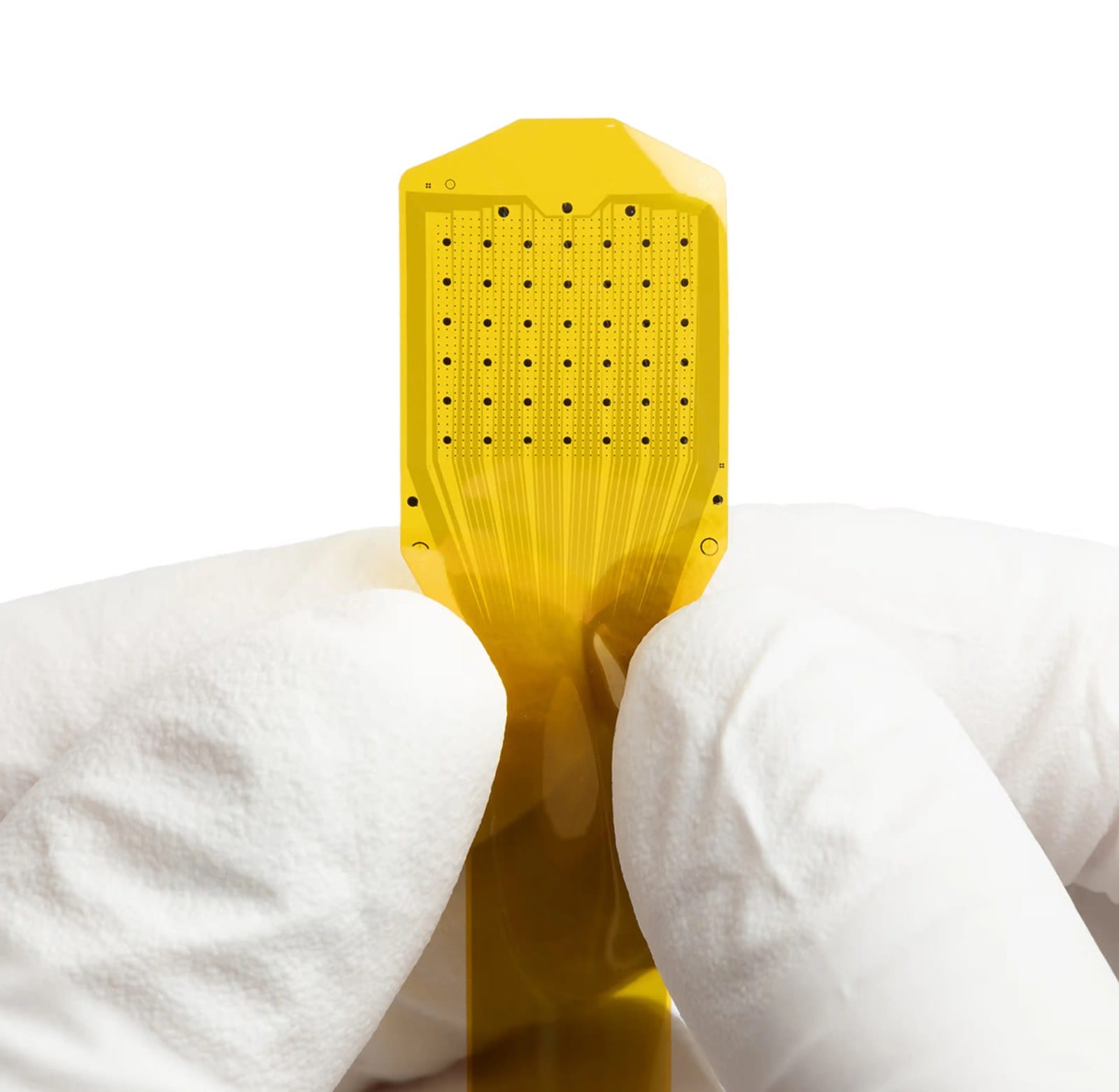
Precision Neuroscience makes the Layer 7 Cortical Interface, a subdural thin-film array of 1,024 platinum electrodes on polyimide that sits on the cortical surface without penetrating it, inserted through a micro-slit rather than a full craniotomy. Work published in Nature Biomedical Engineering demonstrated sub-millimetre cranial slit insertion in animal and cadaver models.
In March 2025 the FDA granted 510(k) clearance K242618 — and this is the most misreported fact in the field. The clearance covers temporary use of under 30 days for recording and mapping on the brain surface. The FDA summary describes the cleared article as a passive device with no wireless capability and no software. Nothing wireless was cleared, and Precision's own site still states its BCI is investigational and not available for sale. The company raised a $102m Series C in December 2024 and announced a Medtronic partnership in January 2026.
Best for: intraoperative brain mapping today, with a reversible surgical footprint as the long-term bet.
Pros - Does not penetrate cortex, and is explicitly designed for removal and replacement - Holds a genuine FDA 510(k) clearance, narrow as it is — the only one on this list for a cortical electrode - Has scaled to 4,096 electrodes across four arrays in a single procedure - A Medtronic partnership and an LLNL research agreement give it distribution and materials-science depth
Cons - Zero chronic human implants. The longest documented human use is three days - Its 510(k) is routinely reported as BCI approval; it covers a passive ≤30-day mapping electrode that is not MRI-compatible - Surface field potentials cannot resolve single-unit activity; the company's answer is more electrodes over more area, not depth - The pivotal animal study covered only one-week and six-week cohorts, and chronic thin-film degradation is the explicit subject of its LLNL collaboration — an acknowledged open problem - Moving from a Class II ≤30-day clearance to a permanently implanted wireless BCI requires an IDE and almost certainly a PMA; no IDE has been announced, and the patient count of 37 dates from April 2025
6. Onward Medical
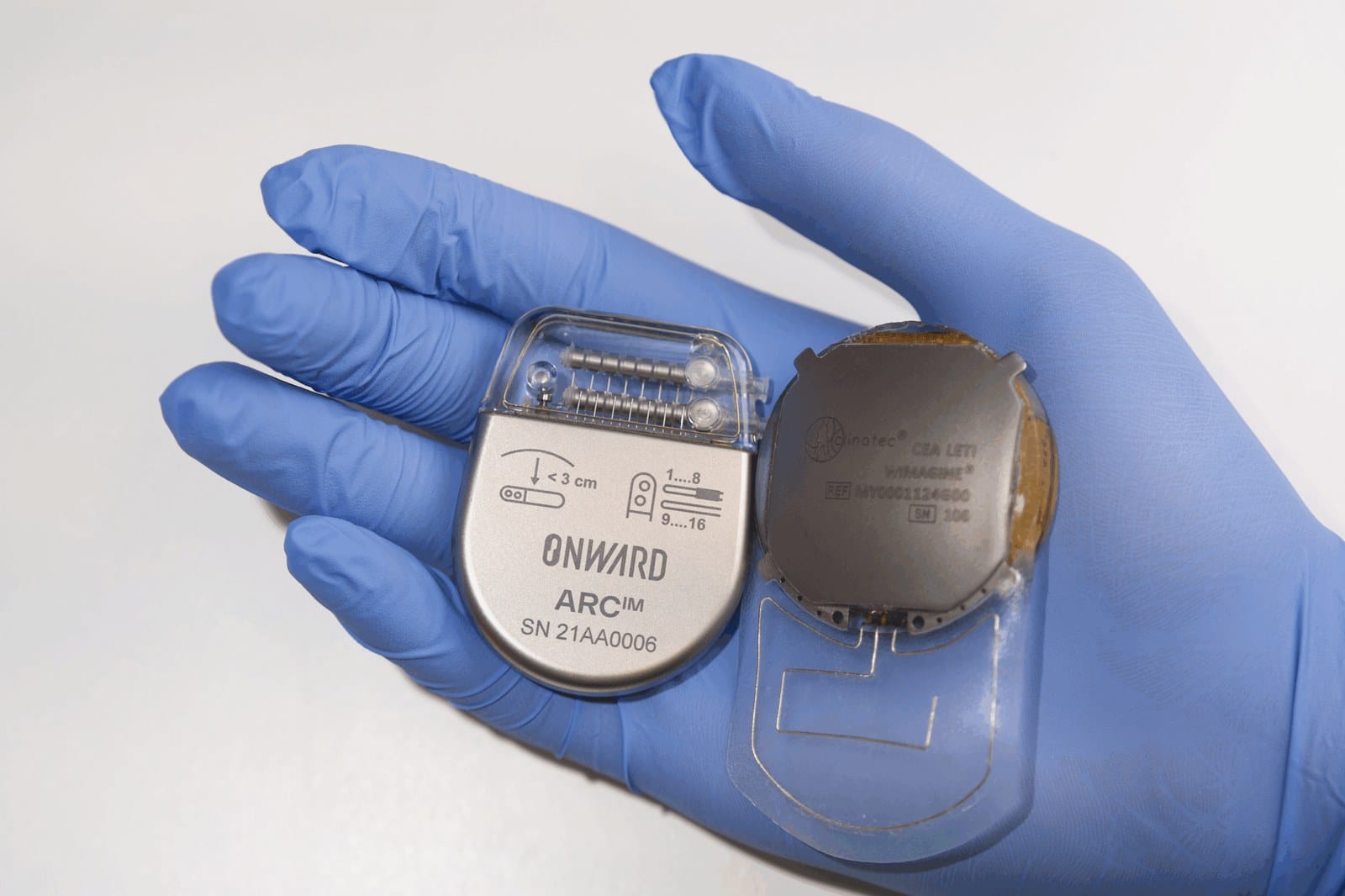
Onward Medical is the only company here with meaningful revenue, and the qualification matters: its commercial product is not a brain-computer interface. ARC-EX is a non-invasive skin-electrode spinal stimulator that received FDA De Novo authorisation in December 2024 for improving hand sensation and strength after incomplete spinal cord injury. It does not record or decode neural activity.
Its actual BCI is ARC-BCI, pairing an implanted spinal stimulator with WIMAGINE, a 64-electrode epidural ECoG brain implant licensed from CEA-Clinatec, decoding movement intent to drive spinal stimulation. The company reported in September 2026 that seven participants have received the therapy. The underlying work was published in Nature in May 2023.
Best for: restoring movement after spinal cord injury, where the brain implant is one component of a larger stimulation system.
Pros - The only FDA market authorisation in this group, via De Novo in December 2024, plus a CE mark - Published pivotal evidence: the Up-LIFT study appeared in Nature Medicine with 43 of 60 participants meeting the primary responder criterion and no therapy-related serious adverse events - Real commercial traction — €4.2m revenue in the first half of 2026, up from €1.2m, across more than 130 US clinics - The brain-interface work is peer-reviewed in Nature, which most of this field cannot claim
Cons - The commercial product is not a BCI. All revenue comes from a skin-electrode stimulator with no recording or decoding - The De Novo indication is narrow — hand sensation and strength only, not walking - The pivotal evidence is uncontrolled; the authors state there was no concurrent control group, and rehabilitation alone produced a 63% responder rate against 72% with the device - The BCI programme is seven participants of grant-funded feasibility work with no registered pivotal trial and no announced regulatory pathway - €81.5m cash against roughly €26m of half-yearly operating loss implies further dilution, and the brain implant is in-licensed rather than built in-house
7. Science Corporation
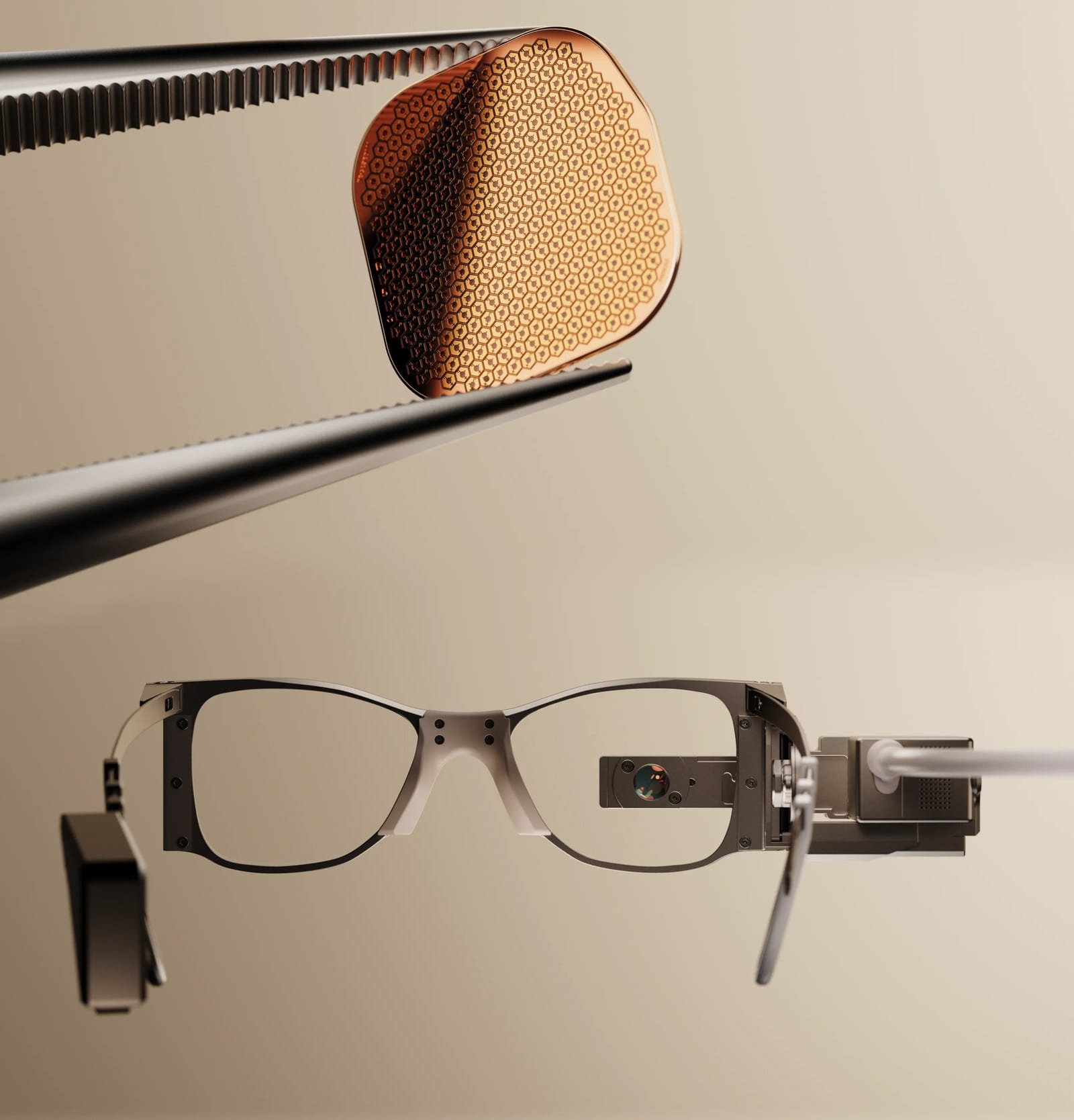
Science Corporation, founded by former Neuralink president Max Hodak, has the strongest clinical dataset on this list and the weakest claim to being a brain-interface company. Its PRIMA device is a subretinal photovoltaic implant — 2mm square, 378 pixels — placed under the retina and driven by near-infrared light projected from camera glasses. It stimulates surviving retinal cells. It never touches the brain.
The evidence is genuinely strong. Published in the New England Journal of Medicine in October 2025, the PRIMAvera trial implanted 38 patients with geographic atrophy; 26 of 32 assessed at twelve months met the primary endpoint, a mean improvement of 25.5 letters. A CE mark followed on 22 July 2026, authorising sale across 30 European countries. The company's actual brain programme, Biohybrid, rests on a preprint with no human data. It raised a $230m Series C in March 2026 at a $1.5b valuation.
Best for: restoring form vision in advanced geographic atrophy — a real, approved, shipping capability.
Pros - A CE mark under EU MDR, making it the only company here with a market authorisation for the flagship implant itself - Peer-reviewed NEJM evidence from 38 patients, the largest and most rigorous dataset in this group - Two FDA Humanitarian Use Device designations granted in July 2026 - $490m raised at a $1.5b valuation with a defined commercial route in Europe
Cons - PRIMA is a retinal prosthesis, not a brain interface. The company's framing of it as a BCI is a definitional stretch worth noting - Surgical morbidity is substantial: 26 serious adverse events across 19 of 38 patients, including retinal detachment and a full-thickness macular hole - The 100-micron pixel pitch caps native acuity at roughly 20/417, vision is monochrome, and patients report difficulty perceiving faces - Implanted eyes showed accelerated atrophy — 8.5mm² against 2.5mm² in non-implanted eyes over twelve months — and the trial's quality-of-life instrument showed no measured change from baseline - The actual brain-facing programme is preclinical, supported by a non-peer-reviewed preprint, and the US route depends on an HDE that would cap distribution
How to choose
If you are assessing clinical maturity, the honest ranking inverts the media coverage. Onward and Science have market authorisations and peer-reviewed pivotal data; Neuralink and Paradromics have the most striking demonstrations and the thinnest published record.
If the question is bandwidth, penetrating arrays win on physics: Neuralink at 1,024 channels, Paradromics at 421 with single-unit resolution. Surface and endovascular approaches trade resolution for surgical safety, and no amount of electrode count closes that gap.
If the question is surgical acceptability, Synchron's catheter delivery and Precision's micro-slit insertion are the two credible answers, with the caveat that Precision has never implanted anyone chronically.
If you are an investor, weigh capital concentration seriously. Tether funds Blackrock; sovereign funds sit in Synchron, Paradromics and Neuralink. And weigh the base rate: two decades of BrainGate work has produced roughly fourteen well-characterised long-term participants and no approved product.
Frequently Asked Questions
Has any brain-computer interface been approved by the FDA?
No. As of September 2026 no company has FDA approval or clearance for a brain-computer interface. Precision Neuroscience holds a 510(k) for a passive cortical electrode limited to under 30 days of use. Onward Medical's De Novo covers a non-invasive spinal stimulator. Breakthrough Device Designations held by Neuralink, Synchron and others are expedited-review status, not approval.
How many people have received a brain implant?
Publicly stated figures are small. Neuralink announced 21 participants in January 2026, Synchron ten as of November 2025, Onward seven for ARC-BCI, and Paradromics one chronic implant. Blackrock Neurotech publishes no count; the BrainGate literature documents 14 long-term participants over two decades.
Which BCI is the least invasive?
Synchron's Stentrode requires no craniotomy, reaching motor cortex by catheter through the jugular vein. Precision Neuroscience inserts a thin film through a sub-millimetre cranial slit. Both trade signal resolution for reduced surgical risk, recording field potentials rather than individual neuron firing.
Is Neuralink ahead of its competitors?
On participant count and channel count, yes. On published evidence, no. Neuralink has no peer-reviewed clinical publications; Synchron has published in JAMA Neurology, Onward in Nature and Nature Medicine, and Science Corporation in the New England Journal of Medicine. The two rankings point in opposite directions.
When will a brain-computer interface be commercially available?
No company has announced a pivotal trial for an implanted BCI, and pivotal trials typically precede approval by several years. Synchron has targeted a pivotal study ahead of a future PMA filing. Blackrock Neurotech publicly targeted commercialisation in 2022 and has not achieved it, which is a useful calibration on timeline claims in this field.
Editor's note — sources: Company statements and trial disclosures from Neuralink, Synchron, Paradromics, Precision Neuroscience, Onward Medical and Science Corporation; FDA records for K242618 and DEN240014; peer-reviewed results in Nature Medicine, Nature, Nature Biomedical Engineering and the New England Journal of Medicine; and the BrainGate long-term array analysis. Clinical and regulatory claims stated as of September 2026.