
Top 7 AI Image Generation Platforms in 2026
The leading AI image platforms in 2026 — Google, OpenAI, Midjourney, Black Forest Labs, Adobe, Ideogram and Recraft — compared on model quality, pricing, licensing and who carries the copyright risk.
For designers, marketing teams and developers choosing where to generate images at production scale — and for anyone who needs to know which vendor will stand behind the output if a rights holder comes calling.
The leading AI image generation platforms in September 2026 are Google, OpenAI, Midjourney, Black Forest Labs, Adobe Firefly, Ideogram and Recraft. Two things separate them: raw model quality, which now converges quickly between releases, and the legal and commercial terms wrapped around that quality, which do not converge at all. One vendor will indemnify you against a copyright claim on your output. Another explicitly requires you to indemnify it. That gap matters more than a benchmark score, and it is the thing most comparisons skip.
The category also just moved. OpenAI shipped ChatGPT Images 2.5 on 8 September 2026. Google replaced its Imagen line with Nano Banana. And on 8 September 2026, the first US jury trial over AI image training — Andersen v. Stability AI — began in the Northern District of California.
How we picked these
Seven criteria, applied to every candidate:
- Current shipping model. Not an announced model, not an early-access model. What a paying customer can use today.
- Production access. An API, a rate limit you can plan around, and documented behaviour.
- Published pricing. Where a vendor does not publish a rate, this article says "pricing on request" rather than guessing. Several figures circulating on aggregator sites are stale or invented.
- Commercial terms and indemnification. Who carries the copyright risk.
- Deployment flexibility. Whether weights are available, and under what licence.
- Verifiable adoption. Company-published figures or named customers only.
- Legal exposure. Active litigation, disclosed and dated.
Three notable names did not make the list. Stability AI remains influential — Stable Diffusion 3.5 is still self-hostable and its Community Licence is generous below $1m revenue — but its flagship dates to October 2024, it offers no indemnification, and it carries the heaviest litigation load in the sector. Leonardo.ai (acquired by Canva in July 2024) and Magnific (the April 2026 rebrand of Freepik) are increasingly resellers of other labs' models rather than model developers; Magnific's own pitch, per its coverage in The Next Web, is workflow rather than a superior model.
Ranking below runs from broadest production fit to most specialised. Pricing and feature claims are stated as of September 2026.
Quick comparison
| Company | Best for | Deployment | Pricing model |
|---|---|---|---|
| Enterprises that need indemnified output | SaaS + API, closed | Token-metered API; consumer tiers | |
| OpenAI | Teams already building on ChatGPT or the API | SaaS + API, closed | Token-metered API; ChatGPT tiers |
| Midjourney | Art direction and aesthetic control | SaaS only, no API | $10–$120/mo subscription |
| Black Forest Labs | Self-hosting and embedding in your own product | Open weights + API | Pay-as-you-go API; licence on request |
| Adobe Firefly | Creative Cloud shops needing licensed training data | SaaS + CC + API | Credit subscriptions from $9.99/mo |
| Ideogram | Text inside images, layout control | SaaS + API + open weights | $20–$60/mo; $300/mo self-host licence |
| Recraft | Vector, brand systems, design tooling | SaaS + API, closed | $12/mo, then $0.01/credit |
1. Google
Google's current image model is Nano Banana 2, released 26 February 2026 and built on Gemini 3.1 Flash Image, with output from 512 pixels to 4K. It replaced the Imagen brand, which Google has been retiring across Vertex AI and the Gemini API through 2026. Access runs through the Gemini app, the Gemini API, Google Workspace, Search AI Mode and Ads, which gives Google a distribution surface no competitor matches.
The commercially significant part is not the model. Google maintains a generative AI indemnification policy covering both training data and generated output for paid enterprise services — a two-pronged structure no other vendor here offers. It applies to generally available paid enterprise products, not to free consumer Gemini.
Best for: enterprises that need contractual cover on generated output.
Pros - Two-pronged indemnity covering both training data and generated output on eligible paid enterprise services - Distribution through Workspace, Search and Ads, so no separate procurement for most Google customers - Output to 4K natively - SynthID provenance watermarking applied across outputs
Cons - Three image-model brand names inside a year — Imagen, Nano Banana Pro, Nano Banana 2 — alongside active Imagen endpoint deprecation, which imposes real migration work - A visible Gemini watermark is retained on free and mid-tier outputs and removed only on the top consumer subscription - Indemnity does not extend to free consumer Gemini, where most casual use happens - SynthID watermarking has been shown to be removable; published research reports a high success rate against it - Artists sued Google in the Northern District of California in April 2024 over Imagen and LAION training data
2. OpenAI
OpenAI released ChatGPT Images 2.5 on 8 September 2026, exposing two API models — a fast variant and a high-precision one. The company states that more than three billion images are created weekly across its surfaces. The DALL·E line it started with has been superseded.
Pricing is token-metered rather than per-image, which is unusual in this category and makes cost forecasting harder — the same metering pattern that complicates comparison across AI inference providers generally. For the preceding gpt-image-2 model, OpenAI published image output at $30.00 per million tokens and image input at $8.00 per million, with cached input at $2.00. OpenAI's Copyright Shield defends paid API and ChatGPT Enterprise customers against copyright claims; free tiers are excluded. Named integrations in OpenAI's own launch post include Adobe, Runway, Manus and Higgsfield.
Best for: teams already building on the OpenAI API who want image generation in the same billing and auth path.
Pros - Image generation and editing sit natively inside ChatGPT, so non-technical staff need no separate tool - Copyright Shield covers paid API and Enterprise users - Documented integration partners including Adobe's Firefly - C2PA content credentials applied to outputs
Cons - Four model generations in roughly eighteen months breaks cost and prompt stability for anyone with a fixed pipeline - Token metering makes per-image cost hard to predict against flat-rate competitors - Developers report image rate limits materially below competitors' in OpenAI's own community forum - Copyright Shield explicitly excludes free tiers - Exact token rates for Images 2.5 were not published on a public rate table at the time of writing
3. Midjourney
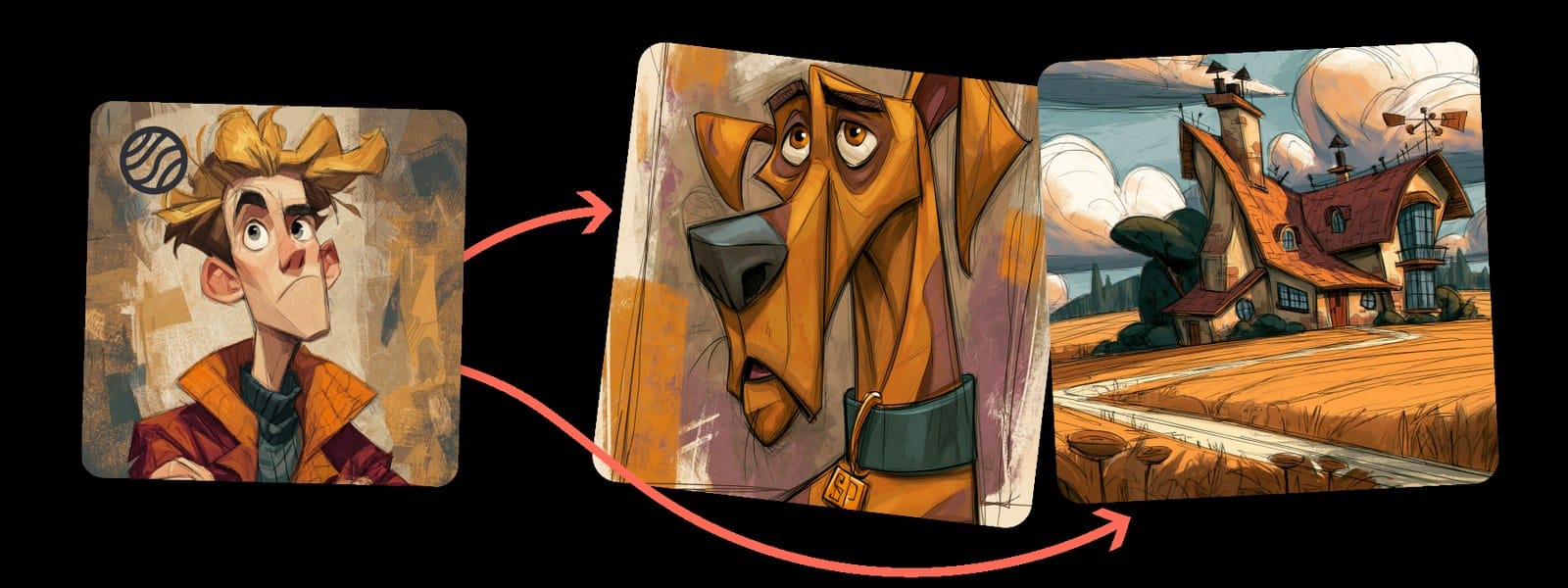
Midjourney shipped V8.2 as its default model on 24 July 2026, following V8.0 in March and V8.1 in April, plus the Niji 7 anime line in January. It remains the aesthetic reference point for the category, and it remains deliberately unusual: access is through Discord and a web app, and there is no official API. The terms of service prohibit automated access, so the wrapper services that offer "Midjourney API" access are operating against them.
Pricing is published and simple: Basic at $10/month, Standard at $30, Pro at $60 and Mega at $120, with a 20% annual discount and extra GPU time at $4/hour. Companies grossing over $1,000,000 a year must be on Pro or Mega. Midjourney is self-funded and has taken no venture capital.
Best for: art direction, concept work and style development where a human is in the loop on every image.
Pros - Published flat-rate pricing with no token arithmetic - Style reference and parameter controls built for iterative art direction rather than one-shot generation - Self-funded, so no investor pressure toward a pivot or forced monetisation - Users own the assets they generate
Cons - No official API, which rules it out of automated pipelines entirely - Terms of service are one-way: users indemnify Midjourney, not the reverse, with liability capped at twelve months of fees - GPU-hour allowances are hard to compare against per-image pricing elsewhere - Co-defendant in the Andersen jury trial that began 8 September 2026, and defendant in the Disney, NBCUniversal and DreamWorks suit in the Central District of California, currently in discovery - The $1m revenue threshold catches growing startups on the cheaper tiers
4. Black Forest Labs
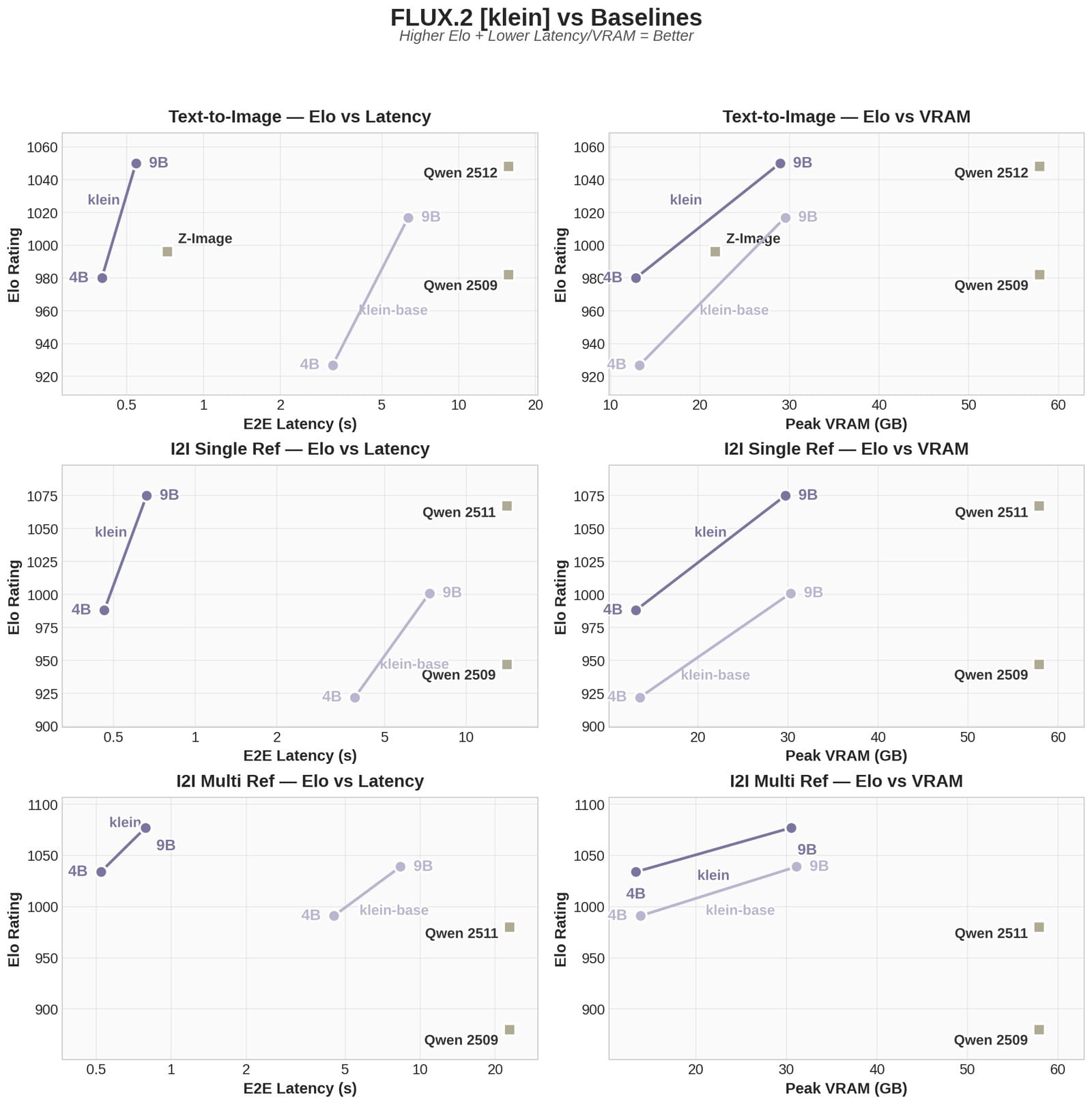
Black Forest Labs was founded by researchers behind VQGAN, latent diffusion and the original Stable Diffusion. Its generally available family is FLUX.2, released November 2025, with a [klein] variant added in January 2026. FLUX 3, announced 23 July 2026, is a multimodal model producing images, twenty-second video with synchronised audio — pushing it into territory covered by the AI video generation platforms — and robot action predictions. But it is gated early access, with no public API, no pricing, no image benchmarks and no released weights.
Licensing is the detail to get right. Per the company's repository, FLUX.2 [klein] 4B and 4B Base are Apache 2.0; the 9B variants and FLUX.2 [dev] at 32B sit under the FLUX Non-Commercial Licence, with commercial self-hosting available under separate tiers priced on request. The company raised a $300m Series B in December 2025 at a $3.25b post-money valuation, co-led by Salesforce Ventures and Anjney Midha, bringing total raised above $450m. FLUX powers features inside Adobe Photoshop, Canva and Picsart.
Best for: teams that need to run a model on their own infrastructure, or embed one in a product.
Pros - Genuinely open weights under Apache 2.0 for the smaller FLUX.2 [klein] variants - Pay-as-you-go API with no subscription floor - No litigation found naming the company — a cleaner risk profile than Stability or Midjourney - Already embedded in shipping products at Adobe, Canva and Picsart, which is a durability signal
Cons - Three licence regimes across one model family makes commercial evaluation genuinely confusing - No indemnification offered at any tier - FLUX.2 [dev] requires H100-class VRAM per the company's own README, so "self-hostable" means renting from a GPU cloud provider rather than running it cheaply - FLUX 3 launched with no pricing, no open weights and benchmarks the company itself labels a preliminary evaluation of an early candidate — not the shipping model - Watermarking is optional rather than enforced, a weaker provenance position than Google's
5. Adobe Firefly
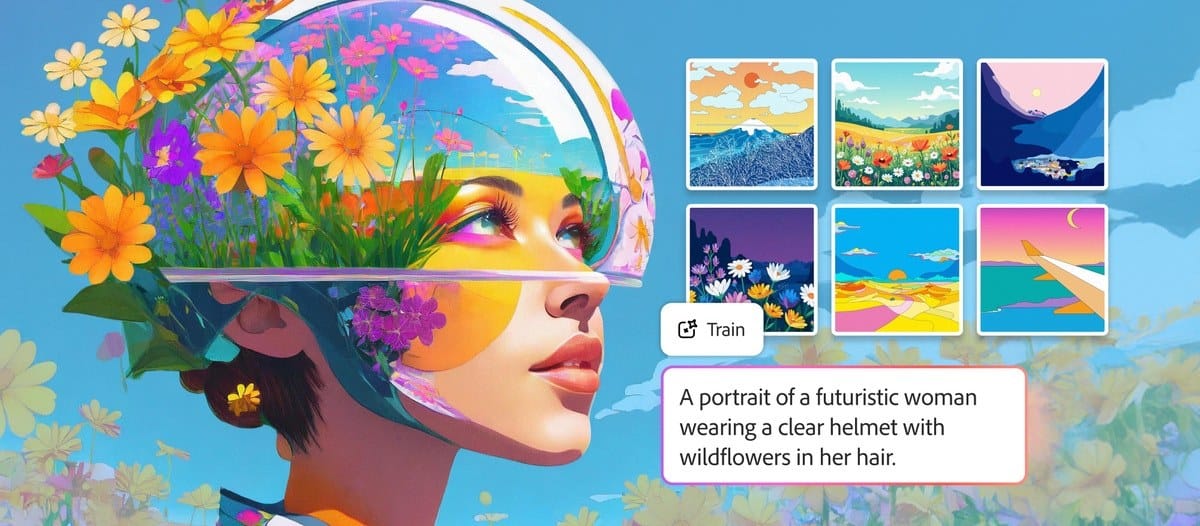
Adobe shipped Firefly Image Model 5, shown at MAX in October 2025 and confirmed generally available in Adobe's March 2026 blog post, with roughly 4-megapixel native output, layer support and prompt-based editing. Adobe's original pitch was training-data provenance: Firefly models are trained on Adobe Stock, licensed and public-domain content.
That pitch has been complicated by Adobe's own strategy. Firefly is now a multi-model marketplace hosting more than thirty third-party models — Google's Nano Banana 2, OpenAI's image generation, FLUX.2, Runway, Kling — alongside Adobe's own. Published pricing runs from a free tier at 25 credits a month (watermarked, no commercial rights) through Standard at $9.99/month for 2,000 credits to Premium at $199.99/month for 50,000. Enterprise and Firefly Foundry are priced on request.
Best for: teams inside Creative Cloud who want generation in the same file as the rest of the work.
Pros - Adobe's own models are trained on licensed and public-domain content, a materially different provenance story - Native integration into Photoshop, Illustrator and the rest of Creative Cloud - Published case studies with named customers including Amazon Fresh, Coca-Cola and Mattel - Firefly Services API for teams that need generation in a pipeline
Cons - Indemnification is narrower than the marketing implies: it applies to eligible enterprise offers, and per Adobe's own legal FAQ excludes user-modified outputs, combined outputs and beta features - Credit consumption draws sustained complaints on Adobe's own community forums, including credits burned on failed generations - The free tier grants no commercial rights and watermarks output - Hosting thirty-plus third-party models dilutes the "commercially safe training data" argument, and the indemnity position on partner-model output is not clearly stated - Published pricing for the middle tier is inconsistent across Adobe's own surfaces

6. Ideogram
Ideogram 4.0, released 3 June 2026, is a 9.3-billion-parameter single-stream diffusion transformer using a Qwen3-VL-8B-Instruct text encoder. It is built around the thing most image models handle badly: text inside the image. Version 4.0 added structured JSON prompting, bounding-box layout control, native 2K output and native transparency.
It is also the company's first open-weight release. Quantised weights are published on Hugging Face under a non-commercial model agreement, with inference code under Apache 2.0, and the model runs on a single 24GB GPU. Commercial self-hosting is licensed separately at $300/month billed annually for 10,000 images a month. Hosted pricing is Free, Plus at $20/month, Pro at $60/month and Team at $30 per user. Commercial use is granted even on the free tier — unusual — but free-tier images are published publicly and cannot be deleted. Ideogram raised an $80m Series A led by Andreessen Horowitz.
Best for: posters, ads, packaging and anything where typography has to render correctly.
Pros - Text rendering and layout control are the design centre of the model, not an afterthought - Open weights runnable on a single RTX 4090-class GPU - Commercial rights granted even on the free tier - No litigation found naming the company
Cons - Free-tier images are public by default and cannot be deleted or opted out of; privacy requires a paid plan - No inpainting, outpainting or canvas editing, so it is a generator rather than an editor - No indemnification at any tier - Face and anatomy artifacts remain visible in multi-person scenes - A small team competing directly with Google and OpenAI on model cadence
7. Recraft
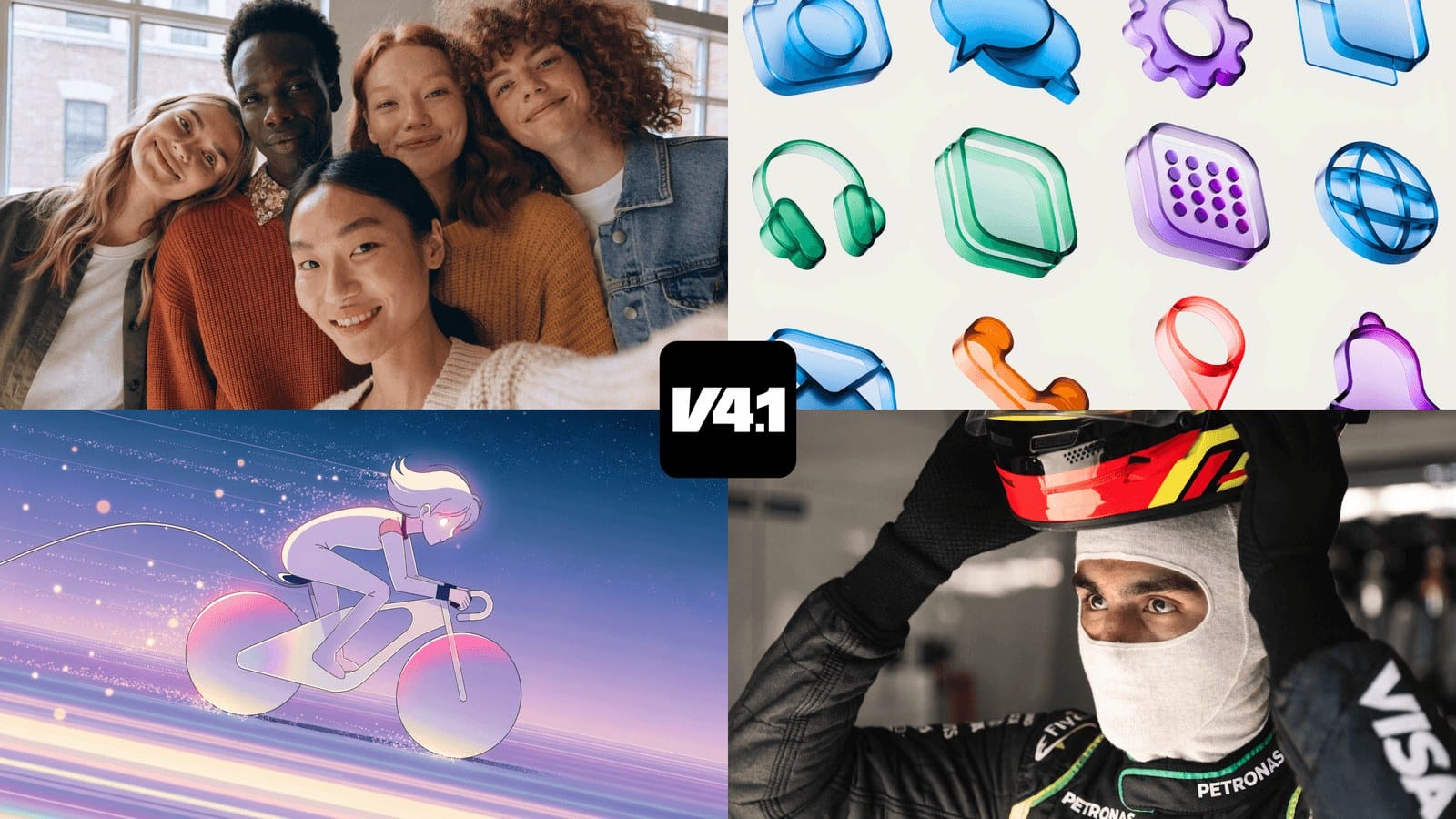
Recraft shipped V4.1 on 14 May 2026 across three variants — V4.1, V4.1 Vector and V4.1 Utility — with native 2048×2048 output. Its predecessor V3, which benchmarked under the codename "red_panda," topped the Artificial Analysis image leaderboard in October 2024 above Midjourney and DALL·E. The company is led by Anna Veronika Dorogush, who created CatBoost.
Recraft's differentiator — like the specialisation seen among AI voice generation platforms — is one narrow thing done well: vector output and brand consistency — generating SVG rather than raster, and holding a style across a set. Its own models are closed and SaaS-only; the open-weight models available in the product are third-party. Published pricing is a free tier at 50 daily credits with no commercial rights, Basic at $12/month, and Pro at a flat $0.01 per credit in blocks from $20 to $160. It raised a $30m Series B led by Accel in April 2025.
Best for: design teams that need editable vector output and repeatable brand styles.
Pros - Native SVG and vector generation, which almost nothing else in this list does - Flat, legible $0.01-per-credit pricing at the Pro tier - Style-consistency tooling built for brand systems rather than one-off images - No litigation found naming the company
Cons - The free tier grants no commercial rights at all and publishes images publicly — stricter than Ideogram's - No vendor-to-customer indemnification; the terms run the other direction - Generated SVGs typically need manual anchor-point cleanup before production use - Its own published pricing table contains an internal inconsistency where one annual price exceeds the monthly equivalent — a small thing, but a documentation-quality signal for a company selling to design teams - Relies on third-party models for video, so it is a partial tool in a multi-format workflow
How to choose
If you are an enterprise and a lawyer has to sign off, the choice is narrow: Google for the broadest indemnity covering output as well as training data, or Adobe Firefly if your provenance requirement is specifically about training data and your team lives in Creative Cloud — reading the exclusions carefully in both cases.
If you are building a product, Black Forest Labs for self-hosting under Apache 2.0 at the smaller sizes, or OpenAI if you are already on its API and want one bill.
If a human art-directs every image, Midjourney, and accept that there is no API.
If the image contains words, Ideogram. If the output has to be editable vector, Recraft.
And if you are generating at volume against uncertain legal ground, the Andersen verdict — expected in the coming weeks — is worth waiting on before signing a long contract with any defendant in it.
Frequently Asked Questions
Which AI image generator has the best copyright indemnification?
Google offers the broadest, covering both training data and generated output for eligible paid enterprise services. OpenAI's Copyright Shield covers paid API and Enterprise users. Adobe indemnifies eligible enterprise offers but excludes modified outputs and beta features. Midjourney, Black Forest Labs, Ideogram and Recraft offer no customer indemnification at all.
Does Midjourney have an API?
No. Midjourney has no official API and its terms of service prohibit automated access. Third-party services advertising Midjourney API access are operating against those terms. If you need programmatic generation, use Google, OpenAI, Black Forest Labs, Ideogram or Recraft instead.
Which AI image models can I self-host?
Black Forest Labs publishes FLUX.2 [klein] 4B and 4B Base under Apache 2.0, with larger variants under a non-commercial licence and paid commercial tiers. Ideogram 4.0 publishes quantised weights under a non-commercial agreement, with commercial self-hosting from $300 a month. Stability AI's Stable Diffusion 3.5 remains available under its Community Licence.
Is AI image generation legally settled?
No. The first US jury trial on AI image training, Andersen v. Stability AI, began 8 September 2026 with no verdict yet. Getty's UK case against Stability largely failed at first instance in November 2025 but is on appeal. Disney and NBCUniversal's suit against Midjourney is in discovery.
What is the cheapest way to generate images at scale?
Self-hosting FLUX.2 [klein] under Apache 2.0 removes per-image cost entirely, though H100-class hardware is required for the larger variants. Among hosted options, Recraft's flat $0.01-per-credit Pro tier is the most legible; token-metered APIs from Google and OpenAI are harder to forecast against fixed volume.
Editor's note — sources: Company documentation and pricing pages for Midjourney, Ideogram, Recraft, Black Forest Labs and Adobe; product announcements from OpenAI, Google and Adobe; Google Cloud's indemnification terms; court dockets for Andersen v. Stability AI and Disney v. Midjourney; and funding reports from TechCrunch and VentureBeat. Pricing and feature claims stated as of September 2026.