
Top 7 Self-Driving Truck Companies in 2026
Who is actually hauling freight without a driver in 2026: Aurora, Kodiak AI, Gatik, Waabi, Plus, Torc and Einride, ranked by real driverless deployment.

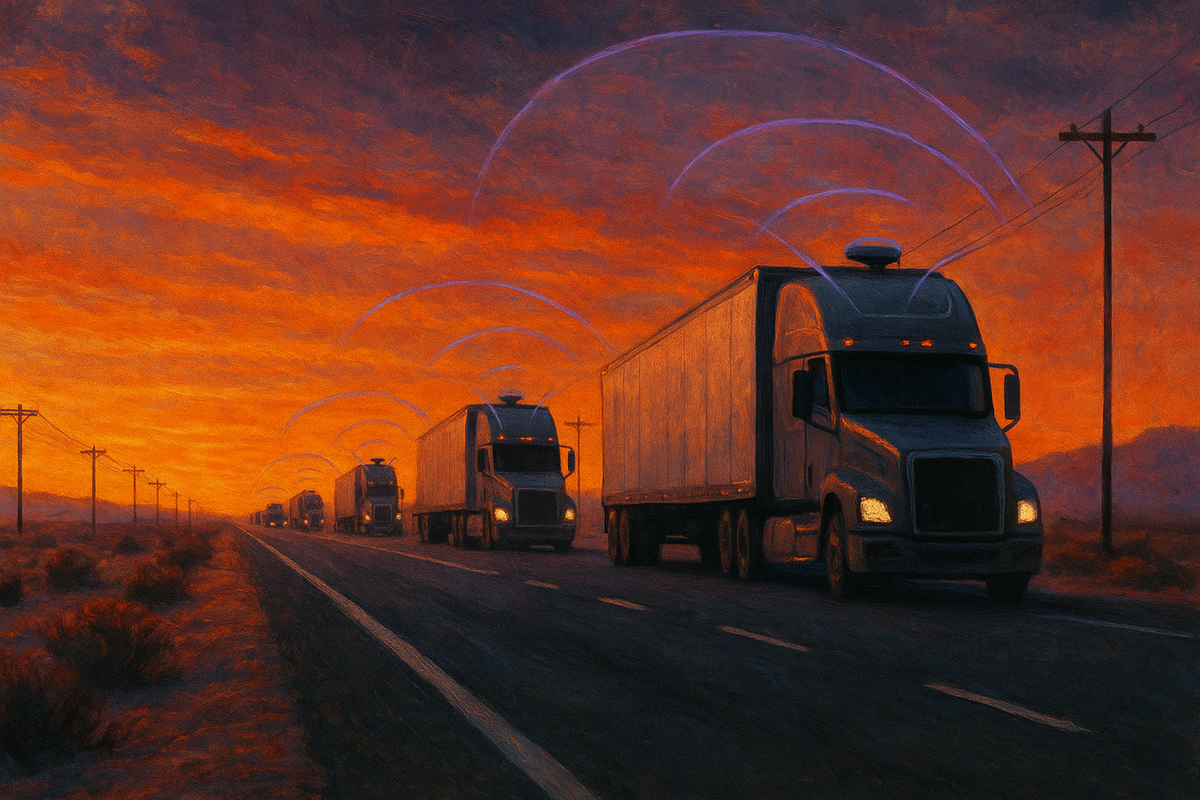
For shippers, carriers and investors trying to work out who is actually hauling freight without a driver in 2026 — and who is still running demos with a safety operator in the seat.
Self-driving trucks are now carrying commercial freight on US public roads, but only a handful of companies have removed the driver. Aurora leads on driverless highway miles, Kodiak AI runs driverless trucks commercially in the Permian Basin, and Gatik operates driverless box trucks on middle-mile routes. Waabi, Plus and Torc are targeting driverless launches between now and 2027. Einride approaches the problem from the electric side.
The gap that matters in this category is between "autonomous" and "driverless." Plenty of companies run autonomous trucks with a safety driver monitoring the wheel. Far fewer have taken the person out of the cab on a public highway and billed a customer for the load. This list is ordered by how close each company is to that second thing.
How we picked these
- Driver-out status on public roads. Not a closed course, not a supervised demo. Has a truck run a commercial load with nobody in the cab?
- Commercial customers. Named, publicly disclosed shippers or carriers paying for freight moved.
- Capital and runway. Public listing, disclosed funding, or an OEM parent. This is a capital-intensive business and several competitors have already failed.
- Manufacturing path. Autonomy software without a truck maker willing to build the platform does not scale.
- Verifiable disclosure. Companies that publish mileage, route counts and readiness metrics rank above those that publish adjectives.
Ranking runs from most commercially deployed to earliest stage. It is not a technology quality judgement — a 2027 launch backed by a major OEM may end up a better bet than a 2025 launch. All claims are as of September 2026.
Quick comparison
| Company | Best for | Vehicle type | Status |
|---|---|---|---|
| Aurora | Long-haul highway freight, available now | Class 8 tractor | Driverless commercial, 10 routes |
| Kodiak AI | Industrial and off-highway autonomy | Class 8 tractor | Driverless commercial in Permian Basin |
| Gatik | Middle-mile retail distribution | Class 6/7 box truck | Driverless commercial, retail routes |
| Waabi | OEM-integrated long-haul at scale | Class 8 tractor (Volvo) | Supervised; driverless pending |
| Plus | Global OEM factory-built autonomy | Class 8 tractor | Supervised; 2027 target |
| Torc Robotics | Fleets standardising on Freightliner | Class 8 tractor | Driver-out on closed course; 2027 target |
| Einride | Electric freight with autonomy attached | Cab-less electric pod + electric fleet | Limited autonomous; electric at scale |
1. Aurora Innovation
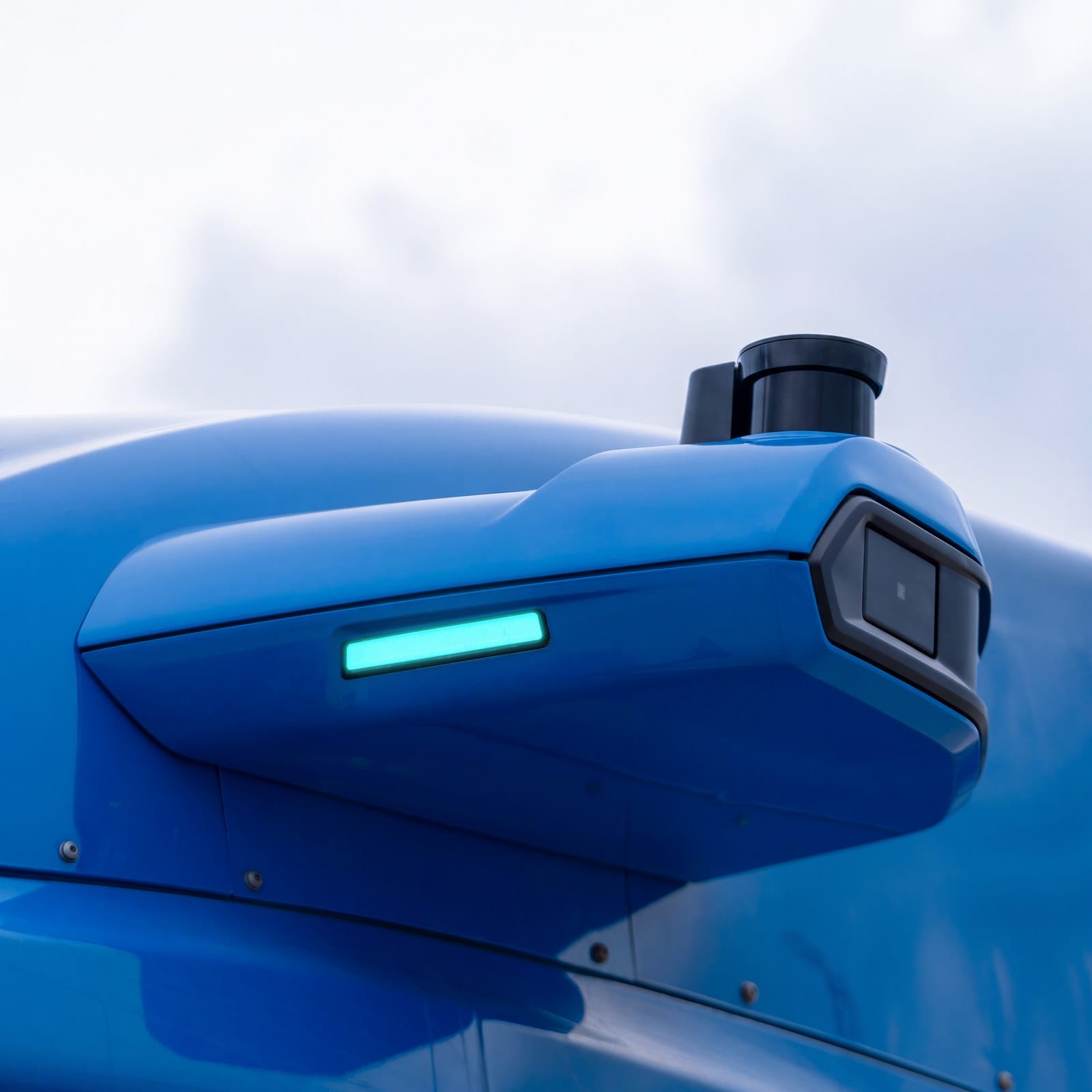
Aurora is further along than anyone else on this list. The company launched the first driverless commercial trucking operations on US public roads in 2025, and its Aurora Driver has since covered more than 500,000 driverless miles. Its commercial network now runs ten driverless routes across the Sun Belt, including Fort Worth to El Paso and bidirectional El Paso–Phoenix lanes.
The company has moved to second-generation hardware on the International LT Series platform, with Roush building the trucks. Aurora says it is fully allocated to exit 2026 with 200 driverless trucks operating under Transport-as-a-Service agreements, and carrier Hirschbach intends to own and operate 500 trucks under a Driver-as-a-Service model with deliveries starting in 2027. At its September 2026 analyst day, Aurora outlined a 2030 target of more than 30,000 driverless trucks.
It is publicly traded on Nasdaq as AUR, which means the numbers above come with SEC filings attached — a level of disclosure none of the private companies here match.
Best for: shippers who want driverless capacity on a Sun Belt lane this year, not a pilot.
Pros
- The only company with a multi-route driverless commercial network on public highways
- Over 500,000 driverless miles, a materially larger real-world record than any competitor
- Manufacturing path secured through International and Roush, with Volvo, PACCAR and Continental as partners
- Public company disclosure means mileage, fleet and revenue claims are auditable
Cons
- Routes are concentrated in the Sun Belt; no driverless operation in snow, ice or mountain grades yet
- Burning capital heavily against a 2030 scale target that requires many more rounds of execution
- The 200-truck end-2026 target is small relative to a US Class 8 fleet measured in millions
- Dependent on partners for both trucks and terminals, so its scaling rate is not entirely its own
2. Kodiak AI
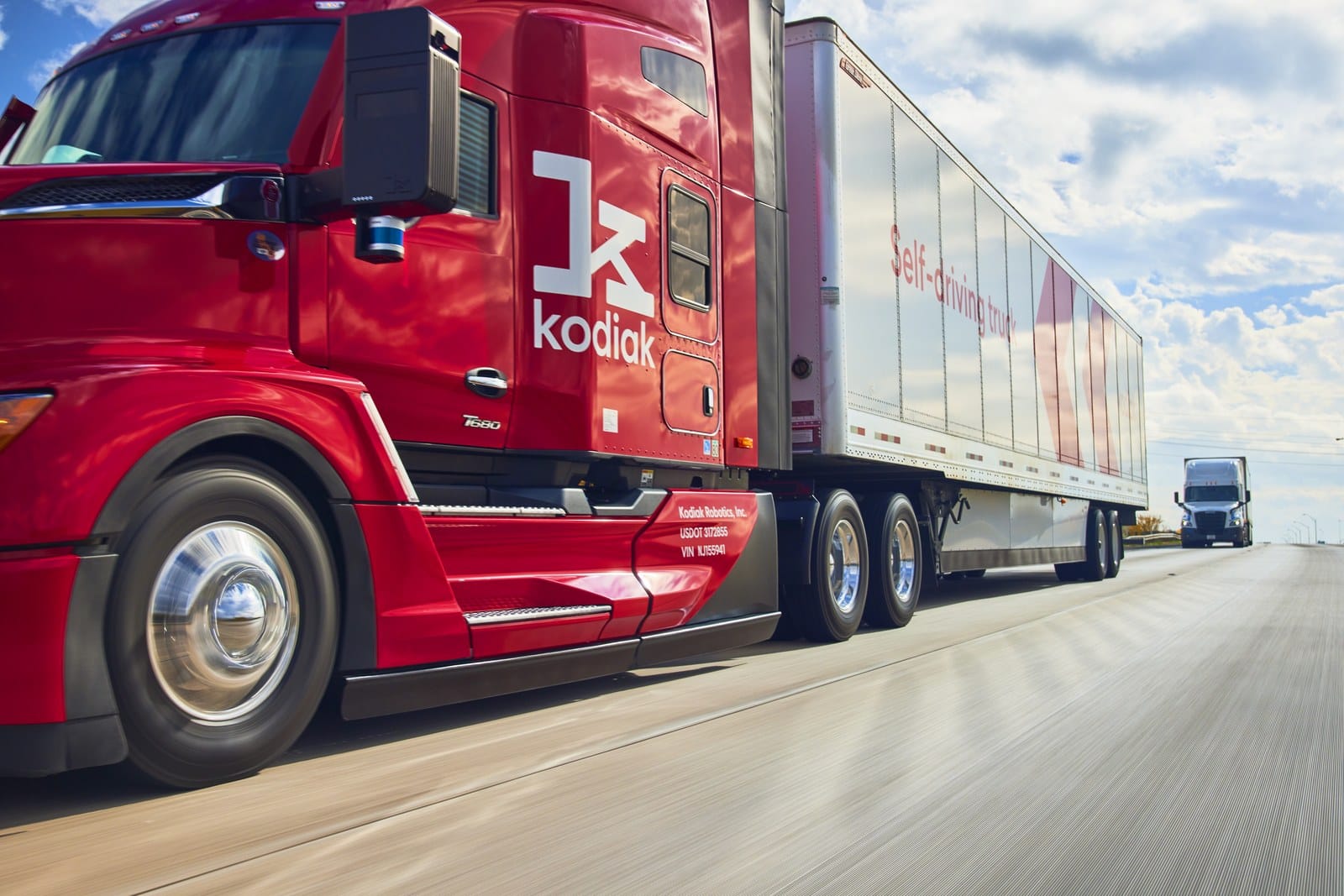
Kodiak AI took a different route to driver-out: instead of chasing public-highway long-haul first, it went to private and industrial roads where the operating environment is narrower. It now has 35 driverless trucks operating commercially with no human in the cab in the Permian Basin, hauling for oilfield customers.
The company went public in September 2025 through a merger with Ares Acquisition Corporation II and trades on Nasdaq as KDK. It publishes an Autonomy Readiness Measure — a self-reported score for how close its system is to driverless long-haul operation — which stood at 93% at the end of August 2026, against a target of launching driverless long-haul commercial operations by the end of 2026. In May 2026 it launched international operations and entered the logging industry, and it runs a separate defence business applying the same autonomy stack to military ground vehicles.
Best for: industrial, off-highway and defence operators, with long-haul arriving next.
Pros
- Genuinely driverless commercial operations today, with 35 trucks running without a person aboard
- Industrial-first strategy generates revenue in constrained environments while highway autonomy matures
- Publishes a quantified readiness metric rather than asking buyers to take launch dates on trust
- Diversified across freight, logging and defence, which reduces dependence on one market
Cons
- Permian Basin routes are far simpler than interstate long-haul; the 93% readiness figure is self-reported
- Long-haul driverless launch is still a forward-looking commitment, not a shipped product
- Post-SPAC listings in this sector have a poor track record, and the company faces public-market scrutiny early
- Much smaller driverless mileage base than Aurora
3. Gatik
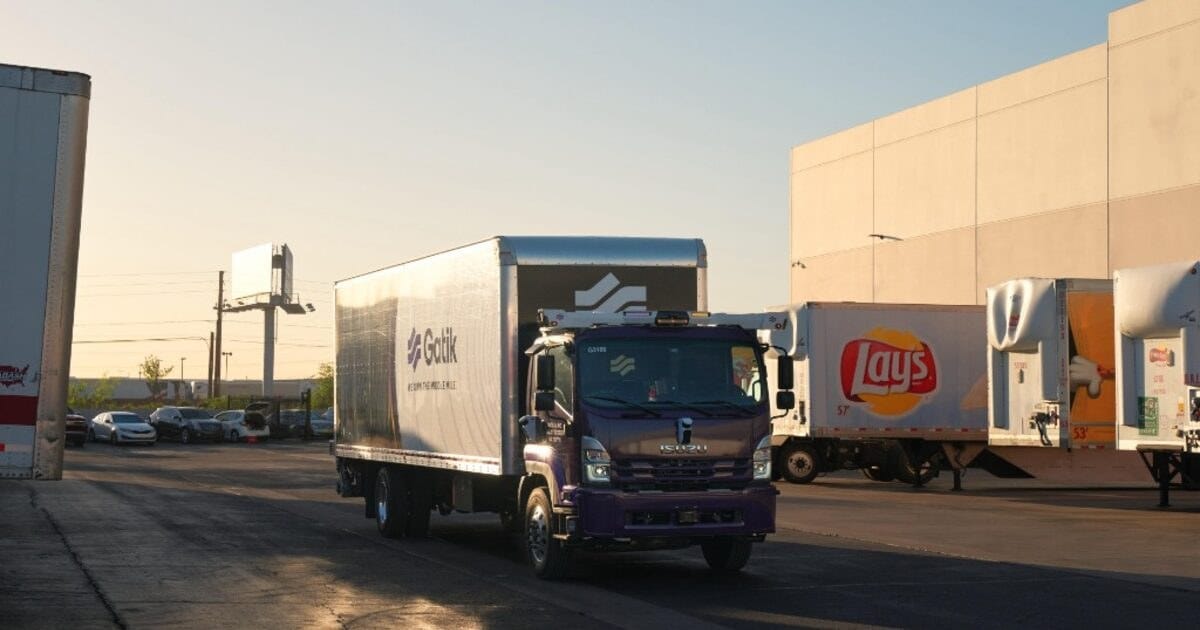
Gatik ignored long-haul entirely. It runs Class 6 and 7 box trucks on short, repeatable middle-mile routes between distribution centres and retail stores — the same roads, several times a day, which makes the autonomy problem tractable and lets the company operate driverless on public roads. Customers include Walmart, Kroger and PepsiCo, moving ambient, refrigerated and frozen goods.
In August 2026 Gatik closed a $200 million Series D led by the Qatar Investment Authority and Koch Disruptive Technologies, with Millennium Management and ARK Invest participating, taking total funding to roughly $500 million. It plans to grow its network to more than 100 trucks by the end of 2026.
The trade-off in the business model is obvious: short dense routes are the easiest autonomy problem and the smallest revenue per mile. Gatik is betting that frequency makes up for distance.
Best for: retailers and grocers with fixed, high-frequency distribution-centre-to-store routes.
Pros
- Driverless on public roads with blue-chip retail customers named publicly
- Constrained route design makes the safety case far easier to validate than open highway
- Well funded after a $200M Series D, with sovereign and strategic investors on the cap table
- Refrigerated and frozen capability opens grocery, which is a large and underserved segment
Cons
- Middle-mile box trucks address a much smaller freight market than Class 8 long-haul
- Route-by-route validation means expansion is slower and more manual than a generalised driver
- Under 100 trucks in operation today — small relative to the retail networks it serves
- Heavy customer concentration in a handful of large retailers
4. Waabi
Waabi is the technical outlier. Founded by Raquel Urtasun, formerly chief scientist at Uber ATG, it trains its driver largely in a high-fidelity simulator rather than accumulating public-road miles, arguing that closed-loop simulation covers rare events that fleet mileage never reaches. If that thesis holds, it reaches driverless with far less capital than the mileage-first approach.
In January 2026 Waabi raised a $750 million Series C with participation from Nvidia's NVentures, Volvo Group Venture Capital and Porsche SE, alongside a $250 million commitment from Uber tied to a plan to deploy 25,000 robotaxis. It has a manufacturing partnership with Volvo and runs autonomous freight for shippers out of a Texas terminal.
It has also missed its own deadline. Waabi targeted a fully driverless truck on public highways by the end of 2025; that has slipped.
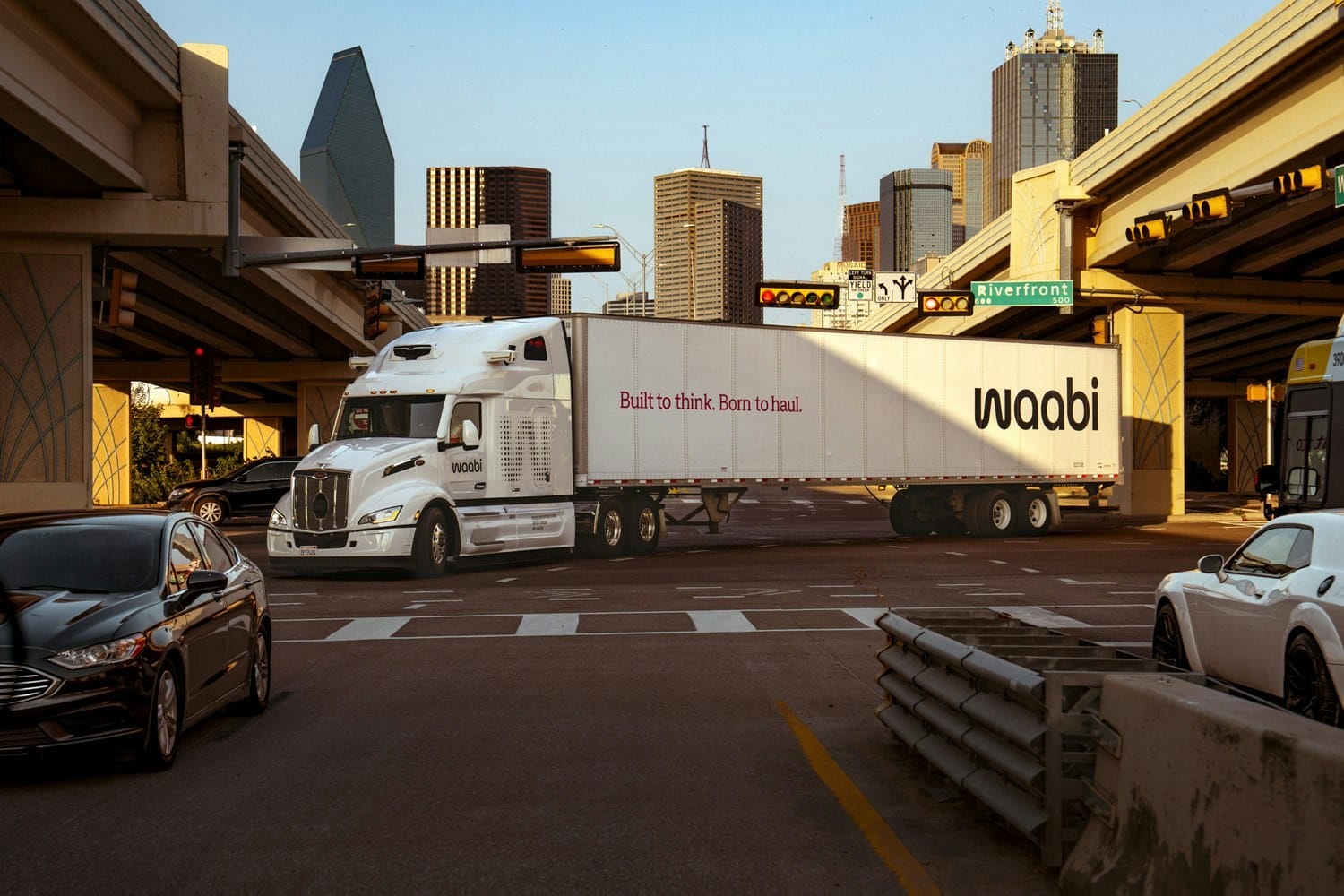
Best for: betting on the simulation-first approach and a deep OEM integration with Volvo.
Pros
- Simulation-led training is a genuinely different technical approach, not a reskin of the mileage race
- Very well capitalised after a $750M round with Nvidia, Volvo and Porsche SE participating
- Volvo partnership provides a factory-built platform rather than a retrofit
- Expansion into robotaxis with Uber diversifies beyond freight
Cons
- Missed its own end-2025 driverless deadline, and no truck has run driverless on a public highway yet
- The simulation thesis remains unproven at driver-out scale — that is precisely what is being tested
- Splitting focus into robotaxis while the trucking product is pre-launch adds execution risk
- Smallest public operating record of the well-funded players here
5. Plus
Plus (PlusAI) is the most globally distributed bet on this list. Rather than operating its own fleet, it sells SuperDrive, a Level 4 system designed to be installed by truck manufacturers on the production line. Its OEM partners include TRATON, Hyundai and IVECO, which gives it a route into European and Asian markets that the US-focused companies do not have.
SuperDrive 6.0 shipped in March 2026, adding night driving and construction-zone handling, and the company says the system is built on more than 7 million miles of driving across the US, Europe and Asia. It targets fully driverless commercial deployment in 2027 with factory-built trucks, starting in Texas.
Its planned public listing did not survive. In April 2026 Plus and Churchill Capital Corp IX mutually terminated their merger agreement, citing market conditions, leaving the company private.
Best for: truck manufacturers that want autonomy fitted at the factory rather than retrofitted.
Pros
- OEM-installed model avoids the cost of retrofitting and operating a fleet
- Partnerships with TRATON, Hyundai and IVECO give genuine multi-continent reach
- SuperDrive 6.0 adds night and construction-zone operation, two common real-world gaps
- Asset-light approach needs less capital per truck than the fleet operators
Cons
- Public listing fell through in April 2026, leaving funding less visible than its listed rivals
- No driverless commercial operation; the 2027 target is two full product cycles from a shipped result
- Dependent on OEM production timelines it does not control
- Revenue is tied to manufacturer adoption rates, which historically move slowly
6. Torc Robotics
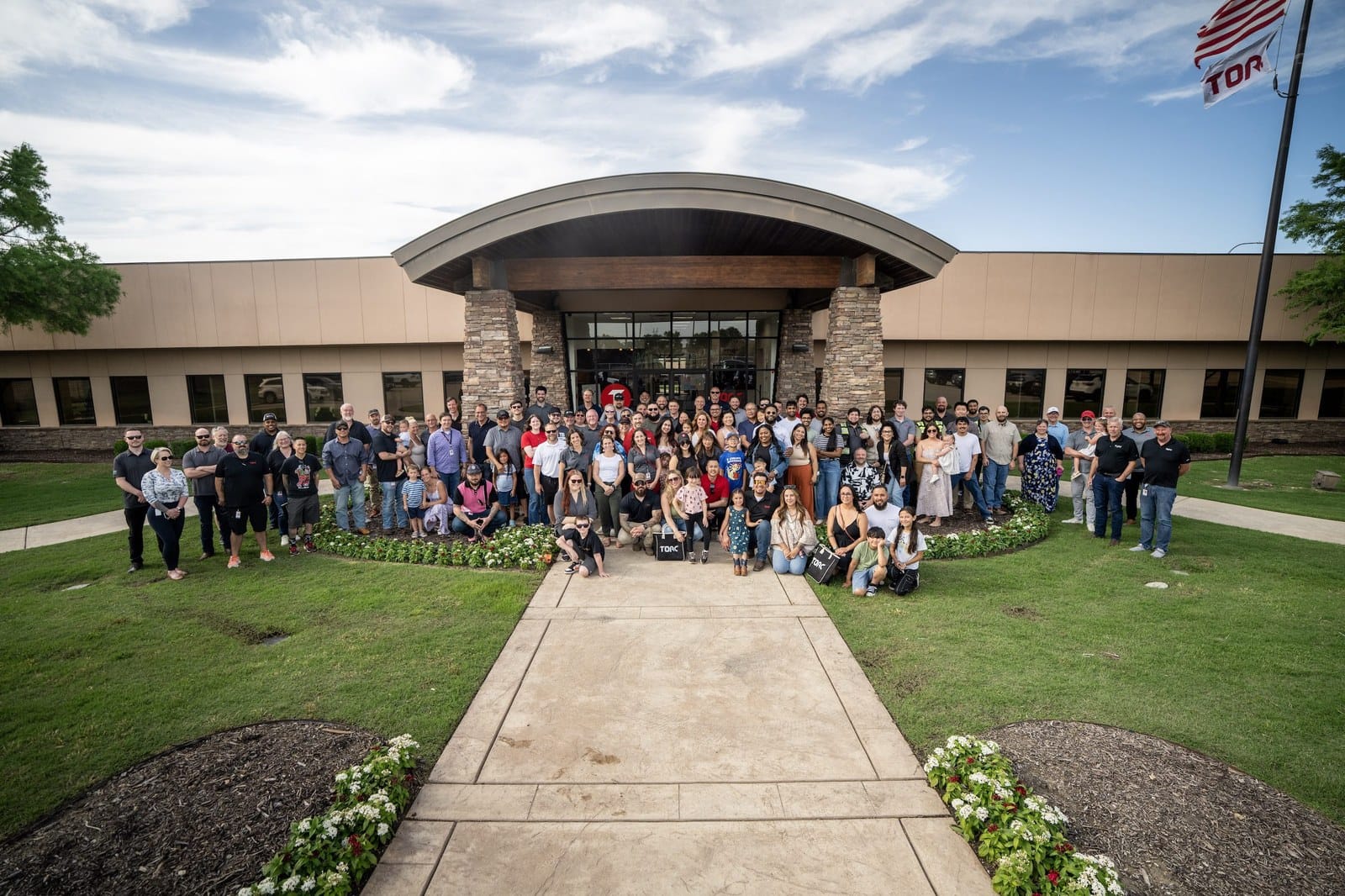
Torc Robotics is the incumbent's entry. Majority-owned by Daimler Truck since 2019, it is building Level 4 autonomy for the Freightliner Cascadia — the most common Class 8 truck on American roads. That is a structural advantage no startup has: the autonomy and the truck come from the same corporate parent, with the dealer and service network already in place.
Torc has achieved a driver-out validation milestone on a closed course in Texas and operates an autonomous trucking hub in Fort Worth. It is targeting commercial launch in 2027 and has entered what it calls a productization phase, taking delivery of next-generation autonomous-ready chassis from Daimler.
The cost of that discipline is time. While Aurora and Kodiak were removing drivers on public roads, Torc was validating on a closed course.
Best for: fleets that want autonomy from the manufacturer that already builds and services their trucks.
Pros
- Owned by Daimler Truck, so the autonomy system and the vehicle platform are engineered together
- Freightliner Cascadia integration means existing service and dealer infrastructure applies from day one
- Corporate parent funding removes the financing risk that has killed several competitors
- Purpose-built autonomous-ready chassis rather than a sensor kit bolted to a standard truck
Cons
- No driverless operation on public roads; the driver-out milestone was on a closed course
- 2027 launch target puts it years behind Aurora and Kodiak commercially
- Tied to Daimler platforms, so mixed-fleet operators get less flexibility
- Less public disclosure than the listed companies, since results roll into Daimler Truck's reporting
7. Einride
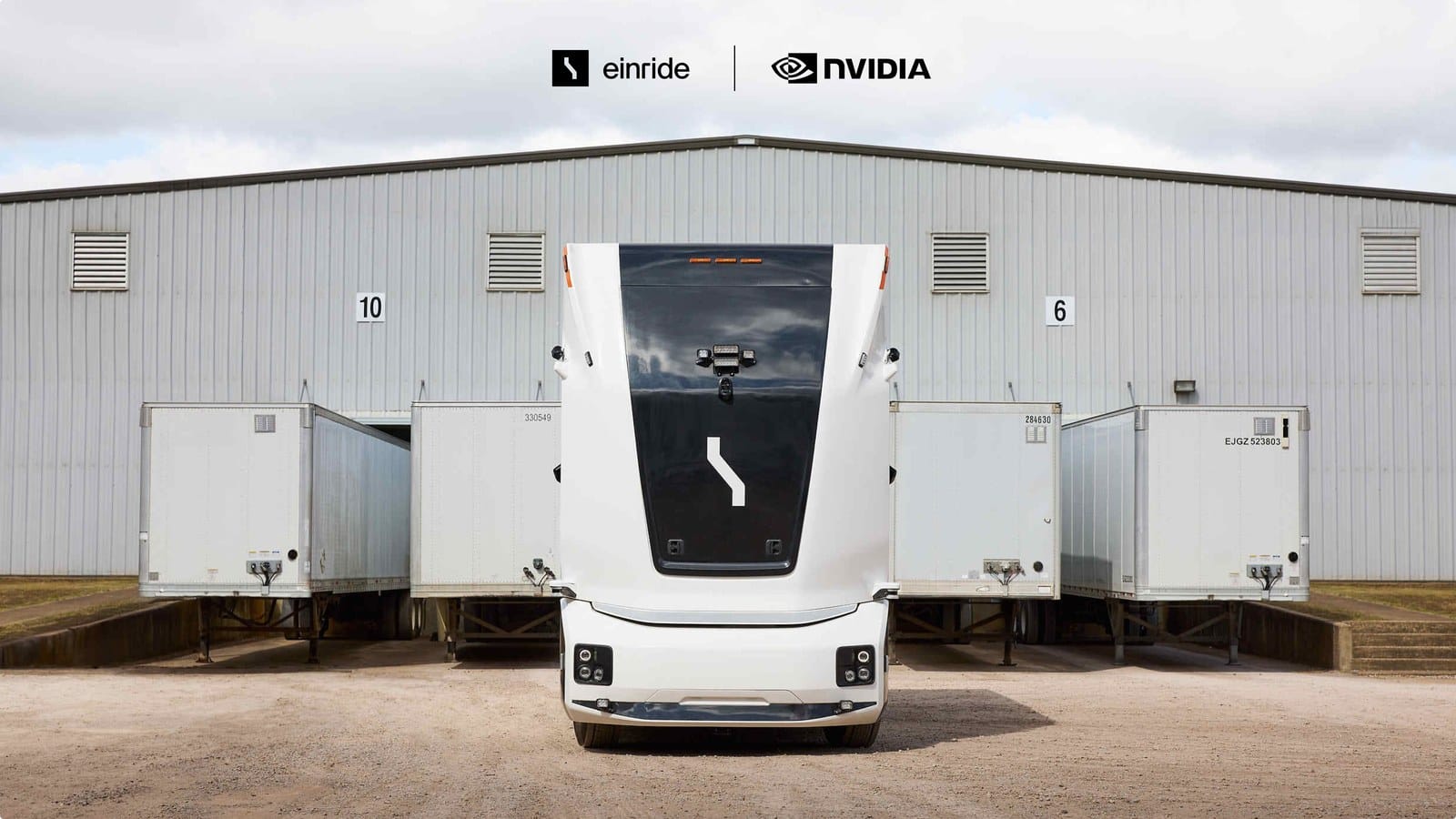
Einride belongs on this list with a caveat: it is an electric freight company that also does autonomy, not an autonomy company that also does electric. The Swedish firm, founded in Stockholm in 2016, is best known for its cab-less autonomous pod — a truck with no driver's seat at all — but the bulk of its operating business today is electric heavy-duty freight and the software that plans and optimises it. It has deployed 75 electric heavy-duty trucks across five US locations in partnership with Amazon.
It began trading on Nasdaq on 10 June 2026 under ENRD after merging with Legato Merger Corp. III, in a deal that delivered roughly $333 million in gross proceeds. The shares rose more than 70% on debut.
Best for: shippers decarbonising freight now, with autonomy as a later-stage option.
Pros
- Operating an electric heavy-duty fleet at real scale today, including 75 trucks with Amazon
- The cab-less pod removes the driver's cab entirely rather than automating around it
- Newly listed on Nasdaq with roughly $333M in gross proceeds from the transaction
- Freight-planning software gives it a revenue line that does not depend on autonomy shipping
Cons
- Autonomous deployment is far narrower than the other six; the pod runs in limited settings
- Cab-less design faces regulatory approval hurdles in most jurisdictions that the others avoid
- Electric range and charging constraints limit the long-haul lanes it can serve
- Recent SPAC listing with volatile early trading and a short public financial track record
How to choose
You need driverless capacity in 2026. Aurora on a Sun Belt long-haul lane, Gatik for middle-mile retail distribution, Kodiak for industrial and oilfield work. Those are the three with trucks running empty-cab today.
You are a fleet planning a 2027–2028 transition. Torc if you run Freightliners, because the autonomy and the truck arrive from the same manufacturer. Plus if you buy from TRATON, Hyundai or IVECO.
You are outside the US. Plus and Einride are the only two here with substantial non-US operations. Most driverless autonomous trucking companies remain concentrated in Texas and the Southwest, where the weather and the regulations are friendliest.
You are decarbonising rather than de-crewing. Einride, and treat autonomy as optional upside.
You are an investor. Aurora, Kodiak and Einride are listed; Waabi, Plus, Gatik and Torc are not. Note that Torc's results consolidate into Daimler Truck, so there is no pure-play exposure there.
One pattern worth noting across the sector: everything commercial is happening in the Sun Belt. Weather is the unsolved problem, and no company on this list operates driverless in snow. That is the same regional-first playbook the robotaxi companies ran, and it depends on the same underlying stack of edge AI compute and AI accelerators.
Frequently Asked Questions
How many self-driving trucks are on the road?
Only a few dozen trucks operate fully driverless on public roads in the US today. Kodiak runs 35 driverless trucks in the Permian Basin, Gatik operates driverless box trucks on retail routes, and Aurora targets 200 driverless trucks by the end of 2026. Thousands more run with safety drivers aboard.
How do self-driving trucks work?
A self-driving truck combines lidar, radar and cameras feeding a perception system that builds a real-time model of the road, then a planning system that decides speed, lane and manoeuvres, and actuators that control steering and braking. Most systems are Level 4: fully autonomous within a defined operating area, not everywhere.
How do self-driving trucks handle bad weather?
Mostly by not operating in it. Heavy rain, snow and fog degrade lidar and camera performance, and every driverless deployment in the US today is in the Sun Belt for that reason. Companies test in adverse conditions, but no operator has removed the driver on snow-covered roads commercially.
Are there self-driving semi trucks carrying real freight?
Yes. Aurora has run driverless Class 8 trucks carrying commercial loads on Texas highways since 2025, and Kodiak operates driverless trucks for oilfield customers. These are paying commercial loads, not demonstrations, though the total number of trucks remains small.
Will self-driving trucks replace truck drivers?
Not soon, and not uniformly. Current deployments target long, repetitive highway segments, while pickup, delivery, urban driving and loading still require people. The near-term model most operators describe is a transfer hub: a driver handles first and last miles, autonomy handles the highway in between.
Editor's note — sources: Aurora investor relations; Kodiak AI news; Gatik Series D coverage, Sourcing Journal; CNBC on Waabi's Series C; Plus on SuperDrive 6.0; FreightWaves on the terminated Plus SPAC; Daimler Truck on Torc's driver-out milestone; CNBC on Einride's Nasdaq debut. Fleet counts, funding and launch targets verified as of September 2026.