
Top 7 SIEM Tools in 2026: Sentinel, Splunk, CrowdStrike and More
For SOC teams choosing a SIEM in 2026. The category has reorganised around data-lake pricing, agentic triage and heavy consolidation - Cisco took Splunk, Palo Alto took QRadar's SaaS business.


The seven SIEM tools worth shortlisting in 2026 are Microsoft Sentinel, Splunk Enterprise Security, CrowdStrike Falcon Next-Gen SIEM, Palo Alto Cortex XSIAM, Google Security Operations, Elastic Security, and Wazuh. The category has split along one line: whether your logs live in the vendor's index or in a cheap data lake you query on demand. That choice now drives your bill more than detection quality does.
How we picked these
Selection criteria, applied in this order:
- Production maturity. The product is generally available, sold as a standalone SIEM, and has published documentation deep enough to evaluate. No previews.
- Detection and investigation capability. Correlation, behavioral analytics, and a query language a detection engineer can actually work in.
- Cost architecture. How the vendor charges for ingest and retention, and whether the pricing is published at all.
- Deployment flexibility. SaaS-only, self-hosted, or both — including whether air-gapped deployment is possible.
- Ecosystem. Prebuilt integrations, detection content, and community rules.
We excluded adjacent categories that solve different problems: cloud posture and workload protection belongs to CNAPP platforms, and runtime protection for exposed endpoints belongs to API security platforms.
Ranking runs from broadest production footprint and capability down to narrower or more specialised fits. All pricing and feature claims are as of September 2026 and traced to vendor documentation.
Quick comparison
| Tool | Best for | Deployment | Pricing model |
|---|---|---|---|
| Microsoft Sentinel | Microsoft-heavy estates wanting a cheap retention tier | SaaS (Azure) | Per-GB analytics tier + separate data lake meters |
| Splunk Enterprise Security | Deep detection engineering and custom content | SaaS + self-managed | Ingest, workload, entity or activity based |
| CrowdStrike Falcon NG-SIEM | Teams already standardised on Falcon endpoint | SaaS | Module licensing / Falcon Flex — quote only |
| Palo Alto Cortex XSIAM | Consolidating SIEM, SOAR and XDR into one vendor | SaaS | Quote only |
| Google Security Operations | Very large telemetry volumes and long retention | SaaS | Quote only |
| Elastic Security | Air-gapped, sovereign or self-managed SOCs | SaaS + self-managed | Resource, usage or node/RAM licensing |
| Wazuh | Small teams and labs with no software budget | Self-hosted / cloud | Free, open source |
1. Microsoft Sentinel
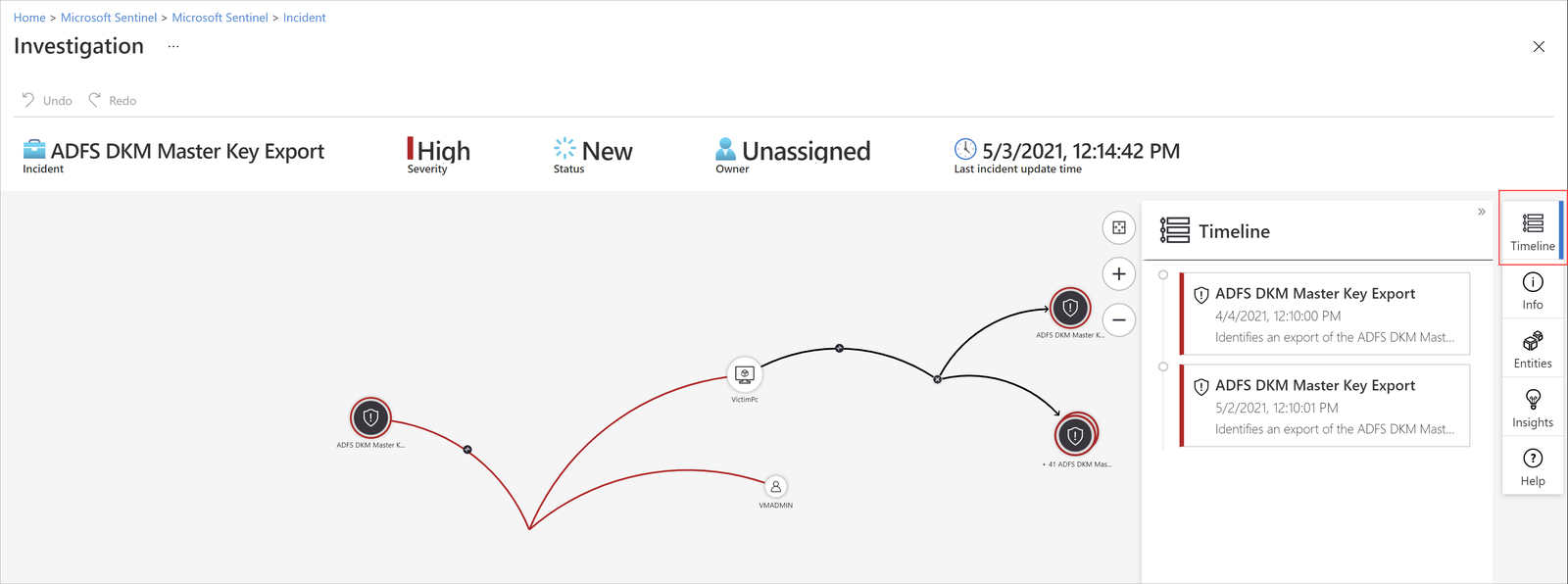
Microsoft Sentinel is a cloud-native SIEM running on Azure, queried with KQL. Its 2025–2026 redesign is the most consequential change in the category: Microsoft split storage into two tiers. The analytics tier holds high-value logs with full detection, alerting and query support. The data lake tier holds high-volume logs — firewall, proxy, network — at much lower cost, with separate compute and storage meters, for forensics and long retention.
Two newer pieces sit on top. Sentinel graph models relationships across security data so teams can build custom graphs. An MCP server exposes Sentinel capabilities to AI agents — the same protocol now spreading through AI guardrails and LLM security tooling; Microsoft bills its calls against the underlying data lake, graph and Security Compute Unit meters rather than as a separate line item.
Best for: organisations already on Microsoft 365 and Defender that want one SIEM bill and a cheap place to park high-volume logs.
Pros
- Published pricing: analytics tier offers Pay-As-You-Go or commitment tiers from 100 GB to 50,000 GB per day, which Microsoft states save up to 52% against PAYG rates.
- A 50 GB commitment tier is in public preview with promotional pricing available through 31 December 2026, locked in until 31 March 2027 for customers who sign up in that window.
- Native ingestion of Defender, Entra and Azure signals without third-party connectors.
- Microsoft offers up to 5 MB of free daily ingestion per user for key security logs under its Microsoft 365 offer.
Cons
- Azure-only. There is no self-managed or air-gapped option.
- The two-tier model adds a new decision to every data source — put it in analytics or the lake — and Microsoft's own FAQ exists largely to answer that question.
- Commitment tiers apply per workspace and cannot be pooled across workspaces or subscriptions, which penalises multi-tenant and multi-region designs.
- Costs beyond Sentinel itself — Log Analytics, Logic Apps, Machine Learning — are billed separately at their own rates.
2. Splunk Enterprise Security
Splunk Enterprise Security is the incumbent most large SOCs are either running or migrating away from. It layers risk-based alerting, correlation searches and the Mission Control analyst workspace on top of Splunk's SPL search engine. Cisco closed its acquisition of Splunk in March 2024, and the product now ships alongside Cisco's security portfolio.
What still separates it is detection engineering depth. SPL remains the most expressive query language in the category, and the volume of community and vendor-published detection content built on it has no equivalent elsewhere.
Best for: teams with dedicated detection engineers who will write and maintain their own content.
Pros
- Runs as SaaS (Splunk Cloud Platform) or fully self-managed (Splunk Enterprise) from the same codebase.
- Four distinct pricing models — ingest, workload, entity and activity based — so buyers can pick the one matching their data shape.
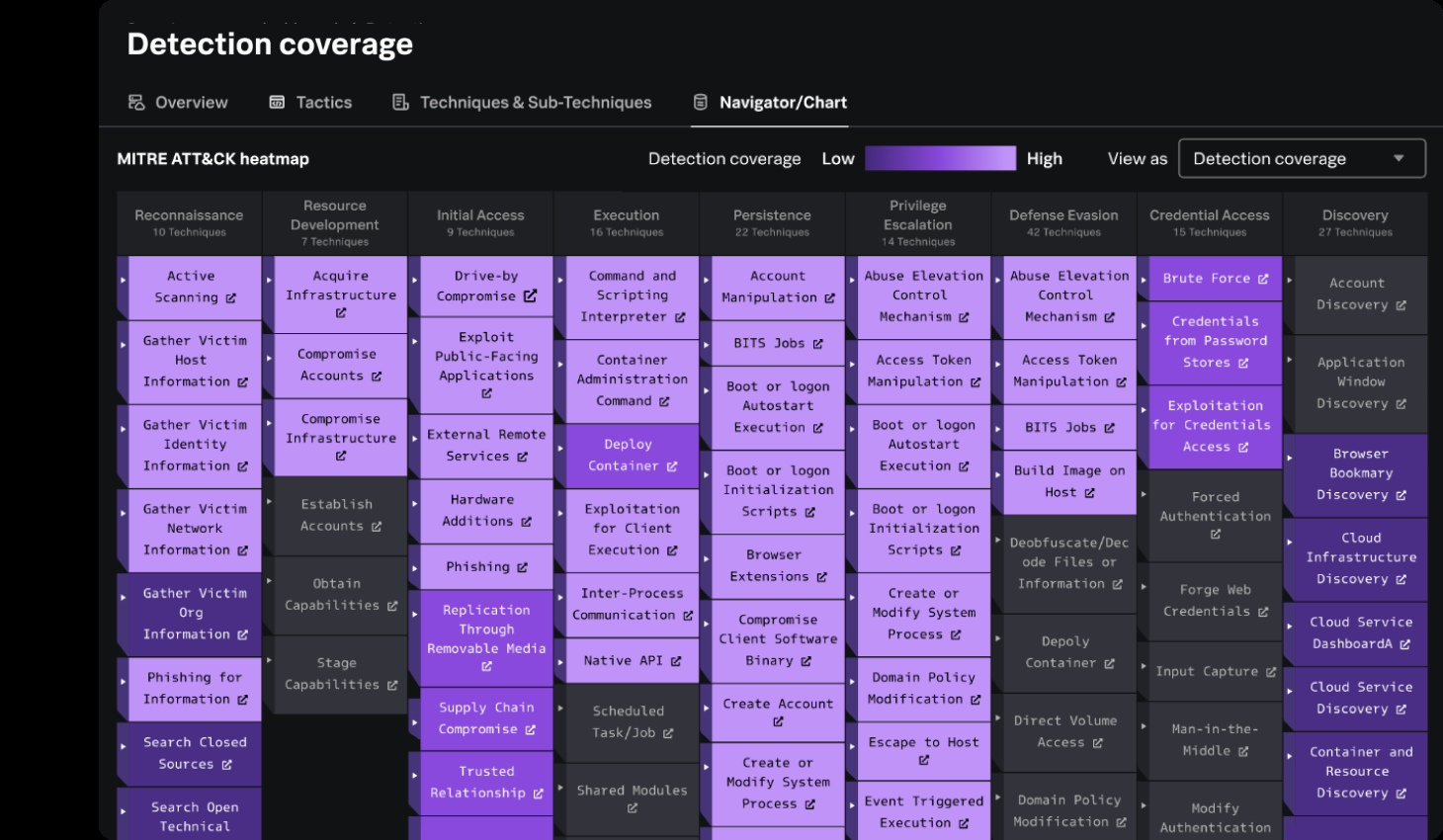
- MITRE ATT&CK coverage mapping is built into the product rather than bolted on.
- Largest third-party integration and app ecosystem in the category.
Cons
- No public price list. Every model is quote-only, which makes cost modelling before a POC guesswork.
- Ingest-based licensing has a long-running reputation for cost surprises at scale — the reason the other three models exist.
- Post-acquisition roadmap overlap with Cisco's own security tooling leaves existing customers with integration uncertainty.
- Self-managed deployments carry real operational cost: indexer clusters need capacity planning and ongoing tuning.
3. CrowdStrike Falcon Next-Gen SIEM
CrowdStrike built Falcon Next-Gen SIEM on an index-free search architecture, which the company claims delivers search up to 150x faster than legacy indexed SIEMs at petabyte scale. That is CrowdStrike's own benchmark claim, published on its product page, not an independent result.
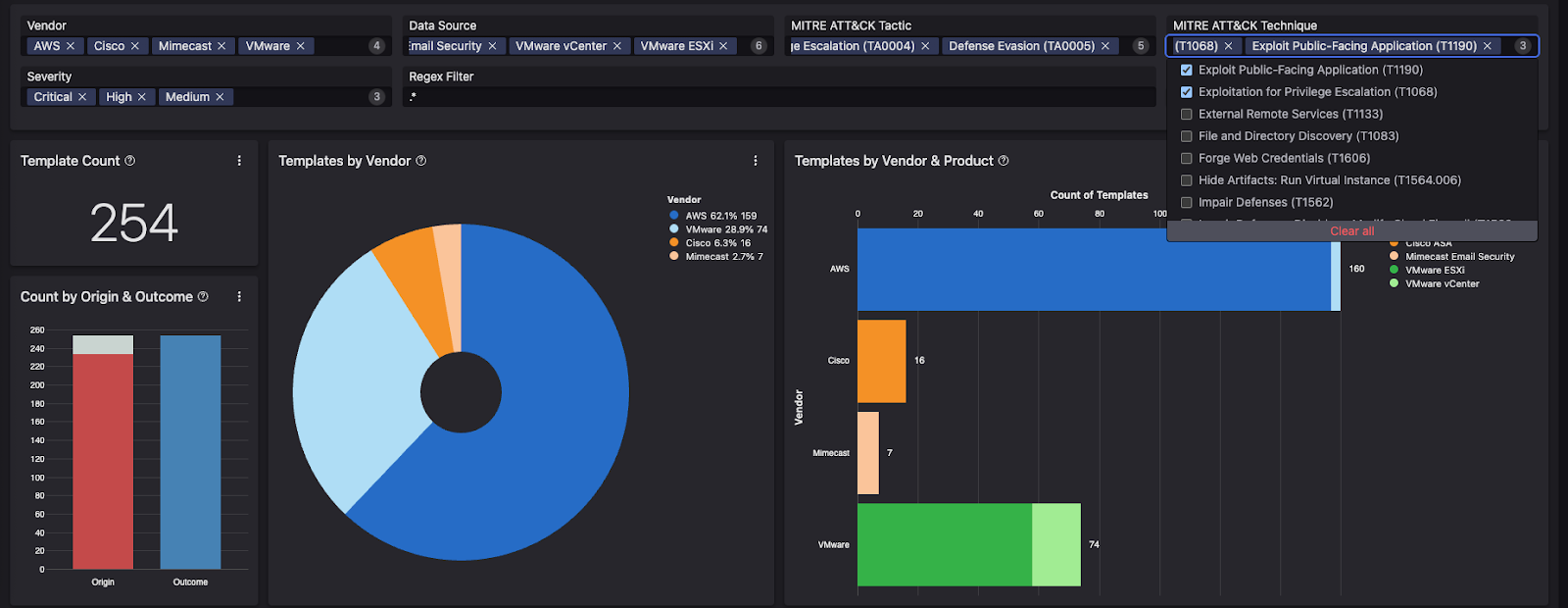
The real argument for it is correlation. Falcon endpoint telemetry is already in the platform, so third-party logs join against first-party EDR data without a connector in between. CrowdStrike has been shipping SOC content tooling on top — a correlation rule template discovery dashboard surfaces detection templates matched to the log sources a customer has actually onboarded.
Best for: SOCs already running Falcon for endpoint that want to fold log management into the same console.
Pros
- No index management or tiering decisions; ingest and search are decoupled from storage layout.
- First-party endpoint telemetry requires no ingestion cost or connector to correlate against.
- Dashboards support charts, lists, maps and Sankey diagrams natively for compliance reporting.
- Detection content is matched to onboarded data sources rather than presented as an undifferentiated catalogue.
Cons
- No published pricing. Licensing runs through module bundles or Falcon Flex, and requires a sales conversation.
- The value case weakens sharply if you are not already a Falcon endpoint customer.
- SaaS only — no self-hosted or air-gapped deployment.
- The 150x search claim is vendor-published and has no independent benchmark behind it.
4. Palo Alto Networks Cortex XSIAM
Palo Alto Networks positions Cortex XSIAM as a replacement for the SIEM-plus-SOAR-plus-XDR stack rather than a SIEM alongside them. It ingests logs, runs detection, orchestrates response and manages attack surface from one platform.
Palo Alto also absorbed IBM's QRadar SaaS assets, closing that deal in September 2024 and taking on the migration path for QRadar cloud customers. Note that IBM continues to sell and support on-premises QRadar independently — only the SaaS business changed hands.
Best for: teams deliberately consolidating onto a single security vendor and willing to accept the lock-in that implies.
Pros
- SIEM, SOAR, XDR and attack surface management ship as one product with one data model.
- A defined migration route exists for former QRadar SaaS customers.
- Automation is native rather than a separately licensed SOAR bolt-on.
- Deep integration with Palo Alto firewalls and Prisma if you already run them.
Cons
- No published pricing at all — quote only.
- Detection and ML-model counts on Palo Alto's own marketing pages are inconsistent between sections, so treat those figures as approximate.
- Single-vendor consolidation is the whole pitch, and also the whole risk: switching later means replacing four tools at once.
- SaaS only.
5. Google Security Operations
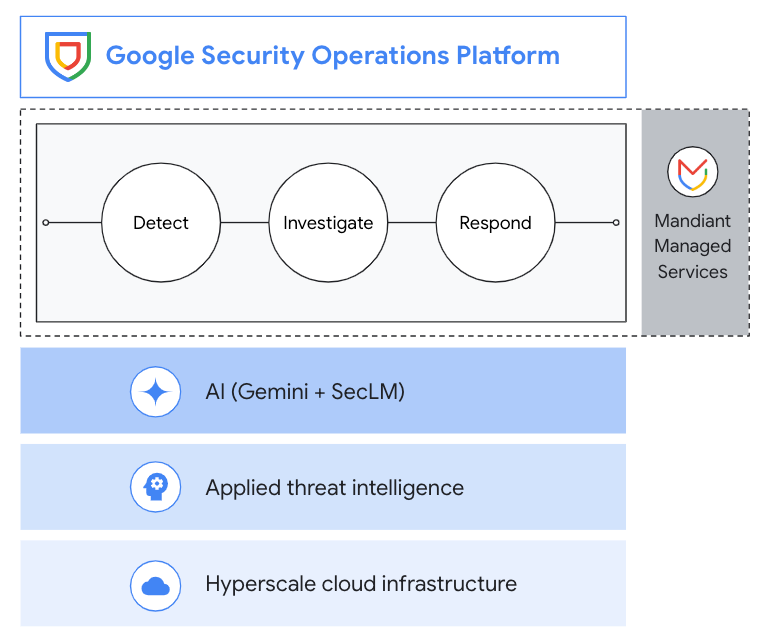
Google Security Operations is the former Chronicle platform, now combined with Siemplify's SOAR and Mandiant threat intelligence. Detections are authored in YARA-L, and Gemini provides natural-language search over the telemetry.
Its structural advantage is economics at volume. Google built it on the same infrastructure that runs its own planet-scale systems, and prices retention in a way that makes keeping a year of raw telemetry a normal decision rather than a budget event.
Best for: organisations with very high log volumes that need long retention without per-GB anxiety.
Pros
- Pricing is oriented around bulk telemetry volume rather than per-GB ingest, which suits high-volume estates.
- Mandiant threat intelligence is applied to customer telemetry natively.
- YARA-L is purpose-built for detection authoring rather than adapted from a general search language.
- Detect, investigate and respond sit in one platform, with Mandiant managed services available on top.
Cons
- No public price list; commercial terms come through Google Cloud sales or marketplace listings.
- YARA-L is specific to this platform — detection content does not port in or out easily.
- SaaS only, with no self-managed option.
- Non-Google-Cloud environments need more integration work than Microsoft or CrowdStrike customers face in their native estates.
6. Elastic Security
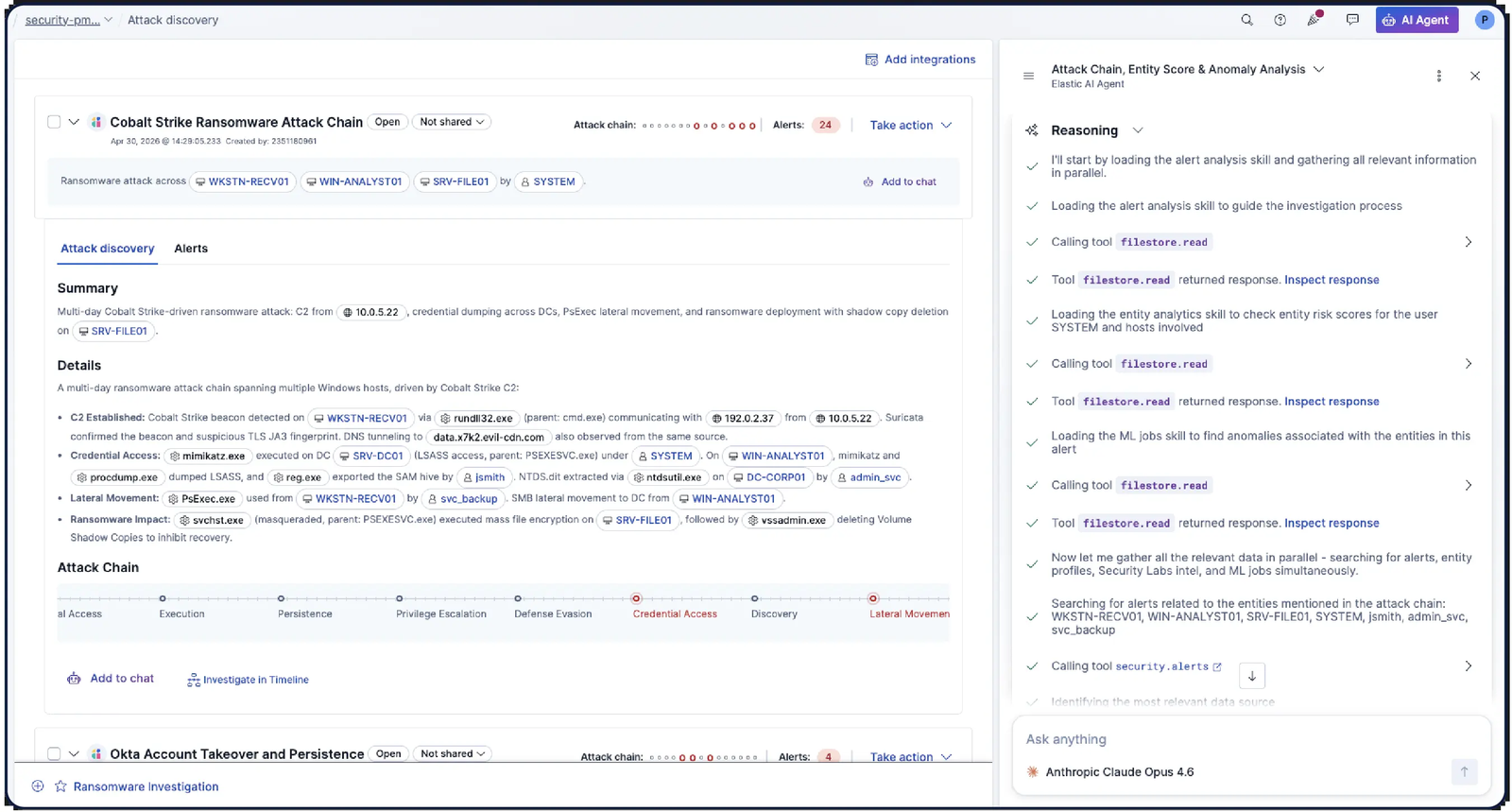
Elastic Security is built on Elasticsearch and Kibana, and it is the only entry here you can run genuinely anywhere — Elastic Cloud Serverless, Elastic Cloud Hosted, or self-managed on-premises, in a private cloud, or air-gapped.
Elastic ships SIEM, XDR and what it calls Agentic SOAR together, with no separate SOAR licence. Its AI layer is model-agnostic: Elastic Agent Builder works with Elastic-managed models, OpenAI, Anthropic, Gemini, or open models you host yourself. For teams with data residency constraints that matters more than any feature.
Best for: sovereign, regulated or air-gapped SOCs, and teams that want to avoid endpoint-count licensing.
Pros
- Deploy anywhere, including air-gapped, from the same product.
- Priced on compute and storage rather than per endpoint or per device.
- Three licensing shapes: resource-based (hosted), usage-based (serverless), node-and-RAM-based (self-managed).
- 99.95% monthly uptime SLA on Platinum and Enterprise cloud tiers; over 1,300 detection rules published openly on GitHub.
Cons
- Serverless does not yet have full feature parity — traffic filtering, cross-project search and bring-your-own-key are on the roadmap, not shipped.
- Self-managed Elasticsearch clusters are genuine operational work: sharding, hot-warm tiers and index lifecycle management are yours to run.
- Analyst recognition is mixed rather than uniformly top-tier — Elastic reports Leader placement in IDC's 2026 SIEM assessment but Strong Performer, not Leader, in the Forrester Wave for XDR Platforms, Q2 2026.
- Security competes with search and observability for engineering attention inside the same platform.
7. Wazuh
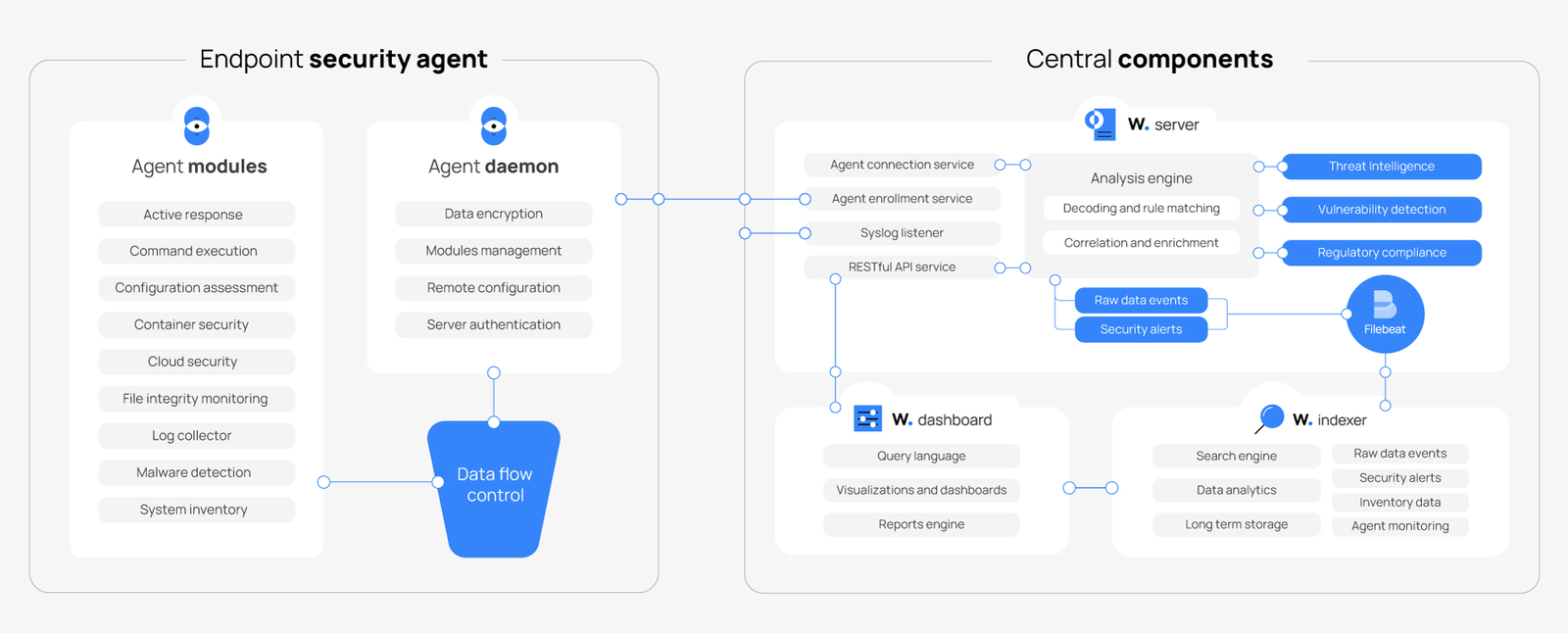
Wazuh is the open-source option, and the only one on this list with no licence cost at all. It combines an endpoint agent with a central server, indexer and dashboard, covering file integrity monitoring, vulnerability detection, configuration assessment, log analysis and regulatory compliance reporting.
Adoption is substantial for a self-hosted security tool: the project shows roughly 17,000 GitHub stars and 2,500 forks as of September 2026, with commits landing daily. A paid cloud option exists for teams that want the platform without running it.
Best for: small teams, labs, MSPs and budget-constrained environments that have engineering time but no software budget.
Pros
- Free and open source, with no ingest metering — cost scales with your hardware, not your log volume.
- Endpoint agent modules cover FIM, malware detection, container and cloud security, and system inventory in the base product.
- Prebuilt compliance mappings for common regulatory frameworks.
- Active development with a visible public repository and daily commit activity.
Cons
- You operate everything: server, indexer, dashboard, upgrades, scaling and backups.
- Correlation and behavioural analytics are considerably thinner than in any commercial entry here.
- No vendor-provided threat intelligence feed of the kind Mandiant or CrowdStrike bundle.
- At large scale the indexer tier becomes a real engineering project rather than a configuration task.
How to choose
Start with where your data already is, because that decides most of the answer.
- Microsoft-centric estate. Sentinel. The native Defender and Entra connectors plus the data lake tier make the total bill hard to beat, and it is the only vendor here publishing per-GB rates.
- CrowdStrike endpoint already deployed. Falcon Next-Gen SIEM. Correlating third-party logs against EDR telemetry you already pay for is the whole case.
- You employ detection engineers. Splunk Enterprise Security. Nothing else gives them the same expressive range or content library.
- You want one vendor for SIEM, SOAR and XDR. Cortex XSIAM — accepting the lock-in as a deliberate trade.
- Petabyte-scale telemetry, multi-year retention. Google Security Operations, priced for volume rather than per gigabyte.
- Air-gapped, sovereign or data-residency constrained. Elastic Security. It is the only one of these SIEM platforms you can run entirely disconnected.
- No budget, some engineering time. Wazuh. Accept thinner correlation in exchange for zero licence cost.
One practical note on SIEM cost comparison: model your ingest volume by source before any demo. Vendors quoting per-GB and vendors quoting per-workload will rank completely differently depending on whether your volume is concentrated in a few noisy sources or spread evenly.
Frequently Asked Questions
What is SIEM?
SIEM — security information and event management — is software that collects log and telemetry data from across an environment, correlates it to detect threats, and gives analysts a place to investigate and respond. Modern SIEM tools add behavioural analytics, automated response, and threat intelligence enrichment on top of that collection layer.
What are SIEM tools?
SIEM tools are the products that implement that function: Microsoft Sentinel, Splunk Enterprise Security, CrowdStrike Falcon Next-Gen SIEM, Palo Alto Cortex XSIAM, Google Security Operations, Elastic Security and Wazuh are the main options in 2026. They differ mainly in deployment model, query language, and how they charge for data ingestion and retention.
Is Splunk a SIEM?
Splunk is a data platform; Splunk Enterprise Security is the SIEM product built on it. You need the Enterprise Security licence for correlation searches, risk-based alerting and the Mission Control analyst workspace. Splunk Enterprise or Splunk Cloud alone gives you log search and dashboards, not SIEM detection content.
What is SIEM in cyber security?
In a security operations centre, SIEM is the system of record. It ingests logs from endpoints, identity providers, firewalls and cloud services, applies detection rules to that stream, and raises alerts analysts triage. It also serves compliance: most regulatory frameworks require centralised log retention and evidence of monitoring.
What is managed SIEM?
Managed SIEM is a SIEM platform operated by a third party — an MSSP or the vendor — who handles deployment, tuning, detection content and often first-line triage. Google offers Mandiant managed services on Security Operations; most other vendors work through MSSP partners. It shifts the staffing cost, not the data cost.
Editor's note — sources
- Microsoft Sentinel pricing — commitment tiers, data lake meters, MCP billing, 50 GB promotion (accessed September 2026)
- Microsoft Sentinel overview documentation
- Splunk Enterprise Security product page
- CrowdStrike Falcon Next-Gen SIEM and correlation rule template discovery
- Palo Alto Networks closes acquisition of IBM's QRadar SaaS assets
- IBM QRadar SIEM — confirming continued on-premises product
- Google Security Operations
- Elastic pricing and Elastic Security
- Wazuh documentation and Wazuh on GitHub (star and fork counts retrieved 25 September 2026)