
Top 7 Web Application Firewall (WAF) Providers in 2026
A web application firewall (WAF) blocks malicious HTTP traffic to your apps and APIs. We rank the seven best WAF providers for 2026 — Cloudflare, Akamai, Imperva, AWS WAF, Azure WAF, F5 and Fastly — on detection, scale, deployment and real pricing.


TL;DR
- A web application firewall (WAF) filters, monitors, and blocks malicious HTTP traffic to web apps and APIs — stopping injection, cross-site scripting, and bot abuse before it reaches your origin. The leading 2026 providers are Cloudflare, Akamai, and Imperva, followed by AWS WAF, Azure WAF, F5, and Fastly.
- Pricing splits two ways. Consumption models (AWS WAF at $0.60 per million requests plus $5/web ACL and $1/rule; Azure WAF similar) can surprise at scale. CDN-bundled flat tiers (Cloudflare Free through Business at $200/month) are the other model; Akamai, Imperva, F5, and Fastly are quote-only.
- The category has converged into WAAP — web application and API protection — bundling WAF with bot management, API security, and layer-7 DDoS. Detection is shifting from pure signatures toward ML and behavioral scoring to cut false positives.
- Pick for fit: Cloudflare for the easiest broad coverage, Akamai/Imperva for enterprise-grade WAAP, AWS/Azure WAF when you're native to that cloud, Fastly for low-tuning, developer-friendly protection.
The best web application firewall providers in 2026 are Cloudflare, Akamai, and Imperva, with AWS WAF, Azure WAF, F5, and Fastly completing the list. A WAF sits in front of your web applications and APIs and inspects every request, blocking the OWASP Top 10 attack classes — SQL injection, cross-site scripting, and more — along with bad bots and layer-7 denial-of-service. The seven here differ in where they run (global edge, in-cloud, or appliance), how they detect attacks (signatures vs. machine learning vs. positive security), and how their pricing behaves at scale. This guide ranks them on capability, reach, breadth, and real-world fit.
How we picked these
We weighted detection capability (rule quality, ML/behavioral analysis, false-positive control), scale and reach (edge footprint and traffic handled), breadth (how fully each delivers WAAP — bot management, API security, and DDoS, not just a rule engine), and fit (cloud-native vs. multicloud vs. appliance). We verified published pricing on each vendor's pages and marked quote-only products as such. In the last Gartner Magic Quadrant for Cloud WAAP (2022), Akamai, Cloudflare, and Imperva were named Leaders; we weight current capability over any single report. Ranking is not alphabetical, and we make no claim of sponsorship or paid placement.
Quick comparison
| Company | Best for | Deployment | Pricing model |
|---|---|---|---|
| Cloudflare | Broad, low-effort app security | Edge reverse proxy (DNS) | Free to $200/mo; Enterprise quote |
| Akamai | Enterprise edge WAAP at scale | Edge/CDN + hybrid | Quote only |
| Imperva | Flexible deployment, deep tuning | SaaS, on-prem gateway, Kubernetes | Quote only |
| AWS WAF | AWS-native stacks | In-cloud (CloudFront/ALB/API GW) | Consumption (published) |
| Azure WAF | Azure/Microsoft shops | Front Door / Application Gateway | Consumption (published) |
| F5 | Hybrid/multicloud, BIG-IP estates | SaaS, appliance, NGINX | PAYG + quote |
| Fastly | Low-tuning, DevSecOps teams | Edge, cloud, on-prem agent | Quote only |
1. Cloudflare
Cloudflare offers the broadest reach and the easiest onboarding of any WAF — a DNS change puts your traffic behind its global anycast edge. Its Managed Rulesets, tuned on an enormous and diverse traffic sample, keep false positives low and ship emergency rules for new CVEs quickly; custom rules, rate limiting, and upload content scanning round out the WAF, with bot management and API Shield as adjacent products. The standout is that a WAF is included on every plan, including the Free tier. As of October 2026, paid plans run Pro at $20/month (annual), Business at $200/month, and Enterprise on contract. Cloudflare is public (NYSE: NET).
Best for: Teams wanting broad, low-effort application security bundled with CDN and DNS.
Pros
- WAF is included at every tier, including the free plan — a rarity in this market.
- Fastest onboarding and an enormous threat-intelligence surface across its network.
- Tight integration with bot management, DDoS protection, API Shield, and CDN.
Cons
- The deepest bot and API protection are separate paid add-ons, so true WAAP cost climbs.
- Advanced managed rulesets and higher limits are gated to paid tiers.
- You operate through Cloudflare's proxy and ecosystem, which is a form of vendor tie-in.
2. Akamai

Akamai App & API Protector is an enterprise-grade edge WAAP built on one of the largest content delivery networks in the world. Its Adaptive Security Engine uses machine learning to learn attack patterns and self-tune, cutting the manual rule burden that sinks many WAF deployments. Coverage spans the OWASP Top 10 and OWASP API Top 10, automated zero-day defenses, edge malware scanning of uploads, bot mitigation, and API discovery, with a Behavioral DDoS Engine for volumetric layer-7 attacks. App & API Protector is the modern flagship; the older Kona Site Defender still exists as a separate product. Akamai is public (NASDAQ: AKAM); pricing is quote-only.
Best for: Large enterprises wanting a managed, high-scale edge WAAP with strong API and bot coverage.
Pros
- Massive edge scale and a mature layer-7 DDoS capability.
- Self-tuning Adaptive Security Engine lowers the manual rule-management burden.
- Strong integrated API discovery and bot controls in one platform.
Cons
- Enterprise-priced and quote-only, with weak self-serve onboarding.
- Heavier platform that benefits from account-team engagement to run well.
- Best value only if you commit to Akamai's edge.
3. Imperva
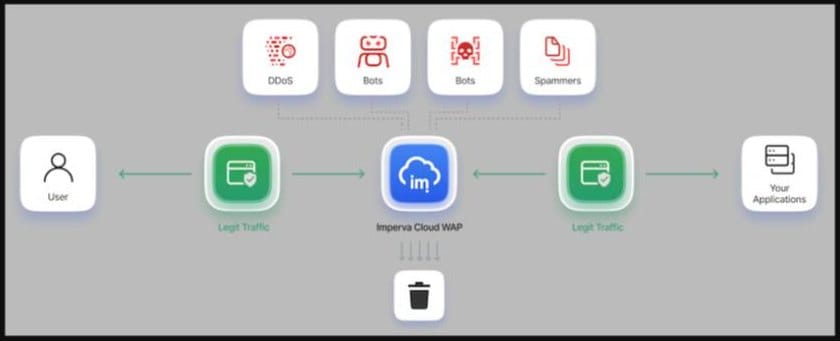
Imperva has the deepest dedicated WAF heritage and the widest deployment range here. Its threat-research team pushes managed rules daily, machine learning and Attack Analytics correlate alerts into incident narratives, and integrated bot protection, API security, and upload scanning round out a full WAAP. It is known for a strong positive-security, low-false-positive reputation. Crucially, you can run it as a SaaS reverse proxy (Cloud WAF), as an on-prem or virtual appliance (WAF Gateway) for data-sovereignty needs, or inside your own Kubernetes (Elastic WAF). Imperva was acquired by Thales — announced July 2023 at roughly $3.6B and completed in early December 2023 — and now sits within Thales's cybersecurity business.
Best for: Enterprises needing flexible deployment and deep, tunable WAF protection.
Pros
- The most deployment flexibility of the group — SaaS, on-prem appliance, and Kubernetes.
- Strong low-false-positive reputation plus Attack Analytics incident correlation.
- Now backed by Thales's security scale and resources.
Cons
- Quote-only pricing with an enterprise sales motion and limited self-serve.
- Breadth across legacy and cloud products adds console and operational complexity.
- Post-acquisition integration into Thales is still maturing — watch the roadmap.
4. AWS WAF
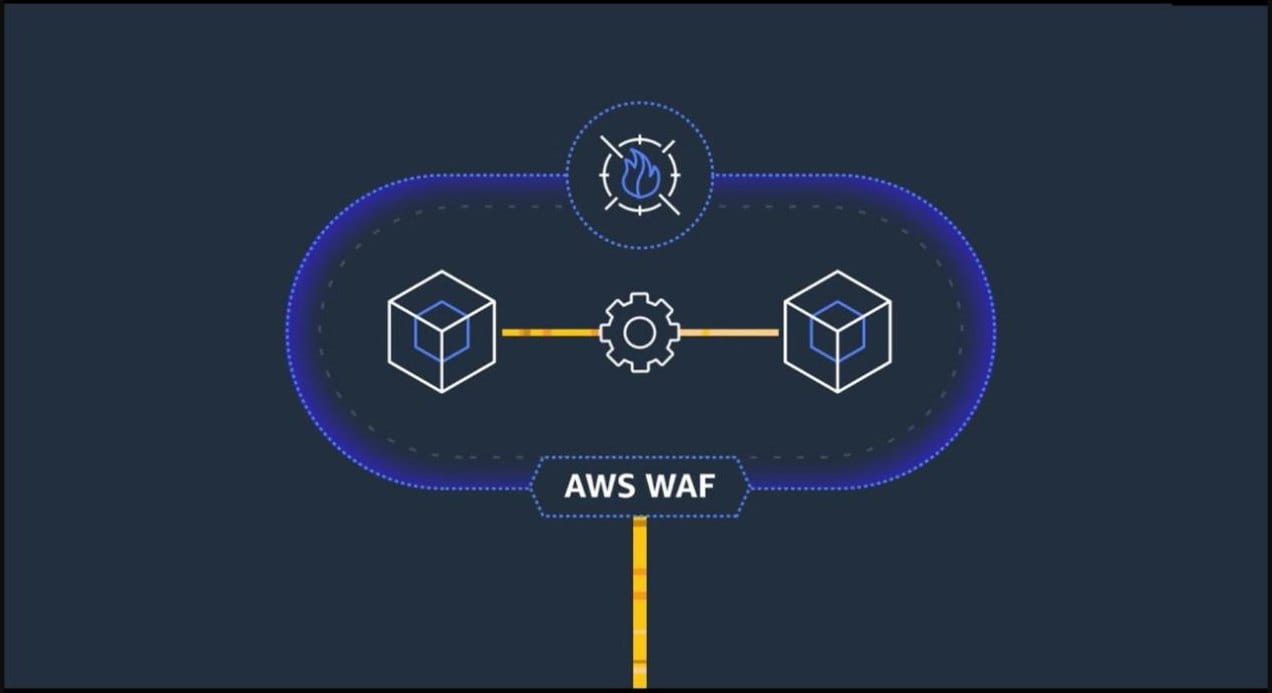
AWS WAF is the native choice for AWS-native stacks, attaching directly to CloudFront, Application Load Balancer, API Gateway, AppSync, and more. AWS Managed Rules cover common and known-bad-input cases, and an AWS Marketplace ecosystem adds third-party rule groups; Bot Control, Fraud Control, and CAPTCHA are available as add-ons. Rules are metered in capacity units (WCUs). Pricing is pay-as-you-go and published: as of October 2026, $5.00 per web ACL/month, $1.00 per rule/month, $1.00 per rule group/month, and $0.60 per million requests, with Bot Control adding $10 per web ACL/month plus request fees. It's a service of Amazon (NASDAQ: AMZN).
Best for: AWS-native teams wanting a WAF wired directly into their AWS edge and app services.
Pros
- Deep native AWS integration with full infrastructure-as-code and automation support.
- Granular consumption pricing with no minimum commitment.
- Managed rules plus a marketplace ecosystem reduce rule authoring.
Cons
- Per-rule, per-request, and per-WCU pricing plus add-ons stack up and can surprise at high volume.
- Comparatively DIY — tuning, logging pipelines, and bot/fraud modules are assemble-your-own.
- Strongest fit only inside AWS, not as a neutral multicloud edge.
5. Azure WAF
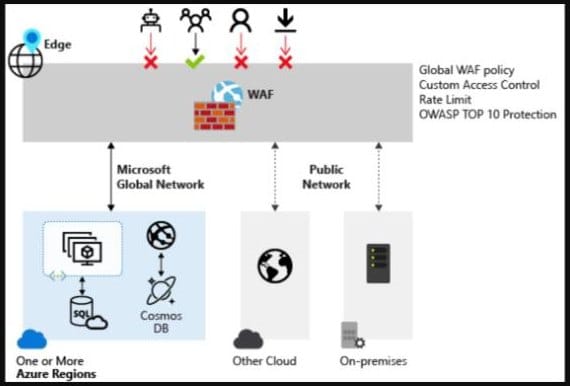
Azure WAF is Microsoft's cloud-native WAF, protecting against OWASP exploits via Azure-managed rule sets, plus bot protection, custom rules, and geo and rate limiting, managed centrally. It attaches to Azure Front Door (edge/global) and Azure Application Gateway (regional). Pricing differs by host: as of October 2026, Front Door (classic) WAF runs $5 per policy/month, $1 per custom rule/month, $0.60 per million requests, and a Default Managed Ruleset at $20/month, while WAF is included in the Front Door Premium SKU. Application Gateway WAF_V2 carries an always-on hourly and capacity-unit cost (roughly $0.443/hour plus $0.0144 per capacity unit/hour in East US — a regional example, not a flat global price). It's a Microsoft (NASDAQ: MSFT) service.
Best for: Azure and Microsoft-centric teams protecting apps behind Front Door or Application Gateway.
Pros
- Deep native Azure integration with single-pane policy management.
- WAF is bundled into the Front Door Premium SKU, simplifying buying.
- Managed Core Rule Set–based rulesets maintained by Microsoft.
Cons
- Pricing and behavior differ between Front Door and Application Gateway, which is confusing to model.
- Application Gateway WAF carries a meaningful always-on cost even at low traffic.
- Best only inside Azure, not a neutral multicloud edge.
6. F5
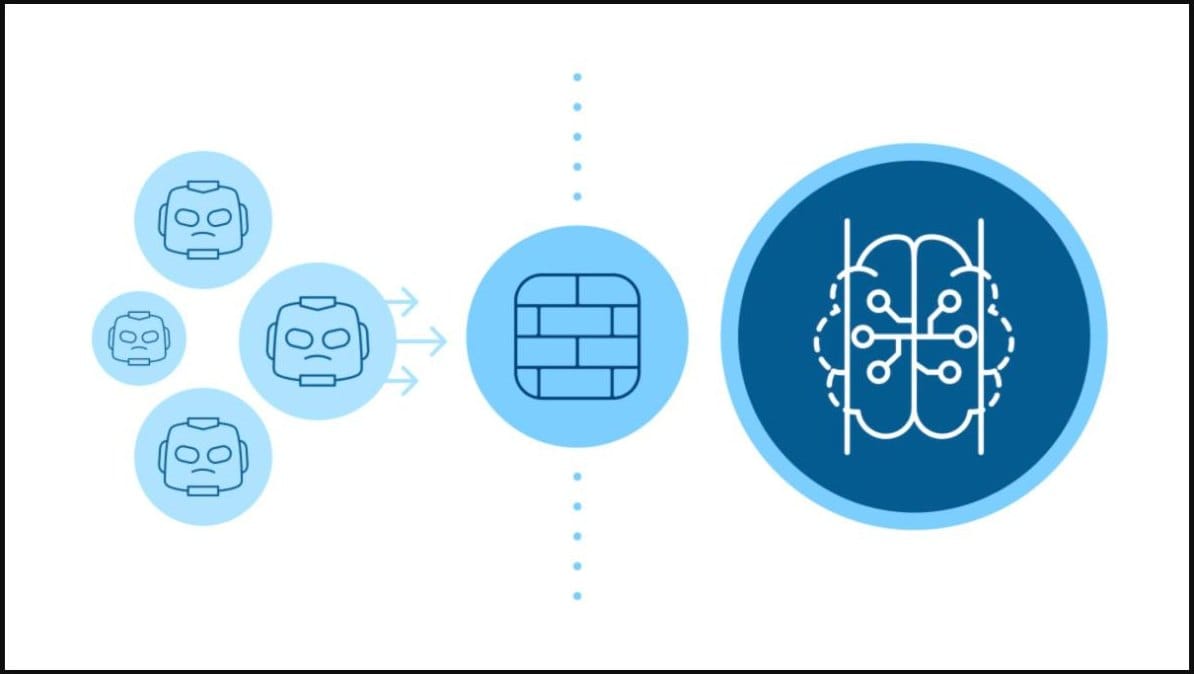
F5 spans SaaS, appliance, and NGINX from one vendor. F5 Distributed Cloud WAF is the SaaS offering: a signature engine fed by F5 Labs, advanced behavioral scoring that flags bad actors with no signature hit, AI-powered risk scoring, and threat-intelligence correlation for daily virtual-patching guidance. BIG-IP Advanced WAF (formerly ASM) is the on-prem and virtual appliance for data-center and positive-security use, and NGINX App Protect brings the WAF engine to NGINX and containers. That breadth makes F5 the natural path for existing BIG-IP estates consolidating hybrid and multicloud security. Distributed Cloud WAF offers pay-as-you-go via AWS Marketplace and a free trial; enterprise and BIG-IP pricing is quote-based. F5, Inc. is public (NASDAQ: FFIV).
Best for: Existing F5/BIG-IP enterprises consolidating hybrid and multicloud app security.
Pros
- One vendor spanning SaaS edge, hardware/virtual appliance, and NGINX.
- Strong behavioral and AI risk scoring plus virtual-patching workflows.
- A natural upgrade path for the large BIG-IP install base.
Cons
- The portfolio spans three distinct products and consoles — real architecture and licensing complexity.
- Full value skews toward existing F5 customers.
- Limited public pricing and self-serve beyond the PAYG marketplace listing.
7. Fastly
Fastly Next-Gen WAF — the former Signal Sciences, acquired in 2020 — is the low-tuning pick. Its SmartParse engine evaluates each request in context rather than matching regex signatures, which keeps false positives low with little manual rule work, and NLX (Network Learning Exchange) shares anonymized malicious-IP reputation across customers for preemptive blocking. Coverage includes the OWASP Top 10, API abuse across REST, SOAP, gRPC, GraphQL, and WebSockets, bad bots, account takeover, and rate limiting. It deploys flexibly — at Fastly's edge, as a Fastly-hosted cloud WAF, or via a lightweight agent/module on-prem (WebSocket inspection is on-prem only). Fastly, Inc. is public (NYSE: FSLY); pricing is quote-only.
Best for: DevOps and platform teams wanting low-tuning, developer-friendly app and API protection.
Pros
- SmartParse delivers strong detection with minimal tuning and low false positives.
- Genuinely flexible deployment across edge, cloud, and on-prem agent.
- Broad API-protocol coverage, developer-friendly for DevSecOps workflows.
Cons
- The smallest edge footprint of this group.
- WebSocket inspection is limited to the on-prem deployment; HTTP/S only.
- Quote-only pricing and a Challenger (not Leader) standing in the 2022 Gartner WAAP report.
How to choose
Match the WAF to where your apps run and how much tuning you can staff.
- If you want the broadest coverage with the least effort: Cloudflare — a WAF ships on every tier and onboarding is a DNS change. Add bot and API modules as you grow.
- If you're a large enterprise needing managed, high-scale WAAP: Akamai or Imperva. Choose Imperva specifically when you need on-prem or Kubernetes deployment, not just edge SaaS.
- If you're all-in on one cloud: AWS WAF or Azure WAF keep protection native and IaC-managed — just model the consumption and always-on costs before you commit.
- If you have a BIG-IP estate or need appliance + SaaS + NGINX: F5 consolidates all three.
- If you want low-tuning protection run by a DevSecOps team: Fastly's SmartParse minimizes false-positive firefighting.
A WAF is one layer, not a whole program. Pair it with API security for schema-level protection, a CNAPP for cloud posture, and a SIEM to correlate WAF logs with the rest of your telemetry. Teams tracking exposure across their estate should also see our guide to vulnerability management tools.
Frequently Asked Questions
What is a web application firewall?
A web application firewall (WAF) is a security layer that inspects HTTP and HTTPS traffic to and from web applications and APIs, blocking malicious requests such as SQL injection, cross-site scripting, and bot abuse. Unlike a network firewall, which filters by IP and port, a WAF understands application-layer (layer 7) traffic and the OWASP Top 10 attack classes.
How does a WAF work?
A WAF sits between clients and your application — at a CDN edge, as a reverse proxy, as an appliance, or natively in a cloud. It evaluates each request against rules: signatures for known attacks, positive-security models of expected behavior, and increasingly machine-learning or behavioral scoring. Requests judged malicious are blocked, challenged, or rate-limited before reaching your origin.
Is Cloudflare a web application firewall?
Cloudflare includes a web application firewall, but it is more than that. The WAF is one product within Cloudflare's broader application-security and CDN platform, which also offers bot management, API Shield, DDoS protection, and rate limiting. The WAF is available on every Cloudflare plan, including the free tier, with advanced managed rulesets on paid plans.
Do I need a WAF?
If you run internet-facing web applications or APIs that handle user data, a WAF is a baseline control and is often required for compliance (for example, PCI DSS). It blocks common automated attacks and buys time to patch vulnerabilities. A WAF is not a complete security program, though — pair it with secure coding, API security, and monitoring.
What is the difference between a WAF and a firewall?
A traditional network firewall filters traffic by IP address, port, and protocol at layers 3 and 4. A WAF operates at layer 7, the application layer, inspecting the actual HTTP content of requests to web apps and APIs. A firewall stops unauthorized network access; a WAF stops application attacks like injection and cross-site scripting that pass through open web ports.
Editor's note — sources: Cloudflare plans and WAF documentation (cloudflare.com), observed October 2026; AWS WAF pricing (aws.amazon.com/waf/pricing), observed October 2026; Akamai App & API Protector product pages (akamai.com); Imperva WAF product pages and Thales acquisition releases (imperva.com, thalesgroup.com), completed December 2023; Azure WAF pricing and overview (azure.microsoft.com, learn.microsoft.com), observed October 2026; F5 Distributed Cloud WAF pages (f5.com); Fastly Next-Gen WAF product pages (fastly.com). Gartner Magic Quadrant for Cloud WAAP reference is the 2022 edition. Pricing and feature claims are current as of October 2026 and may change.