
Top 7 Managed Kubernetes Platforms in 2026
The best managed Kubernetes platforms in 2026, compared on control-plane cost, node automation and lock-in: Google GKE, Amazon EKS, Azure AKS, Red Hat OpenShift, SUSE Rancher Prime, DigitalOcean and Civo.

The best managed Kubernetes platforms in 2026 are Google GKE, Amazon EKS, Azure AKS, Red Hat OpenShift, SUSE Rancher Prime, DigitalOcean Kubernetes, and Civo. The three hyperscaler services (GKE, EKS, AKS) dominate for cloud-native teams; OpenShift and Rancher lead for hybrid and multi-cluster enterprises; DigitalOcean and Civo win on price and simplicity. This guide compares control-plane cost, node management, and lock-in so you can match a platform to your team.
- Free control plane: AKS (Free tier), DigitalOcean, and Civo charge nothing for the control plane. GKE and EKS charge $0.10/cluster/hour.
- Most automated: GKE Autopilot and EKS Auto Mode now manage nodes, scaling, and patching for you.
- Most complete platform: OpenShift ships CI/CD, operators, a registry, and hardened security out of the box — at the highest price.
- Verdict: GKE for the most mature managed service, OpenShift for an enterprise platform, Civo or DigitalOcean for cheap, simple clusters.
What "managed Kubernetes" means
Managed Kubernetes is a service where the provider runs and maintains the Kubernetes control plane — the API server, scheduler, and etcd — so your team deploys workloads instead of operating the cluster's brain. The platforms below split into two groups: managed cloud services (GKE, EKS, AKS, DigitalOcean, Civo) where the provider hosts everything, and management platforms (OpenShift, Rancher) you run across clouds and on-premises for consistency and multi-cluster control.
How we picked these
We ranked on five criteria:
- Maturity and upstream support — how quickly the platform tracks Kubernetes releases and how proven it is in production.
- Ecosystem depth — integration with the provider's networking, identity, storage, and AI services.
- Node and operations automation — how much of node provisioning, scaling, and patching the platform handles.
- Fit for a clear audience — hyperscaler-native, hybrid enterprise, platform team, or cost-sensitive startup.
- Pricing transparency — whether the control-plane and node costs are published.
We make no claim about sponsorship or paid placement; this is an independent editorial ranking.
Quick comparison
| Platform | Best for | Deployment | Control-plane pricing |
|---|---|---|---|
| Google GKE | Most mature, most automated | Managed cloud service | $0.10/cluster/hr (free-tier credit) |
| Amazon EKS | AWS-native ecosystems | Managed cloud + hybrid | $0.10/cluster/hr |
| Azure AKS | Microsoft-stack enterprises | Managed cloud service | Free tier / $0.10/hr Standard |
| Red Hat OpenShift | Full hybrid platform | Managed (ROSA/ARO) + self-managed | From $0.171/hr per 4 vCPU + infra |
| SUSE Rancher Prime | Multi-cluster management | Self-hosted + hosted option | Community free; Prime on request |
| DigitalOcean DOKS | Startups and small teams | Managed cloud service | Free (HA +$40/mo) |
| Civo | Fastest, cheapest K3s clusters | Managed cloud service | Free |
1. Google GKE
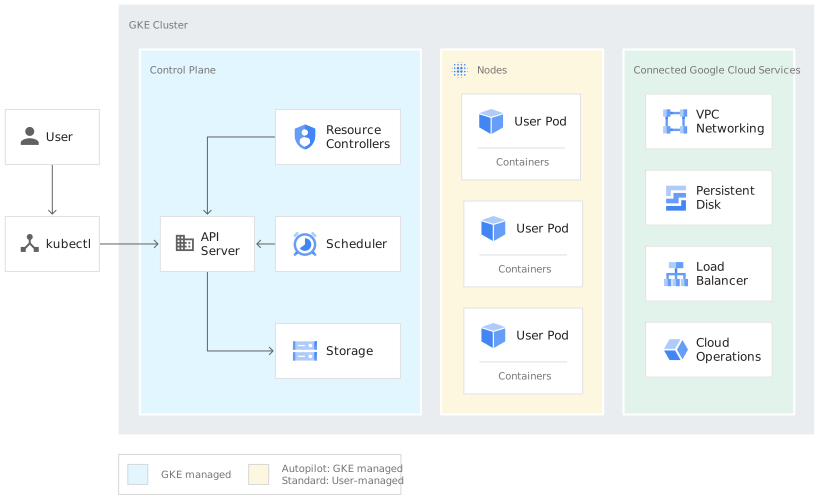
Google Kubernetes Engine is the most mature managed Kubernetes, which is fitting since Google created Kubernetes. GKE offers two modes: Standard, where you manage nodes, and Autopilot, where Google manages node capacity and bills per pod request. It tracks upstream Kubernetes releases fastest and integrates tightly with Google's data and AI stack. The control-plane fee is $0.10 per cluster per hour (as of October 2026), offset by a monthly free-tier credit of about $74.40 per billing account, roughly one free cluster.
Best for: teams that want the most mature, most automated managed Kubernetes.
Pros - Deepest Kubernetes pedigree and fastest support for new upstream versions. - Autopilot delivers genuinely hands-off node operations with per-pod billing. - Strong integration with Google's AI, ML, and data services.
Cons - The $0.10/hour fee applies per cluster, with only one offset by the free credit. - GCP lock-in across networking and identity. - Autopilot's pod-based pricing can exceed raw node cost for dense, always-on workloads.
2. Amazon EKS
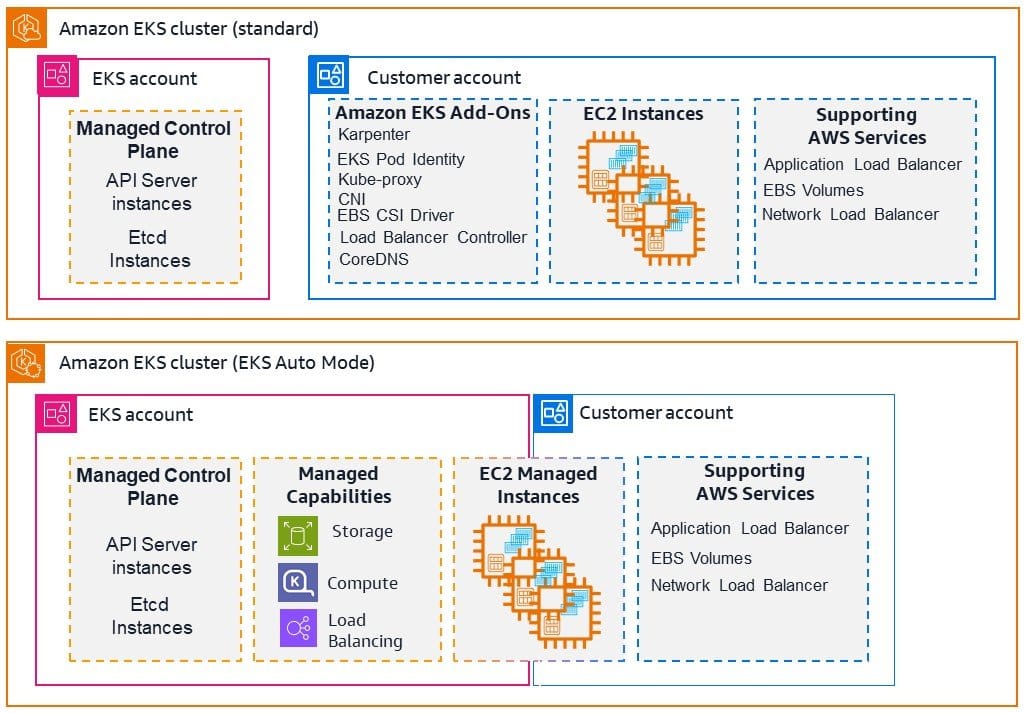
Amazon EKS is the default for teams already deep in AWS. EKS runs a multi-AZ managed control plane and, since EKS Auto Mode reached general availability in December 2024, can automatically manage compute, networking, storage, scaling, and patching through AWS-managed node pools. EKS Hybrid Nodes extend one control plane to on-prem or other clouds. The control plane costs $0.10 per cluster per hour (October 2026), and Auto Mode adds a per-instance management fee on top of EC2. There is no free EKS cluster allowance, so costs start immediately.
Best for: AWS-centric organizations wanting the deepest cloud-native ecosystem.
Pros - Deepest integration with AWS IAM, VPC, and load balancing. - Auto Mode removes node operations while keeping workloads on EC2. - Broadest region coverage and enterprise and compliance certifications.
Cons - $0.10/hour per cluster with no free cluster tier. - Auto Mode, data transfer, NAT, and egress costs stack up quickly. - Heavier initial setup than simpler clouds, with real AWS lock-in.
3. Azure AKS
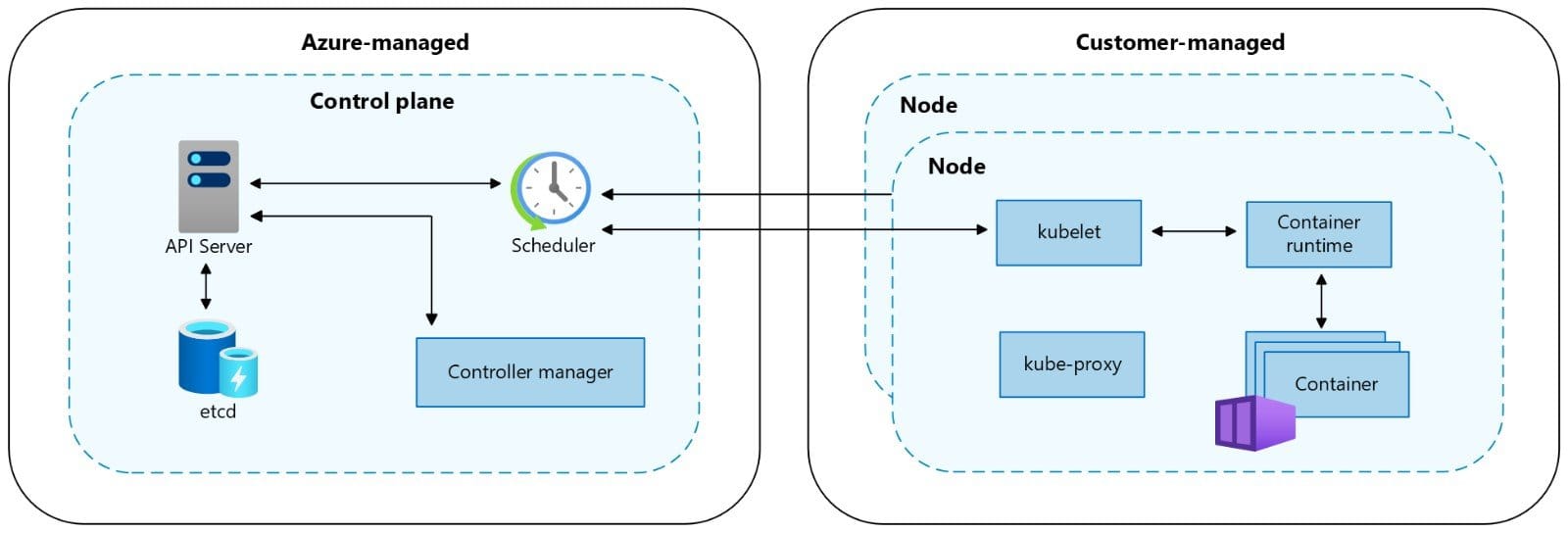
Azure Kubernetes Service is the natural choice for Microsoft-stack shops, with the strongest Entra ID, Azure Policy, and Windows-container integration. AKS offers a free control-plane tier for dev and test, a Standard tier at $0.10 per cluster per hour (October 2026) that adds a 99.95% uptime SLA, and a Premium tier with long-term support for 24-month Kubernetes versions. AKS Automatic, which reached general availability in 2025, provisions opinionated, production-ready clusters with node autoprovisioning and secure defaults.
Best for: Microsoft-stack enterprises that want a free-to-start control plane.
Pros - Free control-plane tier for development and testing. - Best Microsoft, Entra ID, and Windows-container integration, plus a long-term-support option. - AKS Automatic lowers friction for production-ready clusters.
Cons - A production SLA requires the paid Standard tier at $0.10/hour. - Azure lock-in across identity and networking. - The tier-and-SLA model adds complexity versus always-free control planes.
4. Red Hat OpenShift
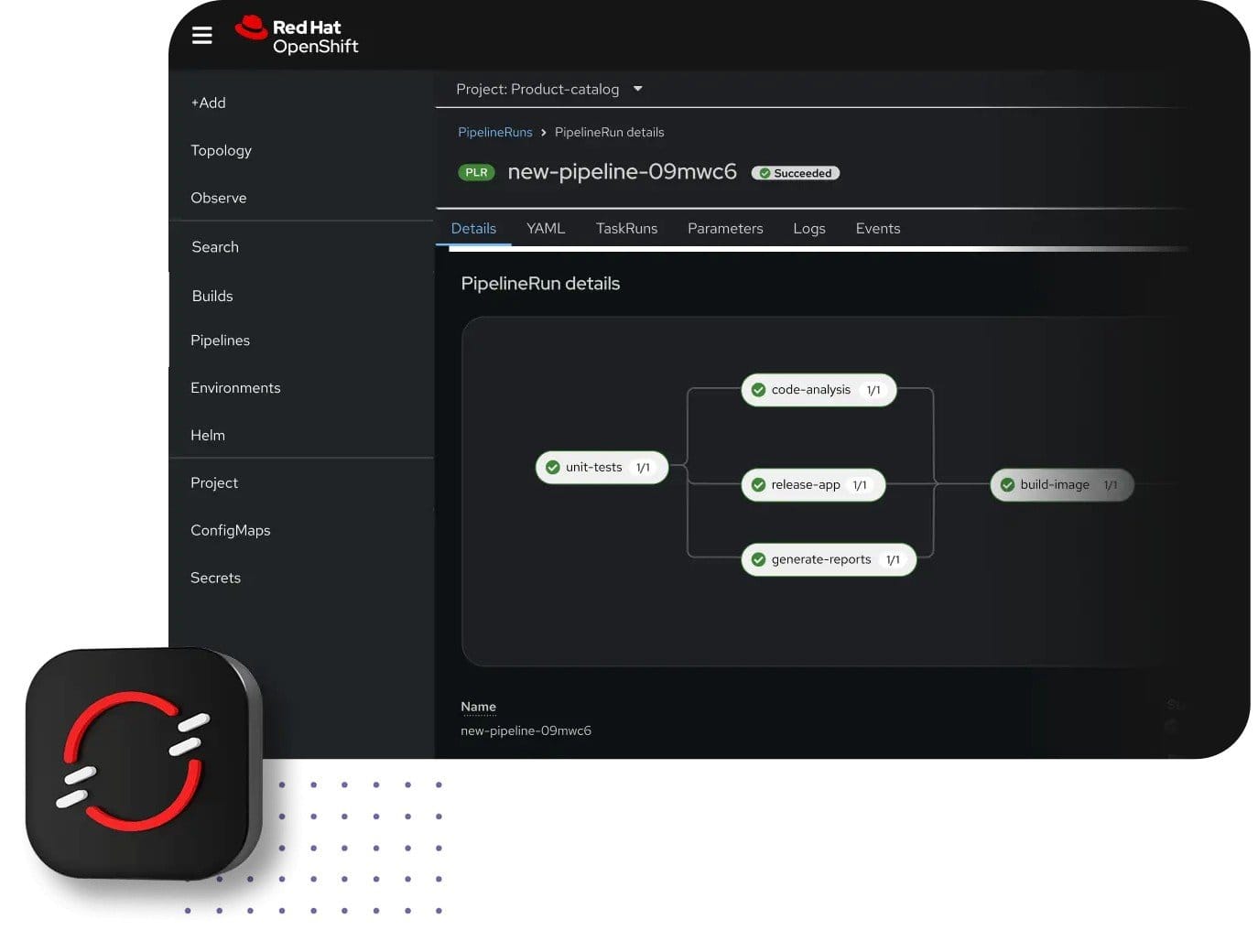
Red Hat OpenShift is a full application platform, not just managed Kubernetes. OpenShift ships built-in CI/CD, Operators and OperatorHub, an integrated registry, a developer console, and a stronger default security posture (SELinux, security context constraints). It runs as a jointly operated managed service — ROSA on AWS and ARO on Azure — or self-managed, with OKD as the open-source upstream. Managed pricing starts at $0.171 per hour per 4 worker vCPUs (October 2026) on top of cloud infrastructure; ROSA with Hosted Control Planes adds $0.25 per cluster per hour. Self-managed subscriptions are quoted on request.
Best for: enterprises needing a complete, secure, hybrid application platform.
Pros - The most complete out-of-the-box platform: CI/CD, operators, registry, and console. - Strongest default security posture in this list. - Consistent hybrid and multicloud operation with Red Hat SRE management.
Cons - The most expensive option once you add the per-vCPU license, cluster fee, and infrastructure. - A real complexity and learning curve. - Opinionated by design, with less raw flexibility than vanilla Kubernetes.
5. SUSE Rancher Prime
SUSE Rancher Prime is a management plane rather than a single managed service. Rancher centralizes provisioning, version management, monitoring, and policy across any CNCF-certified distribution — EKS, AKS, GKE, and on-prem clusters alike — and provisions its own lightweight RKE2 and K3s distributions. It adds NeuVector security and Elemental for edge operating systems. The community edition is free; Rancher Prime is a paid subscription with support and hardened content, quoted on request. You run the Rancher management server yourself, though a hosted option exists.
Best for: platform teams standardizing Kubernetes across many clusters and clouds.
Pros - The strongest multi-cluster and multicloud management in this list. - Fully open-source core (Apache 2.0), so there is no distribution lock-in. - Spans cloud, on-prem, and edge through K3s, RKE2, and Elemental.
Cons - Not a turnkey managed cloud service — you operate the management plane. - Enterprise support, SLAs, and hardened content sit behind a subscription with non-public pricing. - Adds an operational layer compared with a single-cloud native service.
6. DigitalOcean Kubernetes
DigitalOcean Kubernetes (DOKS) targets startups and small teams with simple, predictable pricing. DOKS gives a free control plane, with an optional high-availability control plane for $40 per month, and integrates DigitalOcean's load balancers, block storage, and monitoring behind a clean UI. Node pricing is transparent: basic droplets start near $12 per month (October 2026), and inbound traffic plus a generous pooled egress allowance keep bandwidth costs low. It lacks the region count and enterprise compliance depth of the hyperscalers.
Best for: startups and small teams wanting cheap, simple managed Kubernetes.
Pros - Free standard control plane. - Simple, predictable node pricing with generous pooled free egress. - Fast, low-friction setup and a clean interface.
Cons - High-availability control plane costs an extra $40/month. - Smaller ecosystem, fewer regions, and fewer enterprise and compliance features than hyperscalers. - Limited high-end and enterprise-scale capability.
7. Civo
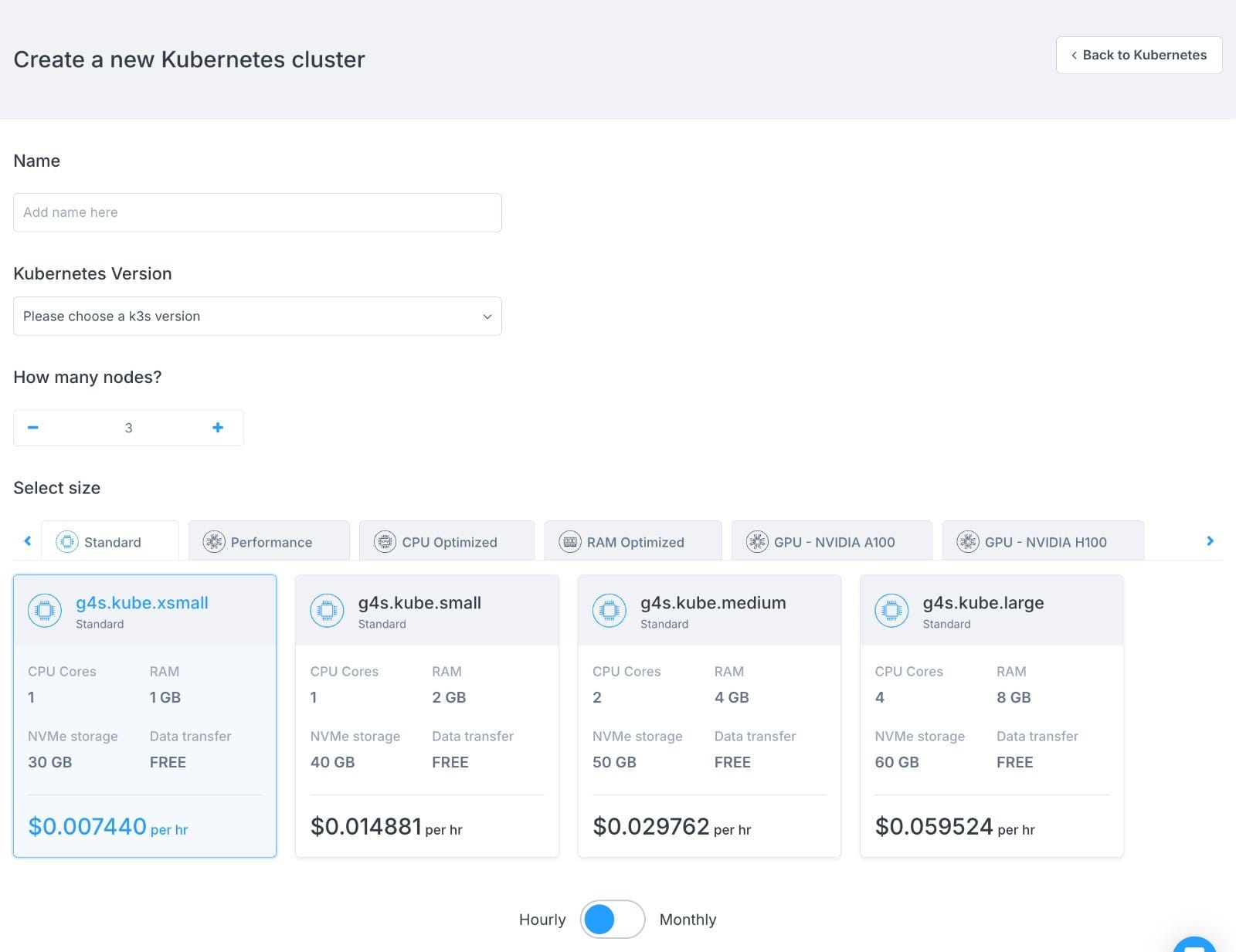
Civo is built entirely on K3s, the lightweight Kubernetes distribution, which it markets on speed and simplicity. Civo provides a free control plane, flat node pricing — a 1 GB/1-core node runs about $5.43 per month (October 2026) — and free, unlimited ingress and egress bandwidth, unusual among providers. New sign-ups get a $250 first-month credit. Its headline "launch a cluster in about 90 seconds" is a marketing claim rather than an SLA. The trade-off is the smallest ecosystem and region footprint of the seven, and a scale ceiling that suits lighter workloads.
Best for: developers wanting the fastest, cheapest K3s-based managed Kubernetes.
Pros - Among the cheapest options, with free unlimited bandwidth. - Very fast K3s provisioning and a simple user experience. - Free control plane with flat, predictable node pricing.
Cons - The smallest ecosystem and fewest regions of the seven. - Limited enterprise and compliance depth. - K3s focus and scale ceiling suit lighter workloads more than very large enterprise ones.
How to choose a managed Kubernetes platform
Start from where your workloads and team already live.
- If you are all-in on one cloud: use that cloud's service — GKE, EKS, or AKS. The ecosystem integration outweighs small price differences, and all three now automate node management.
- If you want the least node operations: GKE Autopilot or EKS Auto Mode hand node provisioning and patching to the provider.
- If you run hybrid or multicloud and need consistency: OpenShift for a full managed platform, or Rancher Prime to manage clusters you already run across providers.
- If you are a startup or small team: Civo or DigitalOcean for a free control plane and predictable bills.
- If compliance and Windows workloads matter: AKS, with its long-term-support tier and Entra integration.
Cost control is where managed Kubernetes bills quietly balloon, usually through nodes, egress, and idle clusters rather than the control plane — the same pattern covered in our guide to cloud cost management tools. Teams standardizing deployment often pair a cluster with an internal developer platform and a CI/CD pipeline, provision it through infrastructure as code, and watch it with dedicated observability tooling.
Frequently Asked Questions
What is managed Kubernetes?
Managed Kubernetes is a service where a provider runs and maintains the Kubernetes control plane — the API server, scheduler, and etcd database — so your team deploys and scales applications without operating the cluster's core. Providers handle control-plane availability, upgrades, and patching; most now also automate worker-node provisioning through options like GKE Autopilot and EKS Auto Mode.
Which cloud providers offer the best managed Kubernetes services?
Google GKE, Amazon EKS, and Azure AKS are the three leading managed Kubernetes services. GKE is widely considered the most mature and most automated, EKS has the deepest AWS ecosystem integration, and AKS offers a free control-plane tier and the strongest Microsoft-stack support. The best choice usually follows the cloud your workloads already run on.
How much does managed Kubernetes cost?
Control-plane pricing ranges from free to about $0.10 per cluster per hour. AKS (Free tier), DigitalOcean, and Civo charge nothing for the control plane; GKE and EKS charge roughly $0.10 per hour as of October 2026. The larger cost is almost always worker nodes, storage, and network egress, not the control plane itself.
How do you manage multiple Kubernetes clusters?
Use a multi-cluster management platform. SUSE Rancher Prime centralizes provisioning, version management, policy, and monitoring across clusters on different clouds and on-prem. Red Hat OpenShift and hyperscaler fleet tools such as GKE Enterprise offer similar cross-cluster control. The goal is one consistent interface for configuration, security policy, and upgrades rather than managing each cluster by hand.
Does Kubernetes manage Docker containers?
Kubernetes orchestrates containers but no longer uses Docker as its runtime; it dropped the Dockershim and now uses CRI-compatible runtimes like containerd. Images built with Docker still run on Kubernetes because they follow the OCI standard, so your Docker-built containers work fine — Kubernetes simply schedules and runs them through a different runtime underneath.
Editor's note — sources: GKE pricing and docs (cloud.google.com); Amazon EKS pricing and EKS Auto Mode (aws.amazon.com); Azure AKS pricing and AKS Automatic (azure.microsoft.com, learn.microsoft.com); Red Hat OpenShift, ROSA, and ARO pricing (redhat.com, aws.amazon.com/rosa, azure.microsoft.com); SUSE Rancher Prime (rancher.com, suse.com); DigitalOcean Kubernetes pricing (digitalocean.com); Civo pricing (civo.com). All pricing observed October 2026 and quoted "as of" that date; enterprise subscription figures not published by the vendor are omitted.