
Top 7 3D Printing Companies in 2026
The top 3D printing companies in 2026, compared on technology, pricing and best use: Stratasys, 3D Systems, EOS, HP, Bambu Lab, Carbon and Formlabs - plus the Stratasys-Markforged and Desktop Metal ownership shake-ups that matter.

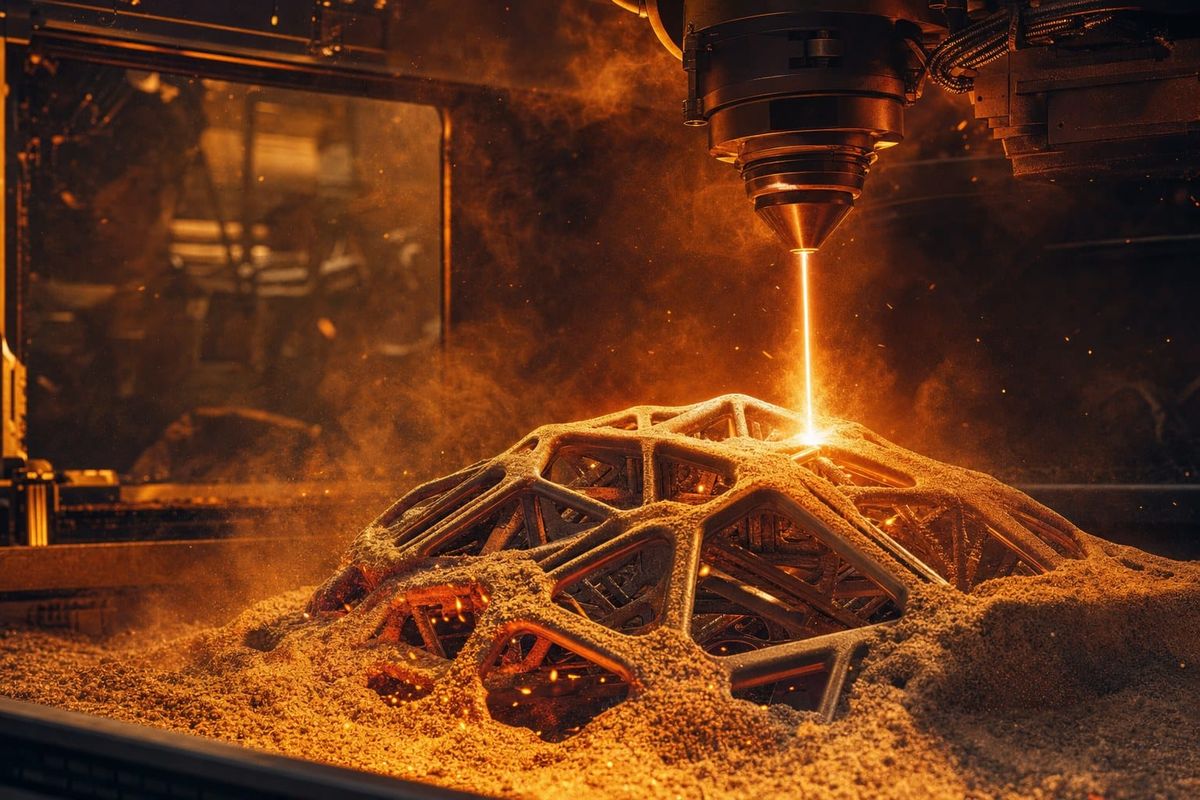
The leading 3D printing companies in 2026 are Stratasys, 3D Systems, EOS, HP, Bambu Lab, Carbon, and Formlabs. They split into three camps: industrial polymer and metal production (Stratasys, 3D Systems, EOS, HP), distinctive process specialists (Carbon, Formlabs), and the desktop disruptor (Bambu Lab). Here is what each one actually builds, what it costs, and who should buy it — with the 2026 ownership shake-ups that matter.
- Market leaders by revenue: Stratasys ($551.1M FY2025) and 3D Systems ($386.9M FY2025), both public and both still posting operating losses.
- Biggest 2026 story: Stratasys agreed in May 2026 to buy Markforged from Nano Dimension for $42.5M; Desktop Metal relaunched as an independent company after a bankruptcy sale.
- Price range: desktop machines start near $199 (Bambu Lab); industrial systems are six figures and quoted on request.
- Verdict: Stratasys for the widest process range, EOS for serial metal and polymer production, Bambu Lab for affordable desktop work.
What counts as a "3D printing company" here
This list covers companies that design and sell additive manufacturing hardware — the printers, materials, and software a team buys to make parts. Additive manufacturing spans many distinct processes, and no single vendor leads all of them, so the right pick depends on the process you need: fused deposition (FDM/FFF), resin (SLA/DLP/DLS), powder-bed polymer (SLS/MJF), or metal laser powder-bed fusion (LPBF).
How we picked these
We ranked on five criteria:
- Market position and adoption — installed base, revenue where public, brand recognition.
- Technology breadth and maturity — how many proven processes and materials the vendor supports.
- Fit for a clear job — production vs. prototyping, desktop vs. industrial, polymer vs. metal.
- Financial and ownership stability — public filings, funding, and recent M&A, because this sector has churned hard.
- Pricing transparency — whether a buyer can see a number before talking to sales.
We make no claim about sponsorship or paid placement; this is an independent editorial ranking.
Quick comparison
| Company | Best for | Core technology | Pricing |
|---|---|---|---|
| Stratasys | Widest polymer process range | FDM, PolyJet, SAF, SLA, DLP | On request (industrial) |
| 3D Systems | Healthcare and dental | SLA, SLS, metal DMP, MJP | On request (industrial) |
| EOS | Serial metal + polymer production | Metal LPBF, polymer SLS | On request (industrial) |
| HP | High-volume polymer parts | Multi Jet Fusion, metal binder jet | On request (industrial) |
| Bambu Lab | Affordable desktop printing | Desktop FDM (CoreXY) | $199–$2,399 (published) |
| Carbon | Elastomer and lattice production | Digital Light Synthesis (DLS) | Subscription, on request |
| Formlabs | Professional resin and dental | SLA resin, SLS (Fuse) | From $2,625 (published) |
1. Stratasys
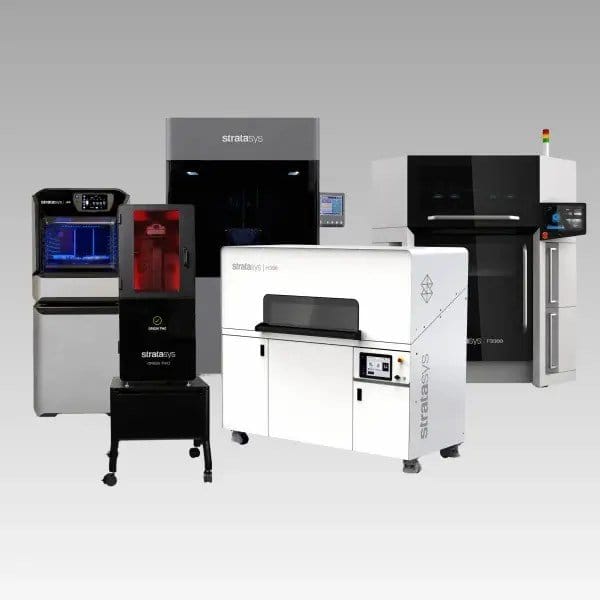
Stratasys is the broadest pure-play in 3D printing, selling more distinct polymer processes than any rival. Its lineup covers FDM, PolyJet, SAF powder-bed, stereolithography, and P3 DLP, which lets a buyer standardize on one vendor across prototyping and production. The company reported $551.1M in FY2025 revenue with $244.5M in cash and zero debt — an unusually strong balance sheet for this sector — though it still posted a GAAP net loss. In May 2026 it agreed to acquire Markforged for $42.5M, adding continuous carbon-fiber composites aimed at aerospace and defense.
Best for: enterprises that want one vendor spanning several professional polymer processes.
Pros - Widest technology spread in a single vendor (FDM, PolyJet, SAF, SLA, DLP), reducing single-process lock-in. - Strong balance sheet: $244.5M cash and no debt at year-end 2025. - Large installed base plus the GrabCAD software ecosystem, expanding into composites via Markforged.
Cons - Still GAAP loss-making, with revenue down from $572.5M in 2024. - No in-house metal powder-bed system; metal arrives only through Markforged's extrusion and binder-jet lines. - Industrial pricing is quoted on request, and materials are proprietary.
2. 3D Systems
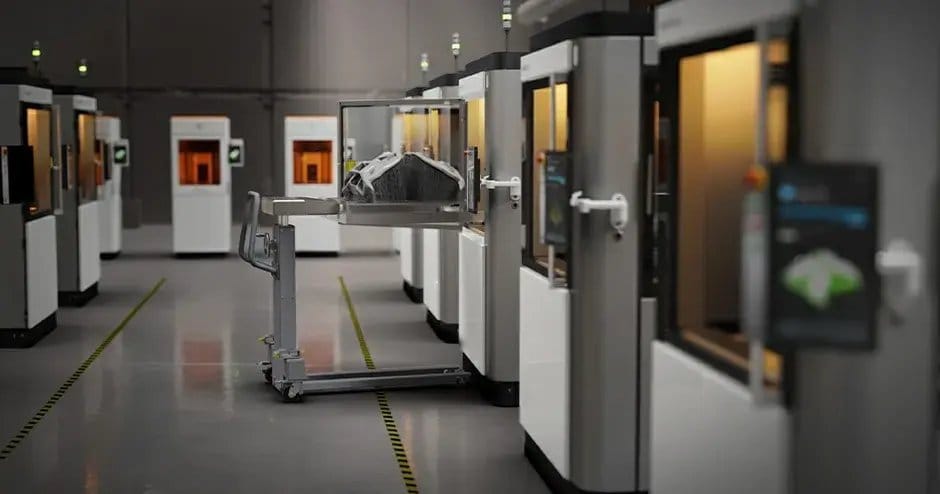
3D Systems invented stereolithography and still runs the widest process stack in the list, from SLA and SLS to metal Direct Metal Printing and MultiJet Printing. Its strongest franchise is healthcare — dental, surgical planning, and personalized medical devices — a regulated niche that is hard to displace. FY2025 revenue was $386.9M, down 12%, split between $179.6M healthcare and $207.3M industrial. The company reported GAAP net income of $29.9M, but that figure was driven by a $139.6M gain on selling its Geomagic software business in April 2025; operating results were a loss.
Best for: healthcare, dental, and regulated or personalized medical production.
Pros - Deepest healthcare and dental track record, including regulatory experience with personalized devices. - Full-stack breadth including metal DMP, plus pioneer brand recognition. - Leaner after shedding Geomagic and cutting operating expense, with stated aerospace and defense momentum.
Cons - Revenue is shrinking and operations are loss-making; the headline net income was a one-off disposal gain. - Divesting Geomagic narrowed its software stack. - Industrial pricing is opaque, and the company has a long history of restructuring.
3. EOS
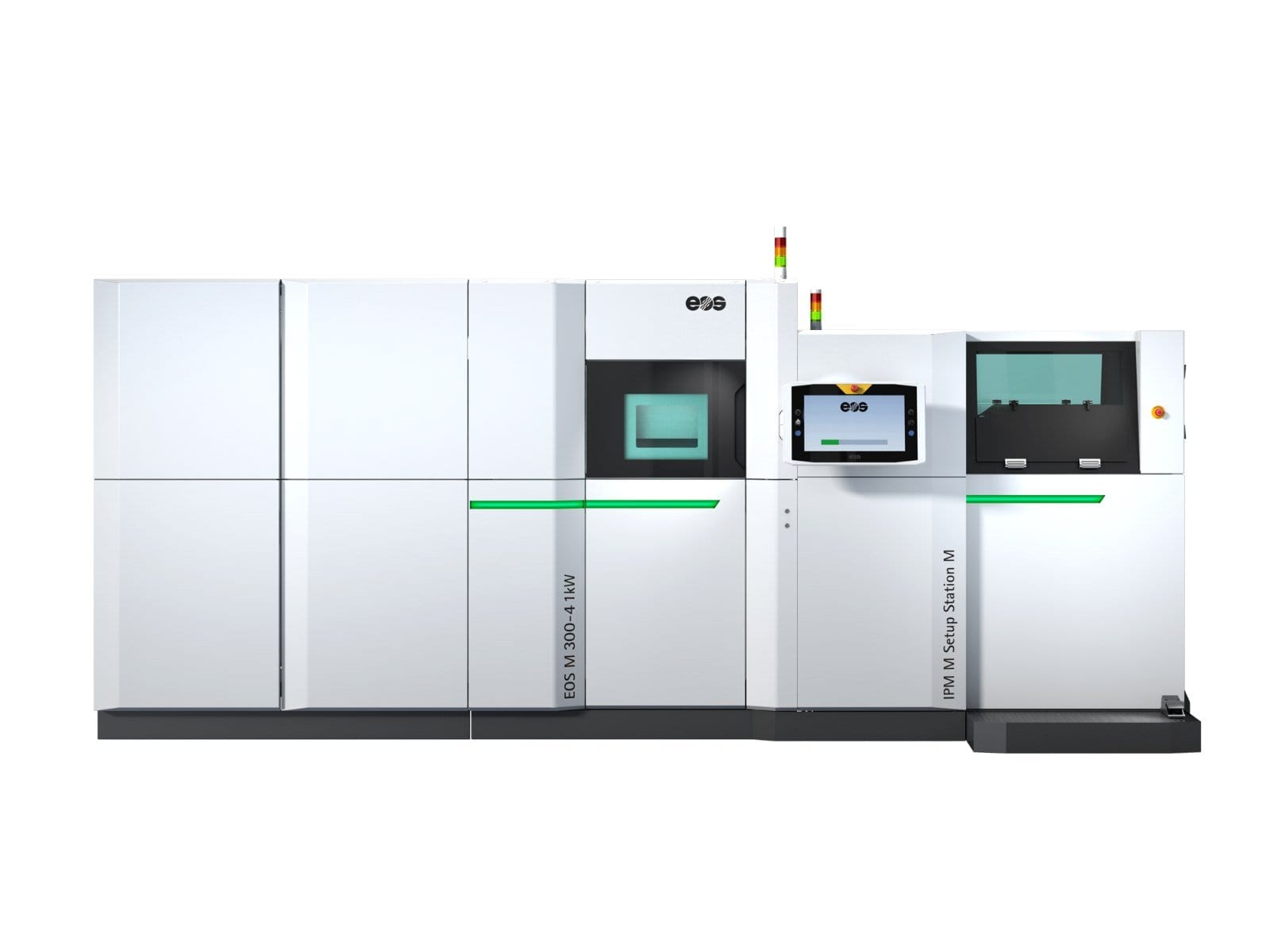
EOS is the industrial benchmark for powder-bed fusion, and one of the few vendors genuinely strong in both polymer and metal. Its polymer SLS and metal LPBF systems run serial production in aerospace, medical implants, dental, and automotive, with large-format metal handled through its AMCM group company. EOS is privately held and family-owned — founded in 1989 and led by CEO Marie Langer — which has kept it clear of the public-market distress and fire-sale M&A that has hit several competitors. As a private firm it discloses no audited revenue, so treat any circulating figure with caution.
Best for: serial industrial production in aerospace and medical, across metal and polymer.
Pros - One of very few vendors strong in both polymer SLS and metal LPBF. - Private and stable, with no public-market distress or forced M&A. - Deep materials and process qualification, plus an open-parameter approach that production engineers favor.
Cons - Opaque pricing and high cost of ownership typical of industrial powder-bed. - No desktop or entry tier — industrial-only, with a high barrier to adoption. - Limited public financial transparency for buyers assessing vendor health.
4. HP
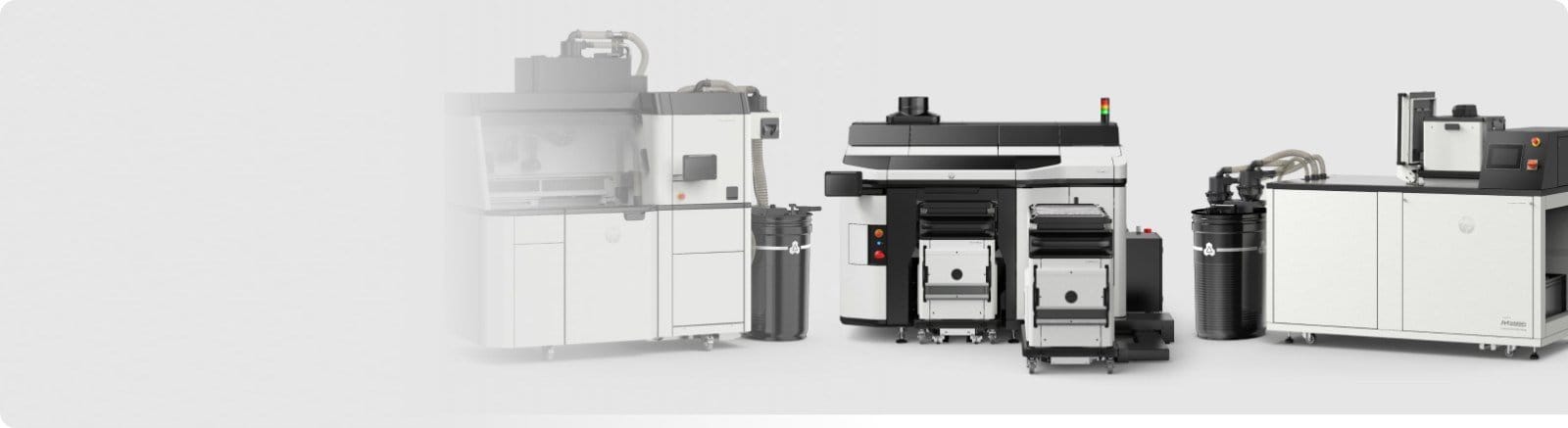
HP brought its printing scale to additive manufacturing with Multi Jet Fusion, a production polymer powder-bed process built for fast, isotropic end-use parts at genuine series volumes. It is expanding beyond polymer with a Metal Jet binder-jetting system and a new Industrial Filament FDM line, the first models of which are scheduled across 2026 with an open-material strategy. HP backs this with the Additive Manufacturing Network software and a deep-pocketed public parent (HP Inc., NYSE: HPQ). The trade-off is that 3D printing remains a small slice of HP Inc., which raises fair questions about long-term strategic priority.
Best for: high-volume end-use polymer part production.
Pros - MJF is a proven production process delivering fast, isotropic polymer parts at series volumes. - Backed by a large, stable public parent for supply-chain and service reliability. - Broadening across metal binder jet and open-material industrial filament.
Cons - 3D printing is a minor part of HP Inc., so strategic commitment is a fair question. - No entry or desktop option, and pricing is quoted on request for six-figure systems. - Metal binder jet and the new filament line are early-stage versus established metal players.
5. Bambu Lab
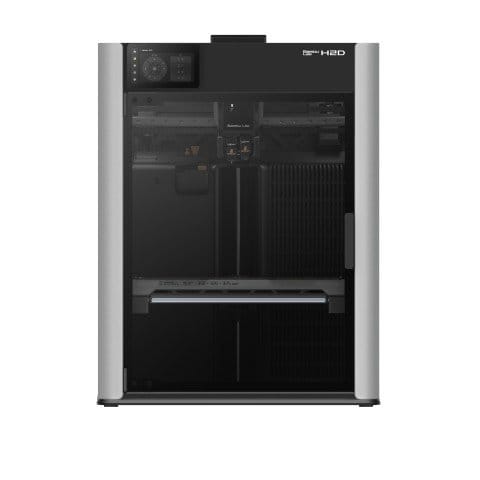
Bambu Lab reset the desktop market. Founded in Shenzhen in 2020 by ex-DJI engineers, it ships enclosed CoreXY FDM printers with automatic multi-color AMS units, fast print speeds, and a polished software and model-sharing ecosystem. Published store prices (as of October 2026) run from about $199 for the A1 mini to $2,399 for the dual-nozzle H2D — the clearest pricing in this list. It is the dominant desktop brand by unit volume and the name most general searchers mean by "3D printing," but it is consumer and prosumer only, with no industrial or metal capability.
Best for: makers, education, and fast, affordable desktop prototyping.
Pros - Best-in-class desktop price-to-performance, with machines from roughly $199. - Huge adoption and a large model-sharing community, plus strong brand recognition. - Fast multi-color and multi-material printing via AMS at consumer price points.
Cons - Consumer and prosumer only — no industrial scale and no metal. - Cloud and ecosystem lock-in; a 2024 firmware-authentication change drew "walled-garden" criticism. - A private Chinese firm with limited financial transparency and some geopolitical and data-privacy scrutiny.
6. Carbon
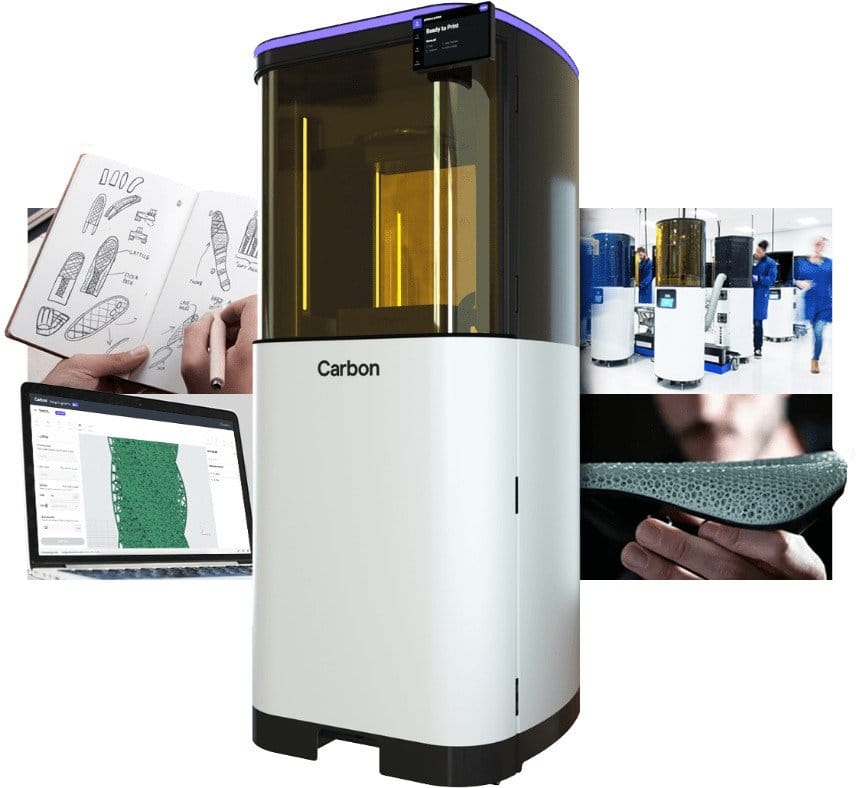
Carbon productized a distinctive resin process, Digital Light Synthesis (DLS), which uses an oxygen-permeable window for fast, continuous photopolymer printing. It leads in elastomer and lattice production — the technology behind cushioning in footwear (adidas is both an investor and a user), sporting goods, and dental. Carbon sells access by subscription rather than outright, pairing hardware with its Design Engine lattice software for a sticky, software-driven workflow. In November 2025 it announced a $60M raise led by existing investors including Sequoia, Silver Lake, and adidas, and said it is approaching cash-flow positive.
Best for: production of elastomeric and lattice parts — footwear, dental, and sporting goods.
Pros - Genuinely fast DLS process with best-in-class elastomer and lattice production. - Strategic backing including adidas, plus a fresh $60M round and a stated path to cash-flow positive. - Subscription plus Design Engine software create a sticky production workflow.
Cons - Subscription and a closed, Carbon-only resin ecosystem mean material lock-in and recurring cost. - Polymer and elastomer only — no metal, narrower than EOS or 3D Systems. - "Cash-flow positive" is the company's forward claim, not yet an audited result.
7. Formlabs
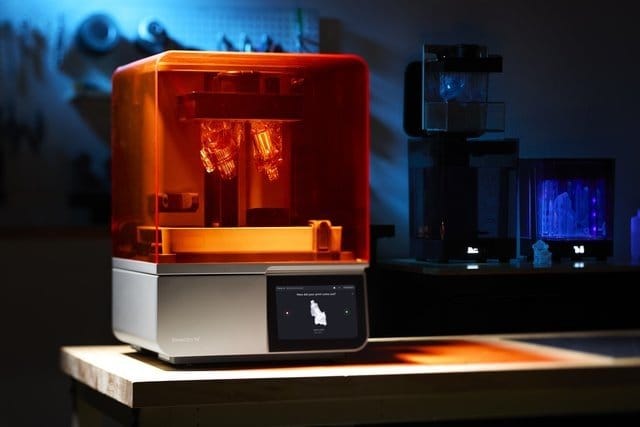
Formlabs makes the most accessible professional resin printers. Its Form 4 SLA line and Fuse SLS platform bridge desktop and industrial, and the company dominates professional dental and engineering by install base. It is one of the few vendors here with published pricing: the Form 4 package starts near $2,625, the biocompatible Form 4B near $7,699, and the Fuse 1+ 30W SLS starter around $24,649 (store prices, October 2026). The main limitation is a closed, DRM-tagged materials ecosystem and build volumes that cap production scale.
Best for: affordable professional resin prototyping and dental labs.
Pros - The most accessible professional SLA, dominant in dental with a large install base. - Transparent, published pricing — rare in this list — at approachable price points. - Cohesive hardware, materials, and software stack that is easy to deploy and support.
Cons - Closed, proprietary resin and powder ecosystem with DRM-tagged cartridges. - Limited build volumes and scale versus industrial production houses; no metal. - A single SLS platform (Fuse) is narrower than competitors' powder-bed ranges.
How to choose a 3D printing company
Match the vendor to the process and the job, not to the brand.
- If you need end-use polymer parts at volume: HP's Multi Jet Fusion or EOS polymer SLS. Both are built for series production, not prototypes.
- If you need metal production parts: EOS metal LPBF is the safe industrial choice. For aerospace and defense specifically, also evaluate Nikon SLM Solutions and the newly independent Desktop Metal.
- If you want one vendor across many polymer processes: Stratasys, especially if composites matter once Markforged closes.
- If you are in healthcare or dental: 3D Systems for regulated metal and polymer work; Formlabs for affordable chairside and lab resin.
- If you make elastomeric or lattice parts: Carbon's DLS has no close equal for footwear and cushioning.
- If you are a team, school, or small shop: Bambu Lab for the best desktop value, or Formlabs if you need professional resin quality.
The hardware churn of 2025 and 2026 matters as much as the specs. The same aerospace and defense demand driving space launch companies is reshaping metal additive, and several once-hyped names were restructured or sold. Buyers assessing a vendor's survival should weigh public filings and ownership — the lesson that also applies when evaluating hardware-heavy fields like humanoid robotics and lidar sensors.
Frequently Asked Questions
Who are the top 3D printing companies?
The top 3D printing companies in 2026 are Stratasys, 3D Systems, EOS, HP, Bambu Lab, Carbon, and Formlabs. Stratasys and 3D Systems lead by public revenue, EOS is the industrial powder-bed benchmark, and Bambu Lab dominates the desktop market by unit volume. Each leads a different process rather than the whole field.
What is the best 3D printer company?
There is no single best company — it depends on the process. For affordable desktop printing, Bambu Lab offers the best value from about $199. For professional resin and dental, Formlabs leads on price and install base. For serial industrial metal and polymer production, EOS is the benchmark, while Stratasys offers the widest range of polymer processes.
Are there any American 3D printer companies?
Yes. 3D Systems (Rock Hill, South Carolina), Carbon (Redwood City, California), Formlabs (Somerville, Massachusetts), and HP (Palo Alto, California) are U.S.-based. Stratasys is dual-headquartered in Minnesota and Israel. EOS is German, and Bambu Lab is Chinese, so the field is genuinely global across both desktop and industrial tiers.
How many 3D printing companies are there?
There are hundreds of additive manufacturing hardware makers worldwide, from desktop startups to industrial system builders, plus a large ecosystem of materials and software firms. Only a dozen or so operate at meaningful scale across professional and industrial segments, which is why a focused shortlist is more useful than a long directory when you are evaluating vendors.
Did Stratasys buy Markforged?
Stratasys agreed in May 2026 to acquire Markforged from Nano Dimension for $42.5M in an all-cash deal expected to close in the second half of 2026. Stratasys gains Markforged's polymer and composite portfolio, including continuous carbon fiber, while Nano Dimension retains Markforged's metal binder-jetting product line.
Editor's note — sources: Stratasys FY2025 results and investor materials (stratasys.com); 3D Systems FY2025 earnings release (3dsystems.com); EOS (eos.info); HP 3D printing (hp.com); Bambu Lab store (bambulab.com); Carbon funding announcement (carbon3d.com); Formlabs store (formlabs.com); Stratasys–Markforged acquisition coverage (TCT Magazine, Manufactur3D, May 2026); Desktop Metal / Arc Impact bankruptcy sale (Metal AM, 3DPrint.com). Pricing observed October 2026 and quoted "as of" that date; private-company revenue figures are not disclosed and are omitted.