
Top 7 Geothermal Energy Companies in 2026
The 7 top geothermal energy companies in 2026, compared on commercial status, technology and funding: Fervo Energy, Ormat Technologies, Eavor, Sage Geosystems, Quaise Energy, XGS Energy and Dandelion Energy.


Top 7 Geothermal Energy Companies in 2026
TL;DR
- The breakout geothermal company of 2026 is Fervo Energy, which brought its Cape Station enhanced-geothermal plant to commercial operation on October 1, 2026, IPO'd on Nasdaq (FRVO) in May, and holds a $7.2B contracted PPA backlog including a 396MW deal with Google.
- The proven incumbent is Ormat Technologies (NYSE: ORA), operating roughly 1.8GW of geothermal capacity today and generating ~$990M in 2025 revenue.
- The rest are next-generation plays: Eavor (closed-loop), Sage Geosystems (power plus storage), Quaise (ultra-deep drilling), and XGS Energy (conductive EGS) — most still pre-commercial. Dandelion Energy covers residential geothermal with 3,000+ home installs.
- AI data-center power demand is the category's new growth engine, driving direct geothermal power-purchase agreements with hyperscalers.
Geothermal energy companies generate clean, 24/7 baseload power from the Earth's heat. The leaders in 2026 are Fervo Energy, the newly public enhanced-geothermal pioneer; Ormat Technologies, the incumbent with the largest operating fleet; closed-loop developer Eavor; power-and-storage company Sage Geosystems; deep-drilling startups Quaise and XGS Energy; and residential specialist Dandelion Energy. This guide ranks all seven on commercial status, technology, funding, and real limitations.
How we picked these
We ranked on what actually matters for a clean-energy buyer or investor in 2026:
- Commercial status — is it generating power today, running pilots, or still in R&D?
- Scale — operating capacity and contracted backlog, where disclosed.
- Category significance — how much the company is shaping where geothermal goes next.
- Funding momentum — dated, sourced rounds, not tracker estimates.
- Honest limitations — drilling cost, timeline, and geographic constraints.
We make no claim about sponsorship or paid placement. Funding figures cite the specific dated round from the company or a reputable outlet; we avoid cumulative "total raised" numbers that vary by database. Claims are as of October 2026.
Quick comparison
| Company | Best for | Technology | Stage |
|---|---|---|---|
| Fervo Energy | Utility & data-center baseload | Enhanced geothermal (EGS) | Commercial (public) |
| Ormat Technologies | Proven utility-scale power | Flash/binary + storage | Operating fleet (~1.8GW) |
| Eavor | Reservoir-free siting | Closed-loop ("Eavor-Loop") | Pre-commercial |
| Sage Geosystems | Power + long-duration storage | Geopressured geothermal | Pre-commercial |
| Quaise Energy | Superhot geothermal anywhere | Ultra-deep millimeter-wave drilling | R&D / demo |
| XGS Energy | Water-scarce regions | Conductive EGS | Pilot |
| Dandelion Energy | Residential heating & cooling | Ground-source heat pumps | Commercial |
1. Fervo Energy
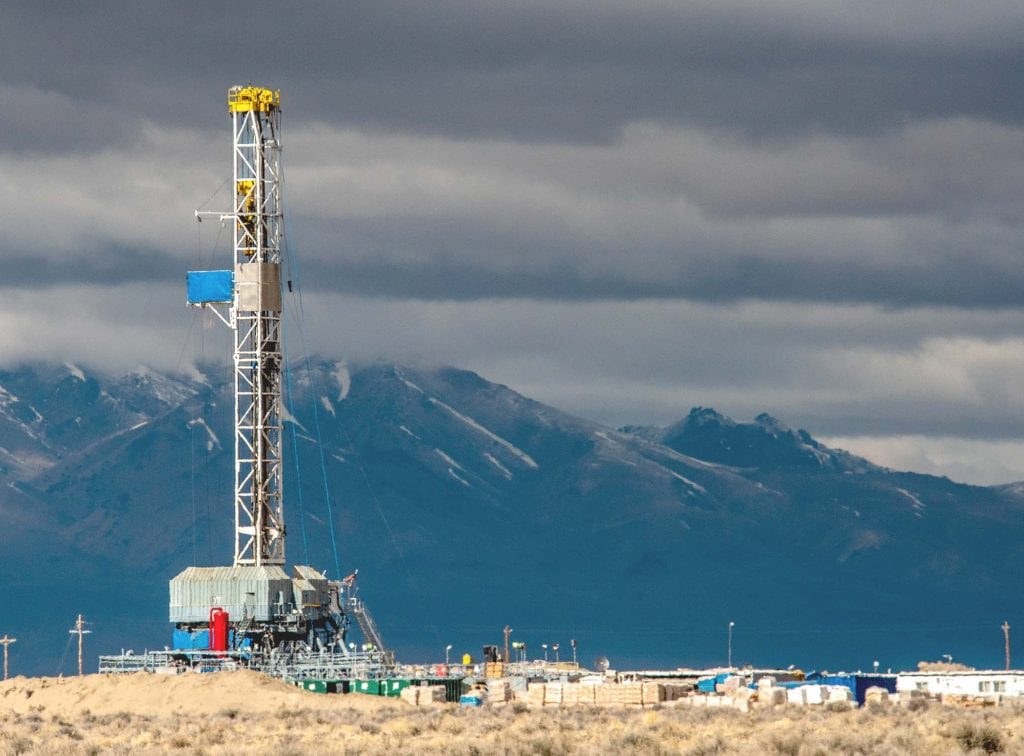
Fervo Energy is the enhanced-geothermal (EGS) company that made geothermal a headline category in 2026. It applies horizontal drilling and distributed fiber-optic sensing — techniques borrowed from oil and gas — to extract heat from hot dry rock in places conventional geothermal cannot reach. Its flagship Cape Station plant in Utah delivered first power on September 24, 2026 and declared commercial operation ahead of schedule on October 1, 2026.
Fervo went public on Nasdaq (FRVO) on May 13, 2026, raising roughly $1.9B. It reports 658MW of binding power-purchase agreements and a $7.2B contracted backlog, including a 396MW PPA signed with Google in September 2026. That combination — commercial operation, a public listing, and a hyperscaler anchor customer — puts it at the top of the category.
Best for: Utility-scale and data-center 24/7 baseload power.
Pros
- Commercial 24/7 baseload is live at Cape Station, ahead of schedule.
- $7.2B contracted PPA backlog, including a 396MW Google deal.
- Proven oil-and-gas drilling techniques de-risk execution versus novel methods.
Cons
- EGS remains capital-intensive with direct drilling-cost exposure.
- Newly public — expect stock and valuation volatility.
- Even with horizontal drilling, siting is still constrained to accessible hot-rock basins.
2. Ormat Technologies
Ormat Technologies (NYSE: ORA) is the incumbent and, by operating capacity, the largest geothermal company on this list. It builds and runs vertically integrated flash and binary geothermal power plants, recovers waste heat, and operates energy storage — a roughly 1.8GW global portfolio with about $990M in 2025 revenue and six decades of operating history. This is conventional geothermal: bankable, profitable, proven.
Ormat is also positioning for the next-generation shift rather than being disrupted by it. It acquired the Blue Mountain geothermal plant in Nevada for $88M (completed June 2025), co-led Sage Geosystems' Series B, and signed its first direct 20-year geothermal PPA with a data-center operator (Switch) in 2026.
Best for: Buyers who want proven, operating utility-scale geothermal today.
Pros
- Operates a ~1.8GW global fleet today — proven, bankable baseload.
- Diversified across geothermal, waste-heat recovery, and storage.
- Actively monetizing the next-gen EGS trend via its Sage investment and site partnership.
Cons
- Conventional flash/binary geothermal is limited to natural high-grade reservoirs.
- Future growth now partly depends on next-gen partners rather than its own core technology.
- At least one analyst has issued a bearish rating (one outlet's opinion, not consensus).
3. Eavor
Eavor builds closed-loop geothermal systems — its "Eavor-Loop" circulates a working fluid through a sealed, radiator-like underground network. Because it needs no natural reservoir and no fracking, the company says it avoids produced brine and induced seismicity, and can be sited almost anywhere with sufficient depth. Eavor has run its Eavor-Lite demonstration facility in Alberta since 2019.
Its near-term proof point is Eavor-Europe, a commercial-scale project in Geretsried, Germany. The company has raised capital from investors including OMV, Temasek, Vickers Venture Partners, and Canada Growth Fund, though reported totals vary widely across sources.
Best for: Projects that need geothermal where no natural reservoir exists.
Pros
- Closed-loop design removes the need for a permeable natural reservoir — deployable almost anywhere.
- No fracking, and the company reports no induced-seismicity or water-contamination risk.
- Demonstrated at the full-scale Eavor-Lite prototype since 2019.
Cons
- No full commercial power plant is operating yet; the Germany project is still in development.
- Reported funding totals are inconsistent across sources — limited financial transparency.
- Closed-loop systems historically carry higher per-well drilling costs than open EGS.

4. Sage Geosystems
Sage Geosystems pursues geopressured geothermal from hot dry rock and pairs it with long-duration energy storage, using pumped underground pressure to store energy for hours to days. That dual power-plus-storage model is its main differentiator. Customers in its pipeline span defense infrastructure, data centers, and utilities.
The company closed a $97M+ Series B on January 21, 2026, co-led by Ormat Technologies ($25M) and Carbon Direct Capital. In September 2026 it selected Ormat's Blue Mountain site in Nevada for its next commercial-scale facility. It has also run a 3MW storage project in Texas and feasibility studies for the U.S. Department of Defense.
Best for: Grid operators wanting geothermal power and long-duration storage together.
Pros
- Dual business model: power generation plus long-duration energy storage.
- Works in hot dry rock, not limited to rare high-grade reservoirs.
- Validated by incumbent Ormat as both co-investor and site partner.
Cons
- No full commercial-scale facility is operating yet.
- Relies on partner sites rather than owned assets so far.
- Smaller funding base (~$97M+) than the category leaders, raising scale-up risk.

5. Quaise Energy
Quaise Energy is the most technically ambitious entry. It aims to drill 3–20km deep using gyrotron-powered millimeter-wave energy to vaporize rock, reaching 300–500°C "superhot" geothermal almost anywhere — and reusing existing oil-and-gas drilling infrastructure and workforce. It built a first full-scale hybrid rig combining rotary and millimeter-wave drilling in 2025.
Quaise closed a $180M Series B on August 27, 2026, including $35M from Nabors Industries. Its flagship Project Obsidian in central Oregon targets an initial 50MW phase scaling to 250MW, with commercial operation aimed at 2030 — a long timeline that reflects how unproven the core drilling method still is.
Best for: Long-horizon bets on location-agnostic superhot geothermal.
Pros
- Potential to access superhot geothermal almost anywhere on Earth.
- Leverages the existing oil-and-gas drilling workforce and supply chain.
- Fresh strategic capital and an operational partnership with Nabors.
Cons
- The millimeter-wave drilling technology is unproven at commercial depth and scale.
- Commercial operation is not targeted until 2030 — a long wait.
- High technical and drilling risk at 20km depths and 500°C.
6. XGS Energy
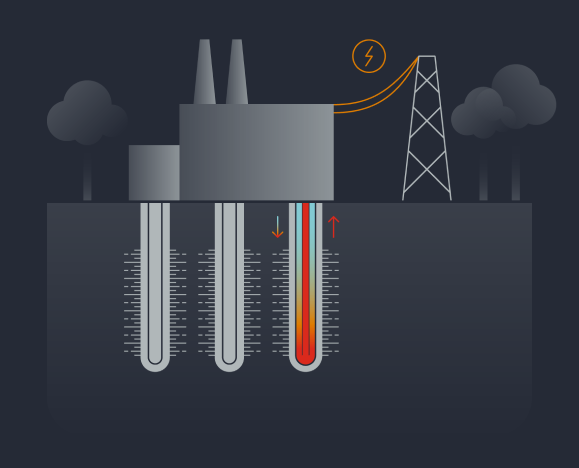
XGS Energy builds conductive, "solid-state" next-generation EGS using pipe-in-pipe heat-exchanger wells with thermally conductive materials. The design is water-independent and works regardless of rock permeability — which it positions as an advantage for round-the-clock power in water-scarce Western regions and for data centers. It was selected by the U.S. Department of Energy on September 28, 2026 to lead a New Mexico drilling project with Baker Hughes, New Mexico Tech, and Sandia National Labs.
Its funding base is the smallest here. XGS closed a $13M financing in March 2025 with investors including Constellation Energy and Aligned Climate Capital, on top of an earlier Series A.
Best for: Clean power in water-scarce regions and data-center sites.
Pros
- Decoupled from water dependence and specific rock permeability — broader siting flexibility.
- Modular, single-well-unit design eases incremental deployment.
- Backed by the DOE, national labs, and Baker Hughes on its flagship project.
Cons
- The smallest funding base of the EGS peers — meaningful scale-up capital risk.
- No commercial-scale plant is operating yet.
- The conductive pipe-in-pipe approach is less field-proven than hydraulic EGS at scale.
7. Dandelion Energy
Dandelion Energy addresses a different layer of the market: residential geothermal. It installs ground-source heat pumps with proprietary drilling for closed-loop ground loops that heat and cool homes. Unlike the utility-scale players above, it is already commercial at the residential level, with 3,000+ installs nationwide and partnerships with homebuilders including Lennar and Toll Brothers.
Spun out of Alphabet's X lab in 2017, it raised a $40M Series C in September 2024 led by GV, with Breakthrough Energy Ventures among the investors. In 2026 it launched a leasing program to remove the upfront drilling cost that has been the main adoption barrier.
Best for: Homeowners and builders wanting geothermal heating and cooling.
Pros
- 3,000+ installs — proven at residential scale today, not pre-commercial.
- Claims 30–50% utility-bill savings and roughly double the lifespan of conventional HVAC.
- Backed by major homebuilders for the new-construction channel.
Cons
- Residential and distributed scale — it does not address utility-scale grid power.
- No confirmed new funding round since September 2024, so its funding cadence is unclear.
- Upfront drilling cost remains the core barrier the new leasing program is designed to offset.
How to choose
- You need proven power on the grid now: Ormat Technologies, with ~1.8GW operating today.
- You want the leading next-gen EGS story and are a utility or data center: Fervo Energy — commercially operating and publicly listed.
- You have no natural reservoir to tap: Eavor's closed-loop or XGS's conductive design, both reservoir-agnostic.
- You want power and storage together: Sage Geosystems.
- You are making a long-horizon technology bet: Quaise, if its deep-drilling method proves out.
- You are a homeowner or builder: Dandelion Energy.
Geothermal now competes with other firm clean-power and climate technologies. If you are comparing baseload options, see our roundups of fusion energy companies and small modular reactor companies. For the grid-storage side, review solid-state battery companies, and for the broader climate stack, our guides to carbon accounting software and direct air capture companies.
Frequently Asked Questions
What is geothermal energy?
Geothermal energy is heat drawn from beneath the Earth's surface and used for power generation or direct heating and cooling. Conventional plants tap natural underground reservoirs of hot water or steam; newer enhanced and closed-loop systems engineer access to heat in dry rock, widening where geothermal can be deployed.
How does geothermal energy work?
Wells bring underground heat to the surface. In power plants, hot water or steam drives a turbine (flash plants) or heats a secondary fluid that drives one (binary plants). Enhanced geothermal engineers fractures in hot dry rock; closed-loop systems circulate fluid through sealed wells. Ground-source heat pumps use shallow heat to warm and cool buildings.
Is geothermal energy renewable?
Yes. Geothermal is a renewable resource because the Earth's internal heat is continuously replenished on human timescales, and properly managed reservoirs sustain output for decades. Unlike solar and wind, geothermal delivers 24/7 baseload power regardless of weather, which is why it is drawing interest for data-center and grid firming.
What are the disadvantages of geothermal energy?
The main drawbacks are high upfront drilling cost and risk, long development timelines for new projects, and — for conventional geothermal — geographic limits to areas with natural reservoirs. Enhanced and closed-loop approaches aim to remove the geographic constraint, but most next-generation systems are still pre-commercial and unproven at full scale.
Which geothermal company generates the most power today?
Among the companies here, Ormat Technologies operates the largest fleet, at roughly 1.8GW of geothermal capacity globally. Fervo Energy's Cape Station reached commercial operation in October 2026 and is scaling fast, but Ormat remains the established utility-scale producer with decades of operating plants.
Editor's note — sources: Fervo Energy newsroom and IPO/PPA coverage (fervoenergy.com, TechCrunch, Utility Dive), Ormat Technologies company and investor pages plus the Blue Mountain acquisition (ormat.com, ThinkGeoEnergy), Eavor company site and funding reporting (eavor.com), Sage Geosystems Series B and Blue Mountain site announcements (sagegeosystems.com, BusinessWire), Quaise Energy Series B and Project Obsidian (quaise.energy), XGS Energy DOE and financing announcements (xgsenergy.com, BusinessWire), and Dandelion Energy company and funding pages (dandelionenergy.com, PR Newswire). Figures verified October 2026 and subject to change.