
Top 7 Direct Air Capture Companies in 2026
Direct air capture has a nameplate problem: announced capacity dwarfs delivered tonnes. We rank seven DAC companies on verified operation, disclosed deal prices and credible path to scale.

TL;DR
- Direct air capture is still a nameplate business. Climeworks is the only company on this list running two commercial-scale plants at once — Orca at 4,000 t/yr nameplate since 2021 and Mammoth at up to 36,000 t/yr since May 2024. Actual captured tonnage has run far below nameplate.
- 1PointFive has the biggest facility and the biggest customer book — Microsoft at 500,000 tonnes, Airbus at 400,000 — and zero verified operating tonnes. STRATOS startup has slipped to roughly 2027.
- Disclosed deal prices show how far costs still are from target. Frontier paid $20M for 45,000 tonnes from CarbonCapture Inc. (about $444/tonne) and $26.6M for 26,900 tonnes from Heirloom (about $989/tonne).
- Federal support got less reliable. The US Department of Energy cancelled a large tranche of clean-energy awards in autumn 2025; Project Cypress and the South Texas DAC Hub survived the review, many others did not.
Direct air capture pulls CO2 directly out of ambient air — roughly 420 parts per million — using chemical sorbents or solvents, then concentrates it for permanent geological storage or industrial use. The leaders in 2026 are Climeworks, which has the longest operating record; 1PointFive, which is building the largest plant; and Heirloom, which runs the first commercial plant feeding CO2 into concrete. Everyone else is smaller, and everyone is far from the cost targets they publish.
How we picked these
Ranked on verified operating capacity first, then credible path to scale, then commercial validation. In that order, deliberately.
- Tonnes actually captured, not nameplate. This is the single most abused number in the sector. A plant designed for 36,000 t/yr that captured a few hundred tonnes in its first year is a 36,000 t/yr plant on a press release and something much smaller in reality.
- Credible path to the next order of magnitude. Funding secured, permits filed, power contracted.
- Commercial validation. Publicly announced purchase agreements with named buyers and stated tonnage — not letters of intent.
- Published cost. Where a company publishes a cost or a target, we say which it is. Several publish neither.
One consequence of ranking this way: a company running 550 tonnes a year across three sites outranks one with a paused megaproject and a larger balance sheet. That is intentional.
Quick comparison
| Company | Best for | Capture approach | Status as of Oct 2026 |
|---|---|---|---|
| Climeworks | Buyers wanting an operating track record | Solid sorbent, temperature-vacuum swing | Two plants operating in Iceland |
| 1PointFive | Megatonne-scale offtake contracts | Liquid solvent (KOH), high-temp calciner | STRATOS in delayed commissioning |
| Heirloom | CO2 embedded into concrete | Limestone/mineral looping | Tracy, CA operating; Louisiana in build |
| Mission Zero Technologies | Low-energy modular deployments | Electrochemical, electrodialysis | Three sites operating, 550 t/yr combined |
| CarbonCapture Inc. | Upgradeable modular hardware | Modular solid sorbent | Flagship paused, seeking new site |
| Avnos | Water-constrained locations | Hybrid moisture-swing, fully electric | First module line launched Sept 2026 |
| Phlair | Grid-flexible, renewable-matched capture | Electrochemical pH swing (hydrolyzer) | Early commercial, limited disclosure |
1. Climeworks
Climeworks uses a solid amine sorbent regenerated by temperature-vacuum swing at around 100°C — low enough to run on Iceland's geothermal heat. CO2 goes to the Carbfix process, which dissolves it in water and injects it into basalt, where it mineralises into rock.
It operates Orca, 4,000 t/yr nameplate since 2021, and Mammoth, rated up to 36,000 t/yr and online since May 2024. Independent reporting put Mammoth's first full year of actual capture at a small fraction of that nameplate; the precise figure is disputed across sources, so treat 36,000 as a design number only. Climeworks raised $162M in July 2025 from Big Point Holding and Partners Group, bringing total funding above $1B, and cut roughly 106 staff — about 22% of the company — in May 2025, citing US policy and funding uncertainty.
Best for: Buyers who want removal credits from a plant that has demonstrably run for years.
Pros
- Longest continuous DAC operating record in the industry, with Orca running since 2021.
- The only company here with two commercial-scale plants operating simultaneously.
- Permanent mineralisation via Carbfix, which converts CO2 to rock rather than relying on long-term well integrity monitoring.
Cons
- Mammoth's actual first-year capture was a small fraction of its 36,000 t/yr nameplate, a gap the company has not fully explained publicly.
- Cut 22% of staff in May 2025, explicitly tied to US federal funding risk.
- Publishes no audited cost per tonne, so buyers cannot compare it on price against peers that do.
2. 1PointFive
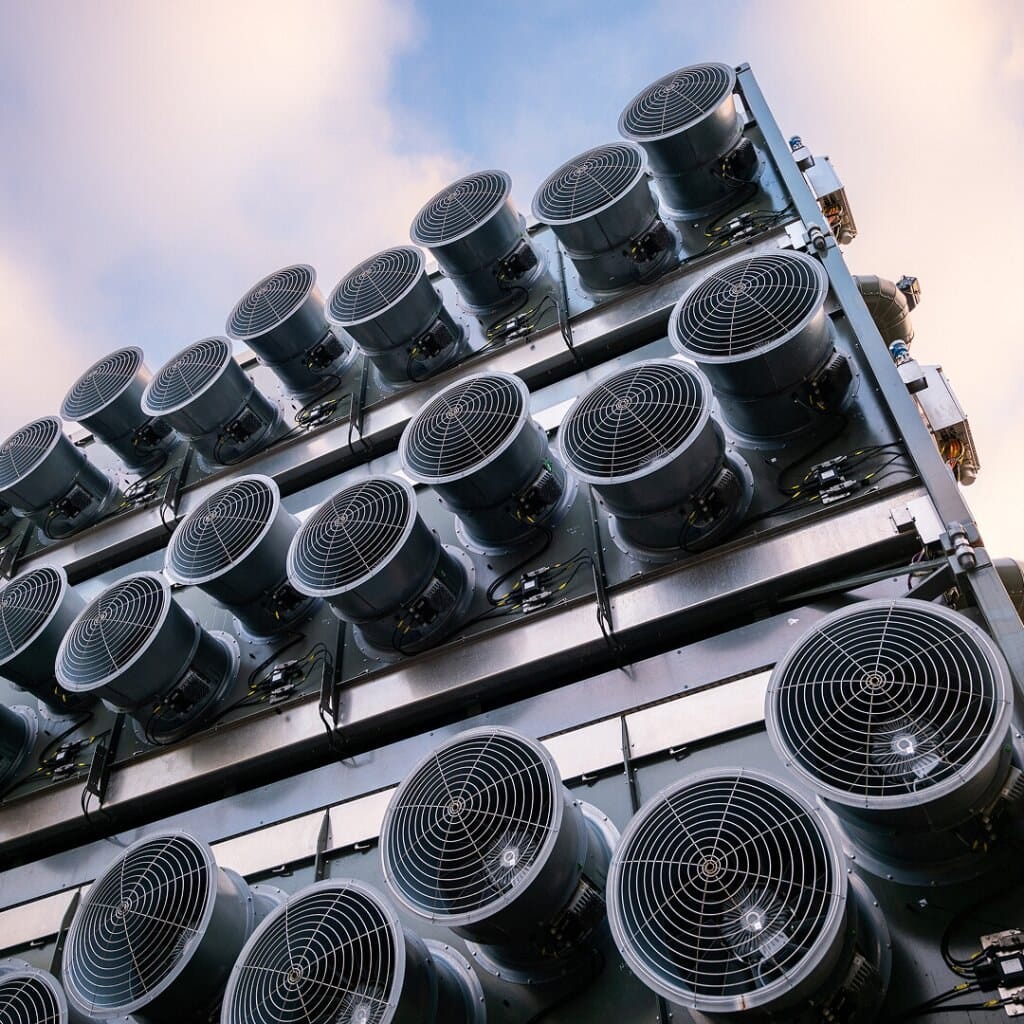
1PointFive is Occidental's carbon capture subsidiary, built on Carbon Engineering technology it acquired. The approach is liquid solvent: a potassium hydroxide solution absorbs CO2 in a large air contactor, then a high-temperature calciner releases it. That calciner is natural-gas-fired and co-captures its own process emissions — a design choice that invites scrutiny on net carbon accounting.
STRATOS in Ector County, Texas is designed for 500,000 t/yr at a stated cost of $1.3B, and is the largest single DAC facility under construction anywhere. Commissioning hit a non-process delay and startup guidance has moved to roughly 2027. A separate South Texas DAC Hub is in front-end engineering for an initial facility near 1M t/yr, on a site the company says could eventually support up to 30M t/yr. BlackRock committed $550M, around 40% of STRATOS's cost. ADNOC's XRG signed a framework in May 2025 for a JV investment of up to $500M in the South Texas hub; that has not been finalised.
Best for: Corporate buyers who need megatonne-scale contracted volume rather than delivery this year.
Pros
- STRATOS is the largest DAC facility design currently under construction, at 500,000 t/yr.
- The broadest named offtake book in the sector: Microsoft 500,000 tonnes over 6 years, Airbus 400,000 over 4, JPMorgan 50,000 over 10, plus Amazon, AT&T and ANA.
- Backed by Occidental's existing Class VI well and CO2 handling operations, plus $550M from BlackRock.
Cons
- Zero verified operating tonnes as of October 2026, with startup guidance slipping roughly a full year.
- The natural-gas-fired calciner makes the net carbon balance dependent on successfully capturing its own process emissions.
- Heavily exposed to US federal policy; DOE support for the South Texas hub survived the 2025 review but remains politically contingent.

3. Heirloom
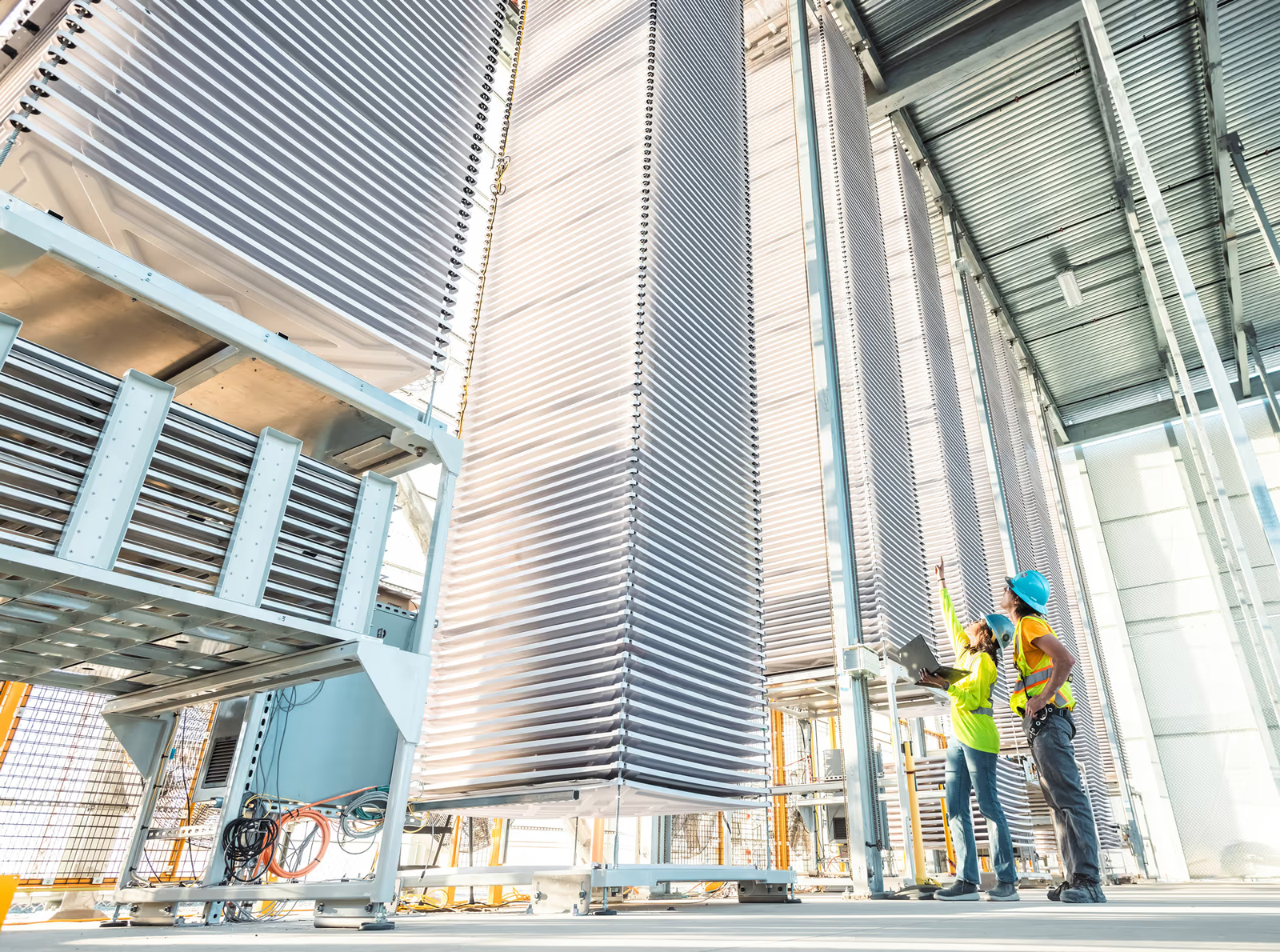
Heirloom's approach is mineral looping with limestone. It calcines limestone in a renewable-powered kiln, hydrates the resulting lime, and spreads it on vertically stacked trays where it absorbs atmospheric CO2 over a cycle of under three days. Re-calcining releases concentrated CO2 and regenerates the sorbent. The materials are cheap and abundant, which is the core cost argument.
Its Tracy, California facility is the first commercial DAC plant feeding captured CO2 directly into concrete, through a partnership with CarbonCure; Heirloom does not publish its annual tonnage. Project Cypress in Louisiana, run with Climeworks under Battelle, targets 1M t/yr fully built with an initial phase near 17,000 t/yr. Heirloom raised a $150M Series B in December 2024 and publishes a long-term target of under $100 per tonne — a target, not an achieved cost.
Best for: Buyers who want CO2 permanently mineralised in building materials.
Pros
- First commercial facility to embed captured CO2 directly into concrete via the CarbonCure process.
- Project Cypress DOE funding survived the October 2025 cancellation review, unlike many comparable hub projects.
- Large diversified offtake book: Microsoft at 315,000 tonnes over 10 years, plus $26.6M from the Frontier coalition for 26,900 tonnes by 2030.
Cons
- Project Cypress is still pre-operational and far short of its 1M t/yr ambition.
- The sub-$100/tonne figure is a target; the Frontier deal works out to roughly $989 per tonne, which is the number that actually transacted.
- Continues to depend on DOE support in a funding environment that cancelled roughly $7.5B of clean-energy awards in autumn 2025.
4. Mission Zero Technologies
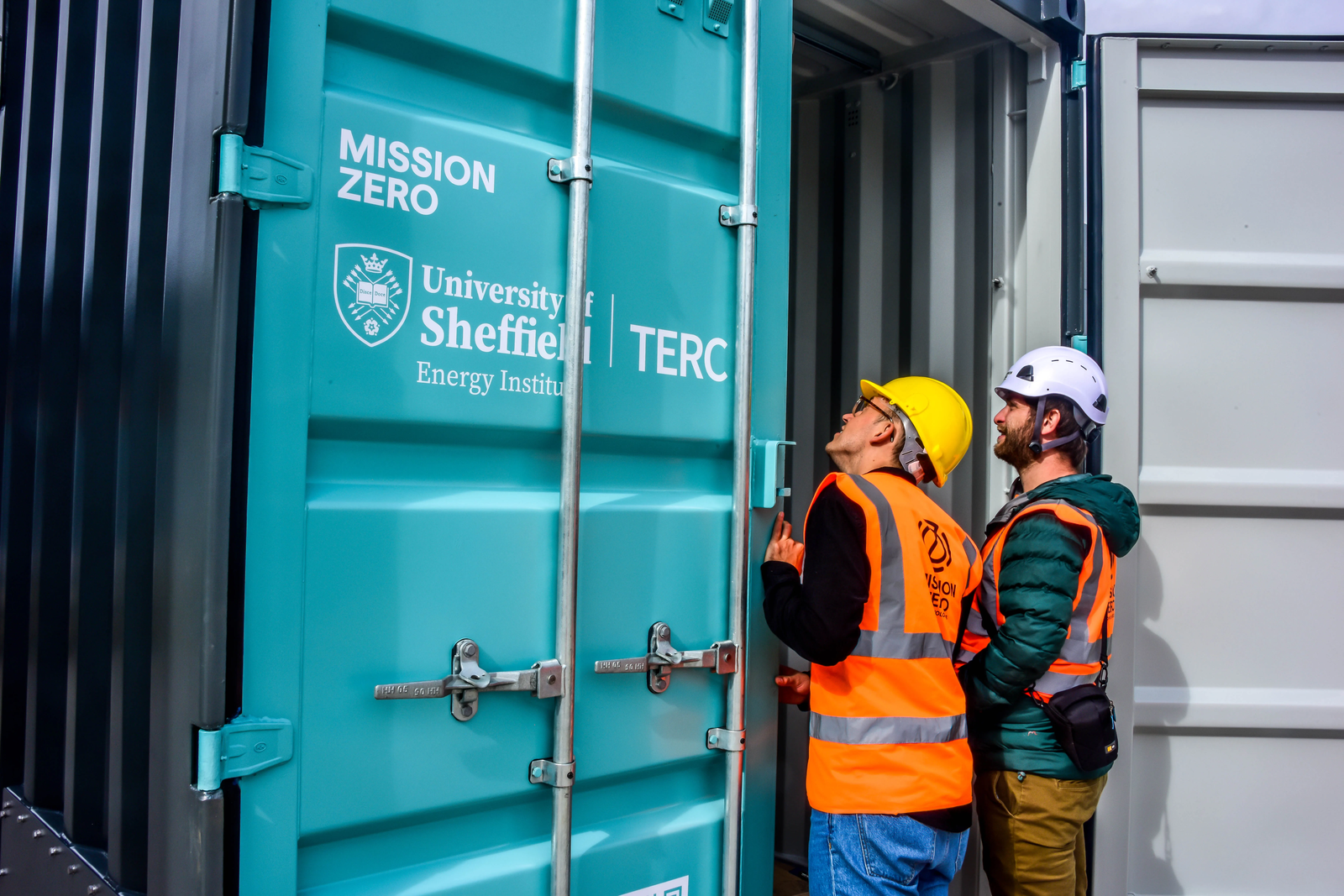
Mission Zero runs an electrochemical process rather than a thermal one. An aqueous solvent absorbs CO2, then electrodialysis — driven by electricity, not heat — strips out pure CO2 gas. The company claims three to five times less energy than thermal DAC. Because the units are container-scale and need no high-temperature heat source, they can be dropped onto a host site relatively cheaply.
It is the only company below the top three with multiple genuinely operating installations: 50 t/yr in Sheffield, UK since 2023; 250 t/yr with O.C.O Technology in Norfolk; and 250 t/yr with Deep Sky in Alberta, both from 2025. That is 550 t/yr of real combined capacity. It raised a £21.8M Series A in February 2025 led by 2150, with Fortescue and Breakthrough Energy Ventures participating.
Best for: Host sites that want small, electrified capture units running now rather than a megaproject later.
Pros
- Three physically distinct sites operating across two countries, with the earliest running since 2023.
- Electrodialysis regeneration removes the need for a high-temperature heat source, widening the range of viable sites.
- Container-scale modular design keeps per-site capital cost low relative to megaproject DAC.
Cons
- Combined operating capacity of 550 t/yr is orders of magnitude below the flagship players.
- The sub-$300/tonne figure is a stated target for "this decade", not a demonstrated cost.
- No large named corporate offtake agreement has been publicly disclosed, so commercial validation is thinner than its peers'.
5. CarbonCapture Inc.
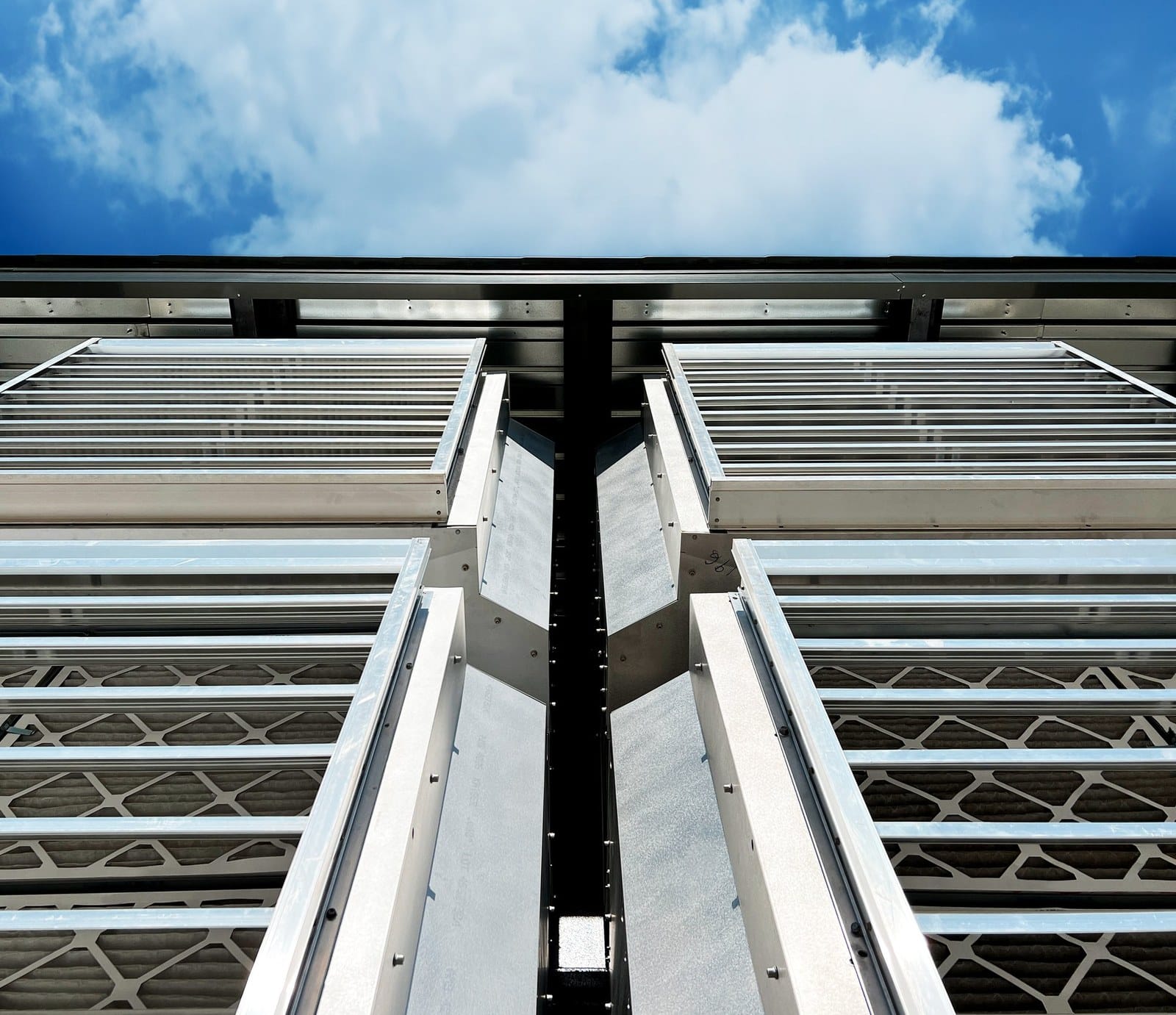
CarbonCapture Inc. builds modular solid-sorbent DAC units — the Leo Series — each rated above 500 t/yr. The design point is an open sorbent architecture: as better sorbents arrive, you swap the chemistry without replacing the hardware. Modules are manufactured in Mesa, Arizona.
The company's flagship is also its problem. Project Bison in Wyoming, pitched at megatonne scale, was paused in September 2024 because clean power could not be secured — grid interconnection had slipped toward 2030 — and CarbonCapture is seeking a new site and negotiating transfer of a $12.5M DOE grant. It raised an $80M Series A in March 2024 with Amazon's Climate Pledge Fund participating. Frontier has committed $20M for 45,000 tonnes by 2028, which works out to roughly $444 per tonne — the lowest disclosed deal price among these seven.
Best for: Buyers betting that sorbent chemistry will improve faster than capture hardware.
Pros
- Open modular architecture allows sorbent upgrades without replacing deployed hardware.
- Established module manufacturing in Mesa, Arizona rather than one-off site construction.
- Backed by Amazon's Climate Pledge Fund, with Frontier, Microsoft and BCG as credit buyers.
Cons
- The flagship Project Bison has been paused since September 2024 with no publicly confirmed replacement site or timeline.
- Its DOE grant depends on successfully transferring to a location that has not been announced.
- No evidence of sustained operation at multi-thousand-tonne scale; deployments remain pilot and field scale.
6. Avnos
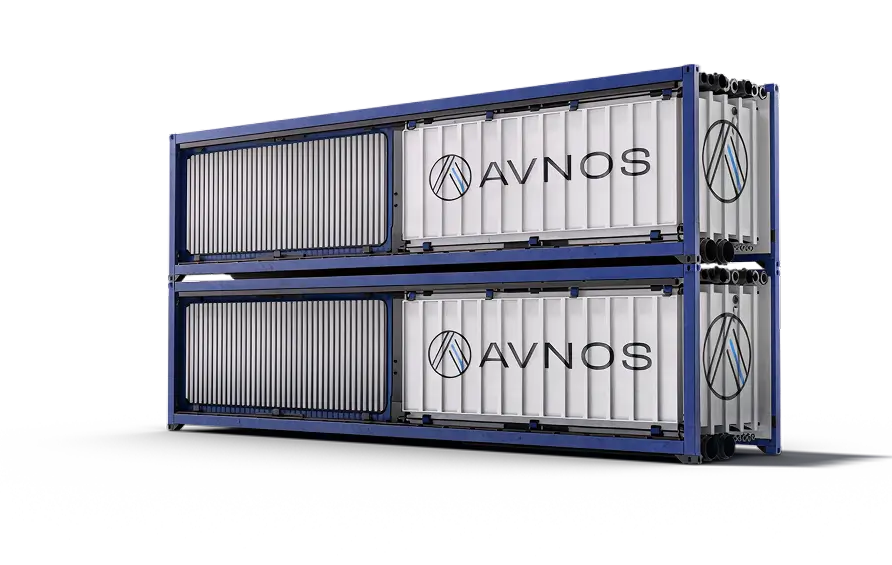
Avnos runs hybrid direct air capture: a moisture-swing solid sorbent that regenerates on humidity change rather than heat, powered entirely by electricity. The unusual output is water. The process co-produces roughly 5 to 10 tonnes of water for every tonne of CO2 captured, where most DAC designs consume water — which makes it the obvious candidate for arid sites where water draw is a permitting obstacle.
In September 2026 Avnos announced its largest hybrid DAC deployment entering operation, though it did not state the scale. Its flagship facility, backed by Shell and Mitsubishi, is designed for 3,000 t/yr of CO2 plus 6,000 t/yr of water, targeted to come online at the end of 2026. Funding includes a $36M Series A led by a NextEra Energy Resources subsidiary, with up to $17M more from Shell and Mitsubishi announced in November 2025.
Best for: Water-constrained regions where conventional DAC water consumption is a blocker.
Pros
- The only approach here that nets positive water, producing 5 to 10 tonnes per tonne of CO2 captured.
- Fully electrified with no thermal input, so it can run on renewable power without a heat source.
- Shell and Mitsubishi are both investors and technology partners, not just prospective customers.
Cons
- No independently verified continuous operation above 1,000 t/yr; the September 2026 deployment announcement did not disclose scale.
- The flagship 3,000 t/yr facility was still pre-operational at the time of writing.
- Smallest disclosed funding base of the seven, and no named-buyer offtake agreements with stated tonnage.
7. Phlair
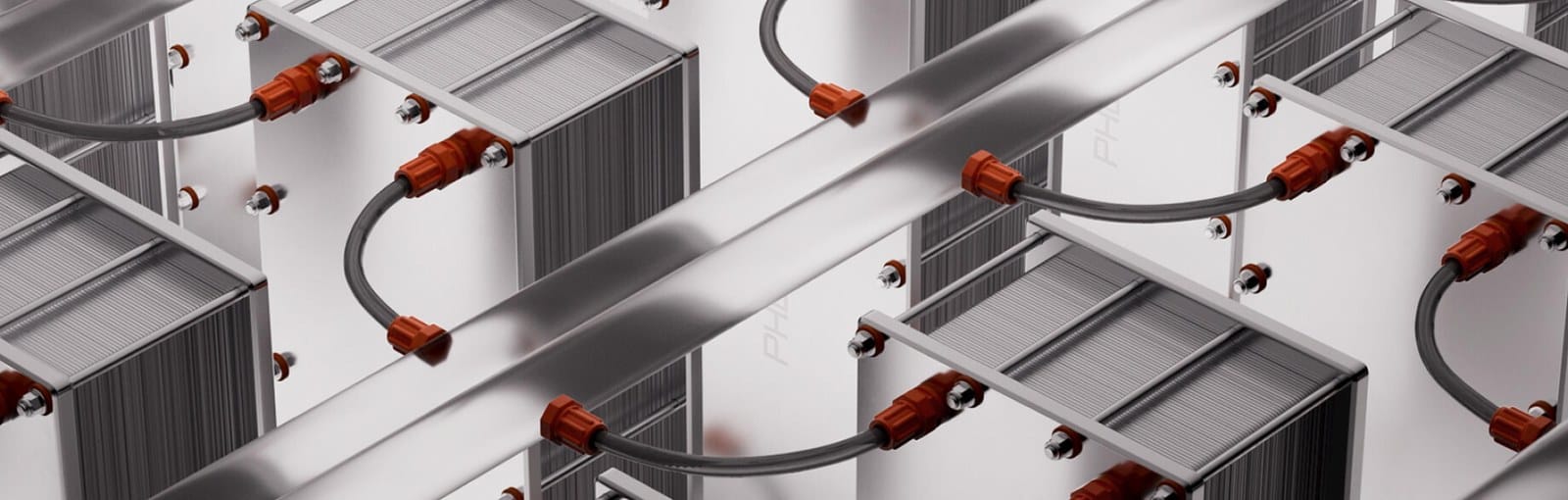
Phlair, a Munich company founded in 2022 and renamed from Carbon Atlantis in 2024, uses an electrochemical pH-swing process built around what it calls a Hydrolyzer. A liquid sorbent captures CO2; the Hydrolyzer — adapted from hydrogen electrolysis hardware — mixes it with acid to desorb pure CO2 while regenerating the acid and base using only renewable electricity. The company claims three times lower energy cost than thermal DAC.
The engineering argument is supply chain rather than novelty: electrolysis stacks are an existing industrial product with an existing manufacturing base, so Phlair is not inventing its core component. Because the process is load-flexible, it can ramp with intermittent renewables. It raised €14.5M in September 2024 led by Extantia Capital, with Planet A and Verve Ventures, plus a €2.5M EIC Accelerator grant. Funding coverage names Shopify, Stripe, Klarna and Deep Sky as early customers; tonnages were not disclosed.
Best for: Projects matching capture to intermittent renewable supply.
Pros
- Built on proven hydrogen-electrolysis components rather than bespoke unproven hardware.
- Load-flexible operation lets capture follow intermittent renewable output instead of requiring firm power.
- Early customer roster includes established corporate buyers in Shopify, Stripe and Klarna.
Cons
- Youngest and smallest company here, with no independently verified operating tonnage disclosed.
- Publishes neither a cost per tonne nor a capacity figure, making it the hardest of the seven to evaluate.
- Operations concentrated in a single country, with no announced international deployment.
How to choose
You need delivered tonnes this year. Climeworks or Mission Zero Technologies. They are the only ones with plants that have been capturing CO2 for multiple years. Ask for actual delivered tonnage, not nameplate.
You need a megatonne contract for a 2030 net-zero target. 1PointFive. Nobody else has volume at that scale under contract. Price the delay risk in — STRATOS has already slipped about a year.
You want permanence you can point at. Climeworks via Carbfix mineralisation into basalt, or Heirloom via CO2 locked into concrete. Both convert CO2 to a solid rather than relying on long-term well monitoring.
You are siting in an arid region. Avnos. Water-positive capture removes a permitting problem that the other six designs create.
You are a utility or industrial host with spare renewable power. Mission Zero or Phlair. Both are electrified, modular, and designed to run on variable electricity.
Treat every published cost target as a target. The gap between the sub-$100/tonne aspirations in this sector and the roughly $444 to $989 per tonne that actually transacted in disclosed Frontier deals is the most important number in DAC right now.
For adjacent coverage: our roundups of carbon accounting software, small modular reactor companies and fusion energy companies cover the measurement and clean-power layers this industry depends on. The power constraint itself is the subject of AI's Power Gap Is Four Years Wide.
Frequently Asked Questions
What is direct air capture?
Direct air capture is technology that extracts CO2 from ambient air, where it sits at roughly 420 parts per million, rather than from a concentrated industrial flue stream. The captured CO2 is then stored geologically, mineralised into rock or concrete, or used as an industrial feedstock.
How does direct air capture work?
Air is drawn across a chemical sorbent or solvent that binds CO2. The capture medium is then regenerated — by heat, vacuum, humidity change, or an electrochemical reaction — which releases concentrated CO2 and resets the material for the next cycle. Regeneration is where almost all the energy is consumed.
How much does direct air capture cost?
Disclosed deals in 2024 and 2025 price removal between roughly $444 and $989 per tonne, based on Frontier's publicly announced purchase values divided by contracted tonnage. Companies publish long-term targets of $100 to $300 per tonne, but none has demonstrated those costs at commercial scale.
How many direct air capture plants are there?
Fewer than you would guess from the announcements. Among these seven companies, Climeworks runs two commercial-scale plants in Iceland, Heirloom runs one in California, and Mission Zero runs three small installations in the UK and Canada. Most announced megaprojects are still in construction, permitting, or paused.
Is direct air capture viable at scale?
Unresolved. The engineering works at thousands of tonnes per year, but the sector has not yet shown that costs fall as volume rises, and the gap between nameplate and delivered capacity remains large. Autumn 2025 DOE award cancellations also removed a funding assumption several projects were built on.
Editor's note — sources: Climeworks, 1PointFive, Heirloom, CarbonCapture Inc., Avnos, Mission Zero Technologies and Phlair company, technology and press pages (observed October 2026); announced purchase agreements from Frontier, Microsoft, Airbus and JPMorgan; US Department of Energy announcements on Direct Air Capture Hub awards and the autumn 2025 award review. Capacity figures distinguish nameplate design from verified operation wherever the companies disclose both; where they do not, we say so. All figures as of October 2026.