
Top 7 Enterprise AI Search Platforms in 2026
For platform, IT and data teams choosing where corporate knowledge retrieval lives. Amazon closed Kendra to new customers, Microsoft moved agentic retrieval to GA, and Glean raised at a $7.2B valuation. Seven platforms ranked, with real pricing and real limits.


For platform, IT and data teams deciding where corporate knowledge retrieval actually lives. The category split in two: finished assistants that index every SaaS app you run, and retrieval infrastructure you wire into your own agents. Amazon closed Kendra to new customers, Microsoft moved agentic retrieval to general availability on its REST API, and Glean raised at a $7.2 billion valuation.
The strongest enterprise AI search platforms in 2026 are Glean, Microsoft Azure AI Search, Elastic, Coveo, Amazon Q Business, Vespa and Onyx. Each solves a different version of one problem: employees and agents cannot find what the company already knows. Some ship as a finished search-and-chat application with hundreds of connectors. Others are retrieval engines you build on. That distinction matters more than any feature list, because it decides whether you buy seats or staff an engineering team. The seven below are ranked on maturity, adoption, connector breadth, technical capability and fit for a job — with the real limits of each.
How we picked these
Four criteria, applied in this order.
Verifiable substance. Every product has documentation, a public release history, and either published pricing or a stated quote-based model. Vendors whose technical claims could not be checked against their own docs were dropped.
Permission handling. A product qualifies only if it enforces document-level access control at query time. Search that returns documents a user cannot open is a compliance incident, not a feature.
Distinct job. Products overlapping almost entirely with a higher-ranked entry were cut, which removed several capable vendors whose positioning duplicates Coveo or Glean.
Current status. Preference went to products in general availability with releases shipped in the last quarter. Preview-only capabilities are flagged below.
Pricing and feature statements are accurate as of September 2026 and change frequently here.
Quick comparison
| Company | Best for | Deployment | Pricing model |
|---|---|---|---|
| Glean | Company-wide employee search and agents across many SaaS apps | SaaS | Quote-based, no published list price |
| Microsoft Azure AI Search | Retrieval infrastructure for RAG and agents inside Azure | Managed Azure service | Tiered per-service, plus usage add-ons |
| Elastic | One engine for search, logs and security, self-hosted or managed | Self-managed, hosted, or serverless | Free self-managed core; serverless per VCU-hour; paid tiers |
| Coveo | Customer self-service and support deflection, plus workplace search | SaaS | Entitlement units for service and websites; seats for workplace |
| Amazon Q Business | AWS-centric organisations wanting a managed assistant per seat | Managed AWS service | $3 or $20 per user per month, plus index capacity per hour |
| Vespa | Custom retrieval and ranking at large scale, built by engineers | Open source self-hosted, or Vespa Cloud | Free under Apache 2.0; Vespa Cloud quote-based with free trial |
| Onyx | Self-hosting a complete search and chat app under your own control | Open source self-hosted, or cloud | $20 per user per month (Business); Enterprise quote-based |
1. Glean
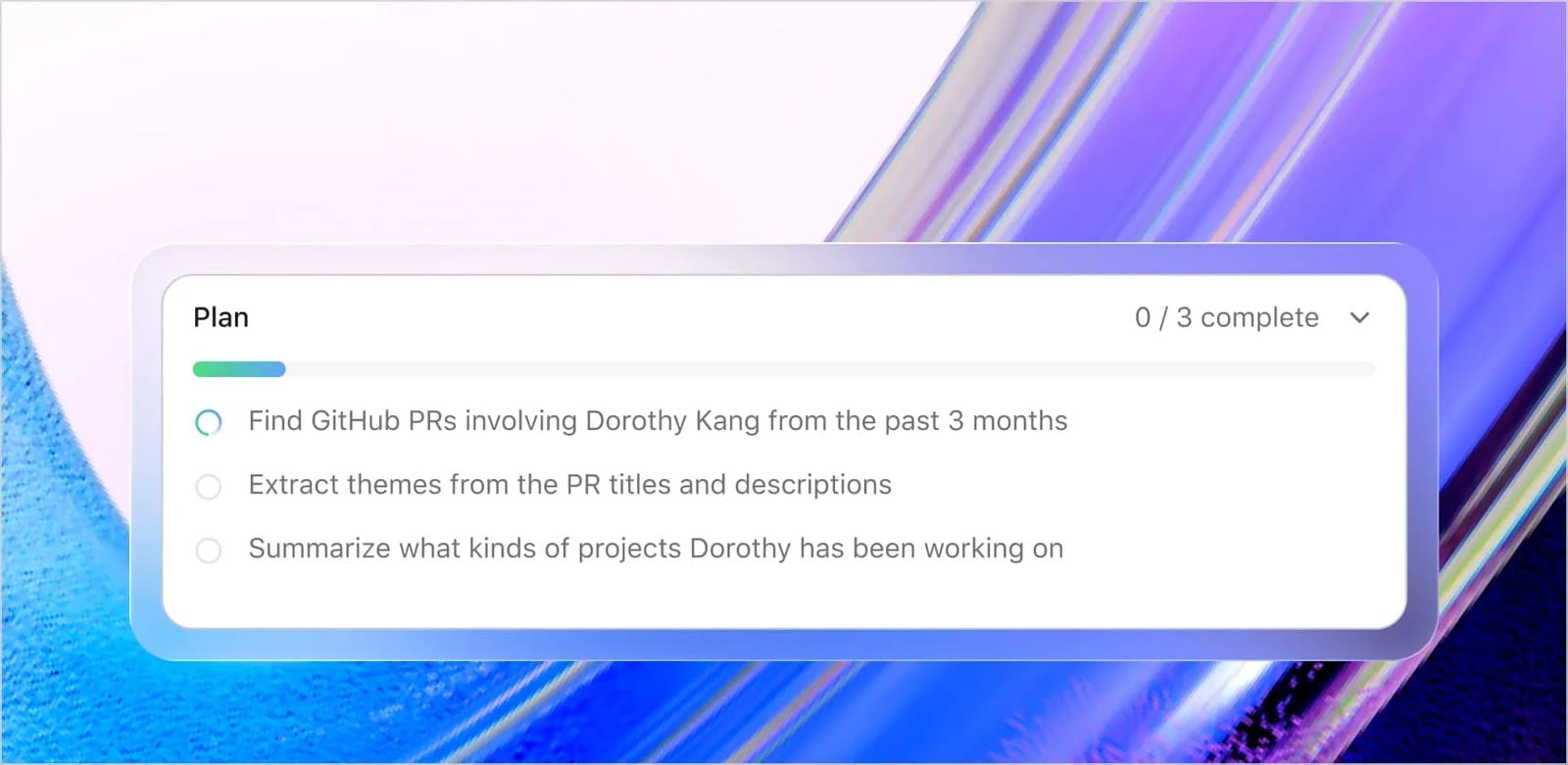
Glean is the clearest example of the finished-application approach. It indexes content across a company's SaaS tools, builds a knowledge graph over people, documents and activity, and exposes that through a search interface, an assistant and an agent builder. Glean states it offers more than 250 connectors. Permissions are inherited from source systems, so results respect the access a user already has.
Positioning has shifted from search toward agents. Glean launched Glean Agents in early 2025 and now sells agent orchestration, governance and an agent library alongside search. It raised $150 million in a Series F at a $7.2 billion valuation in June 2025, led by Wellington Management, and said it had passed $100 million in annual recurring revenue the prior fiscal year. Glean names Booking.com, Zillow, TIME and Ericsson among its customer stories. The generation side of this stack is covered in our enterprise RAG platforms roundup.
Best for: Large organisations that want employee search and agents across dozens of SaaS systems without building the pipeline.
Pros
- More than 250 connectors, per Glean's own connector documentation, covering the long tail of enterprise SaaS
- Source-system permission inheritance, so access control does not have to be re-modelled
- Knowledge graph over people and activity, which improves ranking for internal queries that lack good keywords
- Agent builder, orchestration and governance ship inside the same platform rather than as a separate purchase
Cons
- No published pricing. Glean's pricing page lists no rates, so every cost is negotiated and hard to benchmark
- SaaS only. There is no self-hosted option, ruling it out where index content cannot leave your network
- Priced and packaged for scale; small teams are not the target buyer
- The centre of gravity has moved to agents, so buyers who want search alone pay for a broader platform
2. Microsoft Azure AI Search
Azure AI Search is retrieval infrastructure, not an application. You create a search service, define indexes, run indexers and skillsets over content, then query with keyword, vector or hybrid search plus a semantic reranker. Microsoft's docs state it underpins Foundry IQ, the managed knowledge layer for agents in the Microsoft Foundry portal.
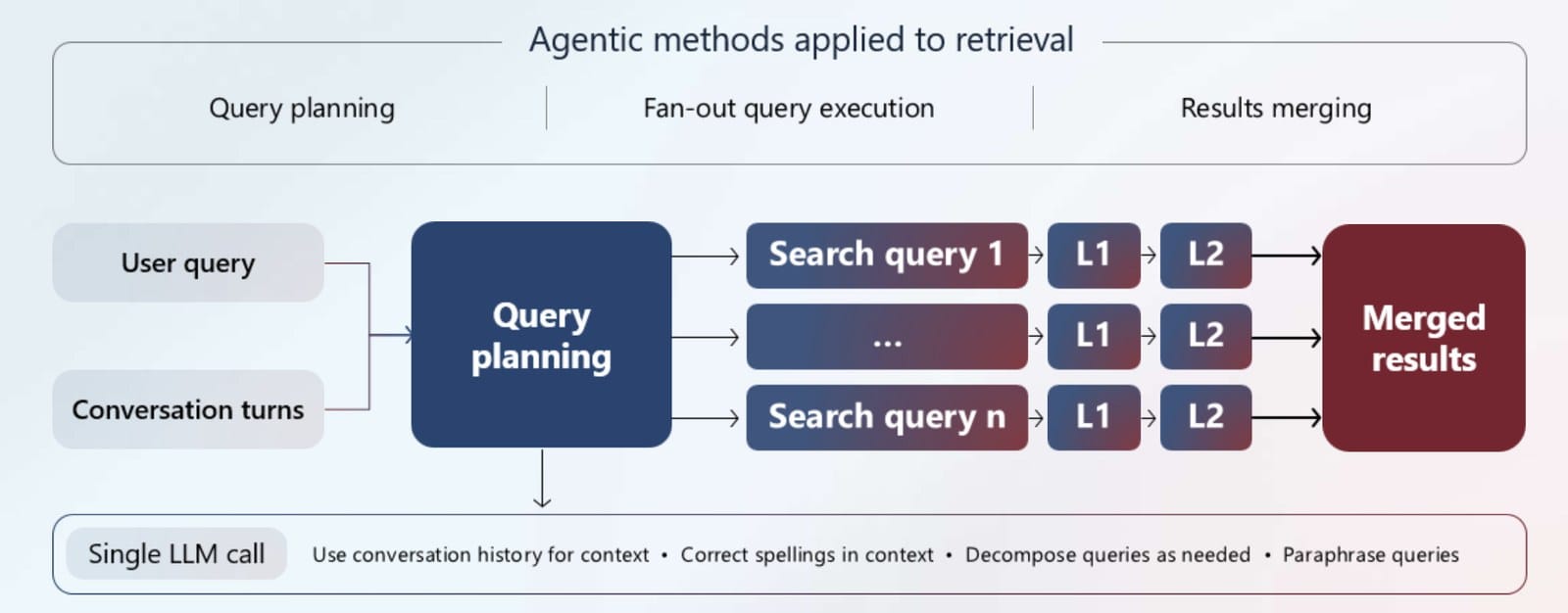
The notable 2026 change is agentic retrieval: a multi-query pipeline that sends a query and conversation history to a model, generates focused subqueries, runs them in parallel as keyword, vector or hybrid searches, semantically reranks each, then merges results with citations. Retrieval reasoning effort is configurable at minimal, low or medium. Microsoft states some agentic retrieval features are generally available in the 2026-04-01 REST API, with more in the 2026-08-01 preview. Service tiers are Free, Basic, Standard S1 through S3, and Storage Optimized L1 and L2.
Best for: Teams already on Azure that want a managed retrieval layer for their own agents and applications.
Pros
- Hybrid retrieval, semantic reranking and agentic multi-query retrieval in one managed service
- Published tier and unit structure, with rates and usage add-ons listed on Azure's pricing page
- Integrated with Microsoft Foundry, so the same indexes serve custom apps and managed agent knowledge bases
- Skillsets handle enrichment during indexing, including entity extraction and image processing
Cons
- Not an end-user product. There is no employee search UI or SaaS connector catalogue; you build the application
- Agentic retrieval is only partly GA. Microsoft's docs state the Azure portal and Foundry portal give preview-only access to all agentic retrieval features
- Agentic retrieval is limited to select regions, adds latency versus a single-query pipeline — Microsoft says so explicitly — and its knowledge source limits vary by tier
- Cost combines service tier with semantic ranker, enrichment and token charges, so forecasting is harder than per-seat
3. Elastic
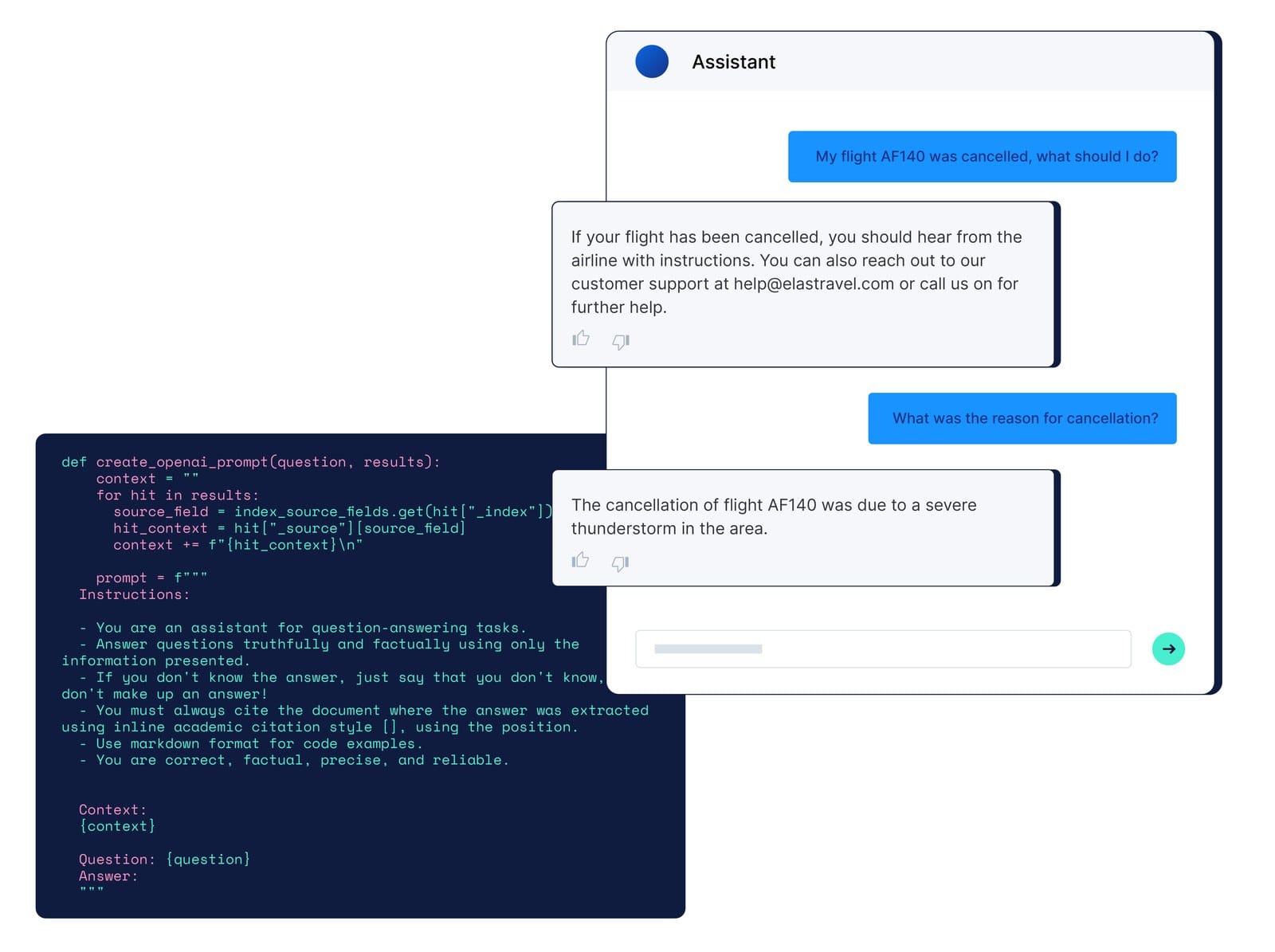
Elastic sells the Search AI Platform built on Elasticsearch, still the most widely deployed general-purpose search engine in enterprise infrastructure. It handles BM25 keyword retrieval, dense and sparse vector search, hybrid ranking and Elastic's own retrieval models, often on the same cluster serving observability and security workloads. Elasticsearch v9.5.3 shipped on 3 September 2026.
Licensing needs care. Source in the Elasticsearch repository is triple-licensed by default under AGPL 3.0 only, the Server Side Public License v1, and the Elastic License 2.0, with code in the x-pack folder licensed solely under Elastic License 2.0. The core is genuinely open source; the commercial features are not. Deployment spans self-managed, hosted Elastic Cloud and Elastic Cloud Serverless, where rates start at $0.14 per VCU-hour for ingest and $0.09 for search. Elastic states Docusign powers millions of e-signature searches daily with Elasticsearch. Teams comparing it against dedicated stores should read our vector databases comparison.
Best for: Engineering teams that want one retrieval engine they can self-host, with hybrid search and a large operational ecosystem.
Pros
- Core Elasticsearch is available under AGPL 3.0, so self-hosting without a vendor contract is possible
- Published serverless pricing per VCU-hour, unusual transparency in this category
- Three deployment models — self-managed, hosted and serverless — behind the same query API
- Very large operator community and tooling, which lowers hiring and troubleshooting cost
Cons
- The triple-license structure is genuinely confusing, and the x-pack features many enterprises rely on are not open source
- Self-managed clusters carry real operational burden: shard sizing, JVM tuning and upgrade sequencing
- No SaaS connector catalogue comparable to Glean or Coveo; content ingestion is largely your problem
- Serverless has only two subscription tiers, Platinum and Enterprise, so support is narrower than hosted, and tier packaging gates capability rather than just capacity
4. Coveo
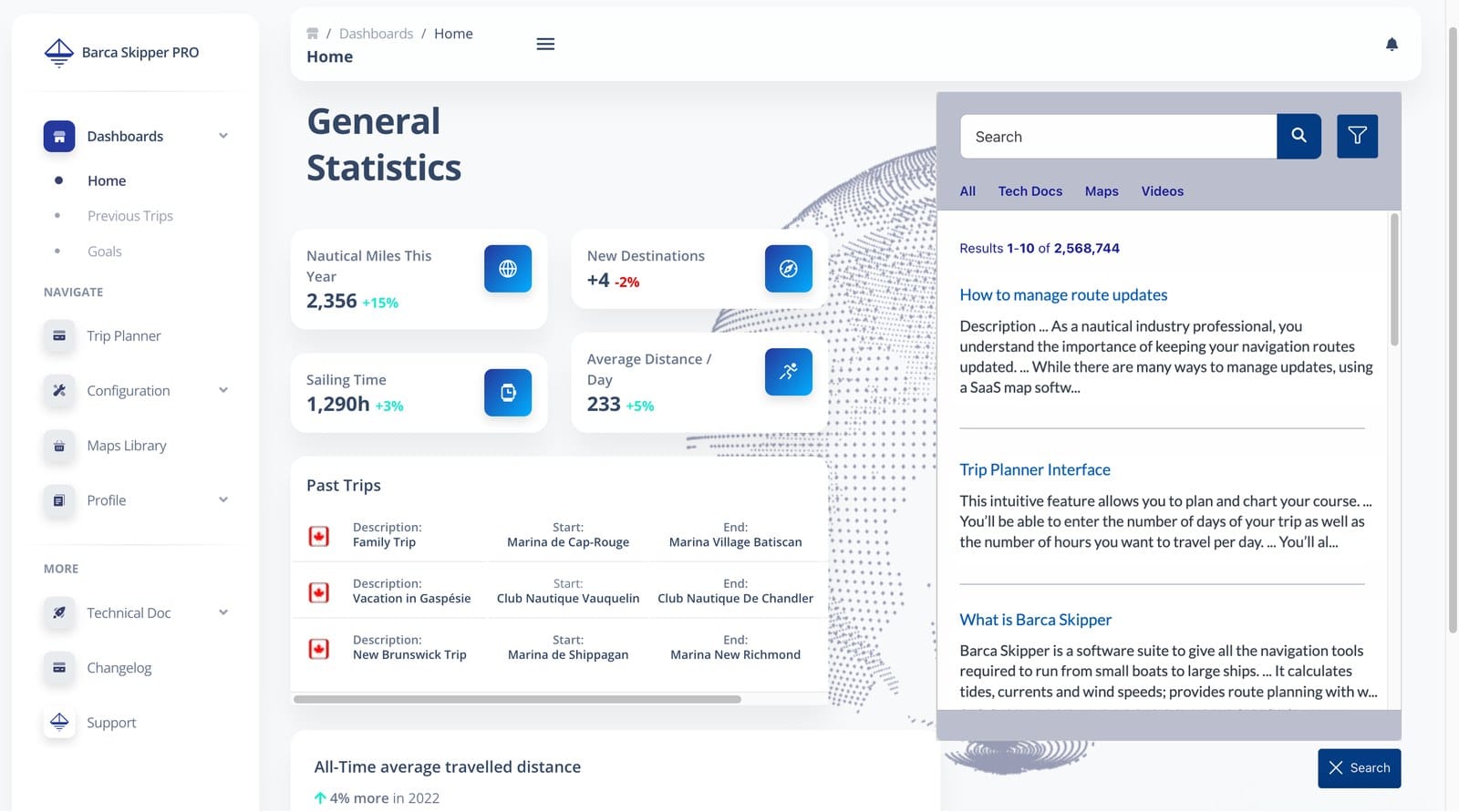
Coveo has sold enterprise search longer than most of this list and is publicly traded on the Toronto Stock Exchange as CVO. Its platform covers three surfaces: customer self-service and support, commerce product discovery, and workplace search for employees. Indexing includes document-level security and permission handling, with generative answering layered on retrieval.
Financials give an unusually clear read on scale. For fiscal 2026, ended 31 March 2026, Coveo reported total revenue of $148.3 million, up 11 percent, with SaaS subscription revenue of $142.5 million, up 13 percent, and platform SaaS subscription revenue of $139.8 million, up 15 percent. Pricing is entitlement-based for service and website use cases and seat-based for workplace search. Coveo states each pricing unit includes 100,000 queries per month, counted as generative queries for generative answering. No dollar rates are published, so pricing is on request.
Best for: Companies where support deflection and customer self-service are the primary goal, with workplace search as a second phase.
Pros
- Publicly reported financials, so buyers can assess vendor stability directly rather than trusting private claims
- Document-level security and permission enforcement built into indexing
- One platform spans customer service, commerce and workplace search, consolidating vendors for organisations needing all three
- Query-unit packaging is defined, with 100,000 queries per pricing unit stated on Coveo's pricing page
Cons
- No published rates. Packaging is described in detail but every price is quoted
- Entitlement and query-unit pricing makes cost sensitive to traffic spikes rather than headcount
- SaaS only, with no self-hosted deployment
- Revenue growth in the low teens trails the venture-funded entrants, and the commerce and service breadth is overhead if you only want employee search
5. Amazon Q Business
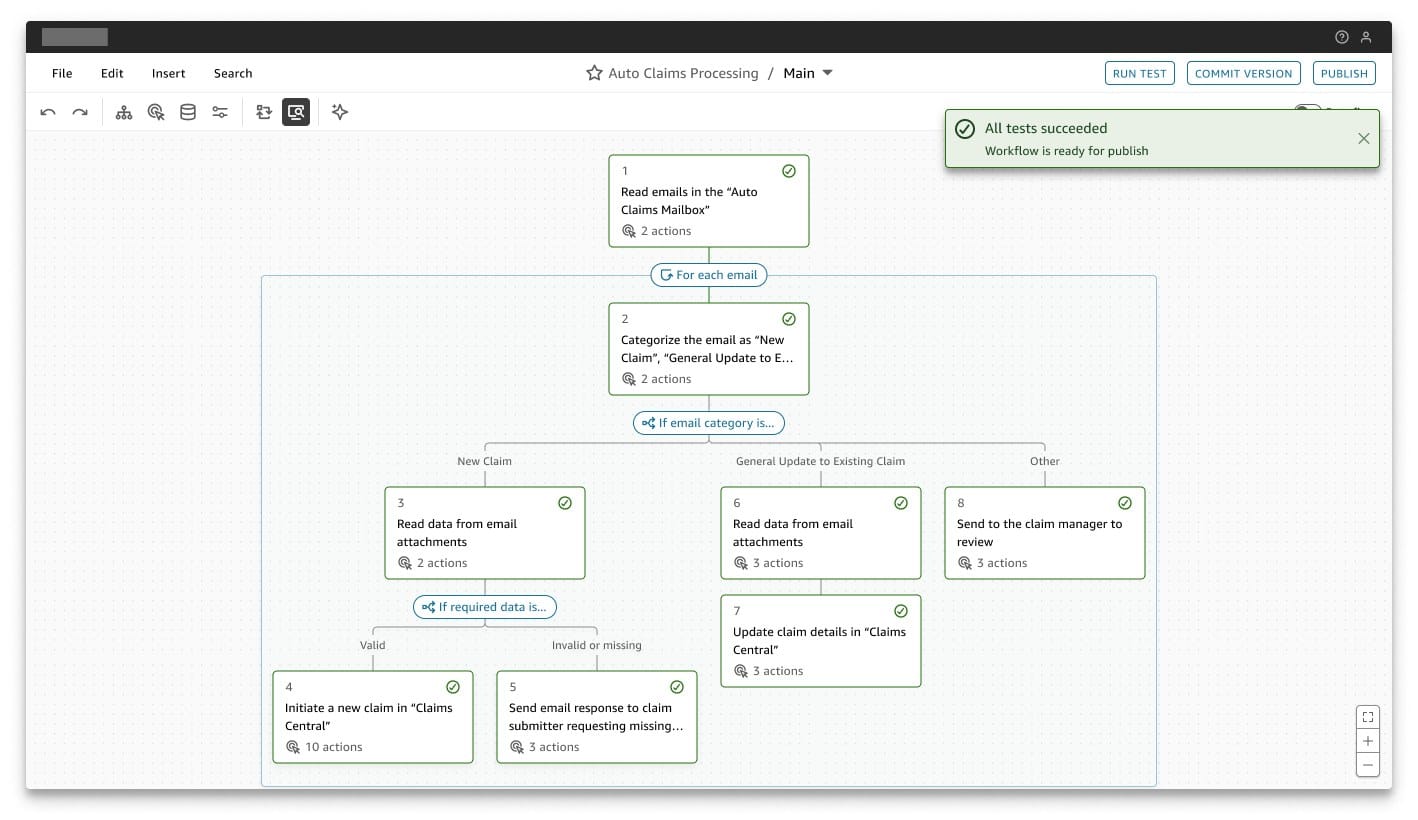
Amazon Q Business is AWS's managed enterprise assistant: connect data sources, build an index, and give employees a chat interface returning permission-aware answers with citations. It is the most transparently priced product here. Q Business Lite is $3 per user per month and Q Business Pro is $20, with Pro adding Q Apps and Amazon Q in QuickSight. Index capacity bills separately: a Starter Index in one availability zone at $0.140 per hour per unit, capped at five units per application, and an Enterprise Index across three zones at $0.264 per hour per unit. Consumption pricing for anonymous embedded use is sold in bundles of 30,000 units for $200.
The complication is platform direction. AWS states Amazon Quick Suite is the next evolution of Amazon Q Business, that existing customers can stay on the current service or use their existing Q index with Quick Suite, and separately that Amazon Kendra is no longer open to new customers.
Best for: AWS-standardised organisations that want predictable per-seat pricing and are comfortable following AWS's product direction.
Pros
- Fully published pricing for seats, index capacity and consumption units, which makes modelling straightforward
- Permission-aware responses with citations, and a Lite tier cheap enough for broad rollout
- Starter and Enterprise index types separate proof-of-concept cost from production availability requirements
- Native fit with AWS identity, networking and data services
Cons
- Product churn. Quick Suite is positioned as the successor, leaving Q Business buyers reasoning about a migration they did not plan
- Amazon Kendra is closed to new customers — a direct precedent for how AWS handles enterprise search products it moves on from
- Index units bill continuously once created, whether or not you use the document capacity
- Answer length is tiered by subscription — Lite roughly a page, Pro roughly seven — and the product is weaker over non-AWS data estates
6. Vespa
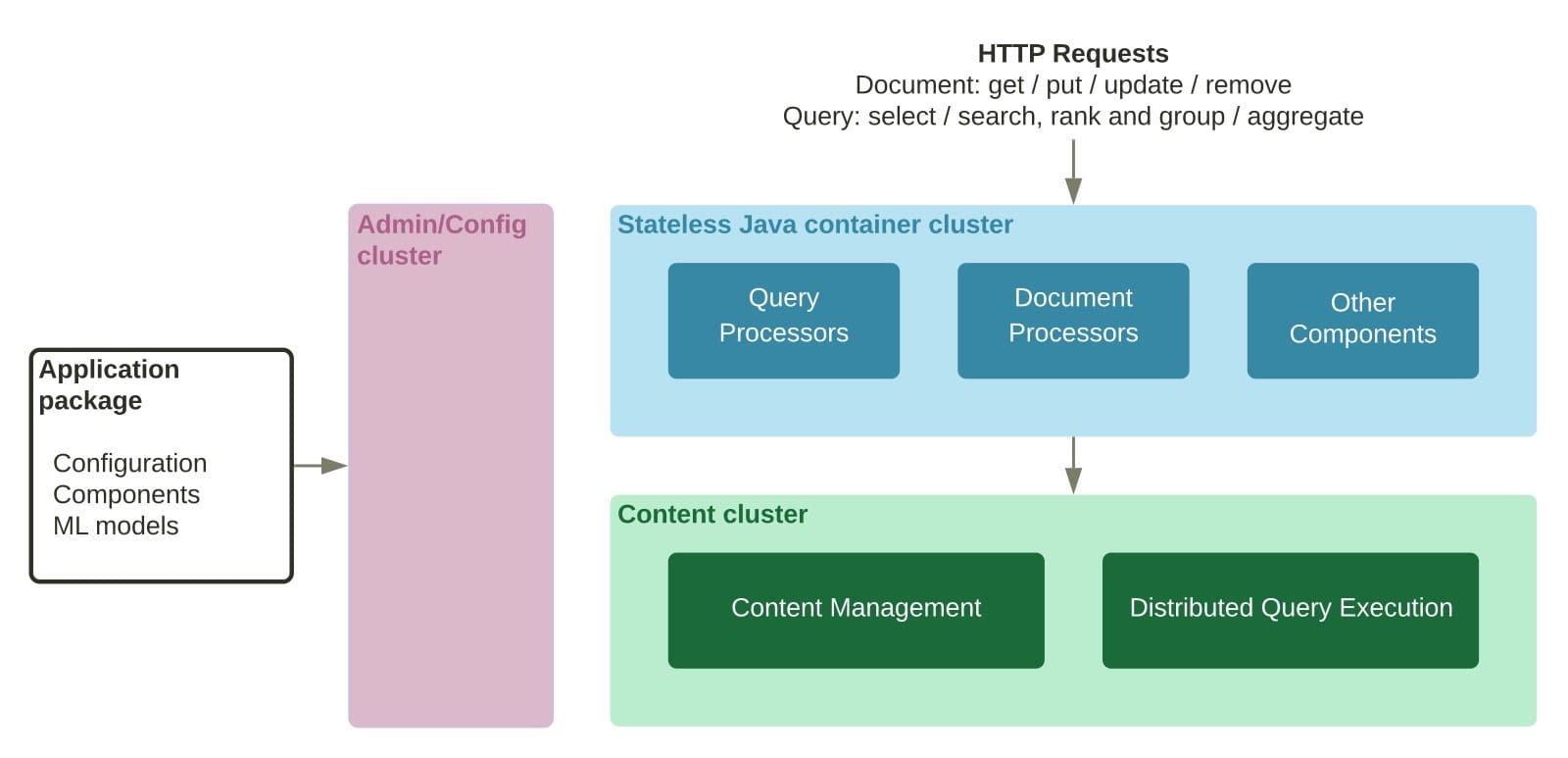
Vespa is the engine other search products get built on. It combines structured filtering, keyword retrieval, vector search, tensor operations and multi-phase machine-learned ranking in one system, evaluating ranking expressions on the content nodes rather than shipping candidates elsewhere. Architecturally it separates an admin and config cluster, a stateless Java container cluster running query and document processors, and a content cluster handling storage and distributed query execution. Configuration, components and ML models deploy together as an application package.
Vespa is Apache 2.0 licensed, has roughly 7,100 GitHub stars, and release v8.751.13 shipped on 7 September 2026. It was developed at Yahoo, spun out as an independent company, and raised $31 million in a Series A from Blossom Capital announced 1 November 2023. Vespa Cloud is the managed option with a free trial; no rates are published, so pricing is on request. Vespa's engineering blog documents Danswer — now Onyx, number seven here — running on Vespa for retrieval. For the compute side, see our guide to AI inference providers.
Best for: Engineering teams building custom retrieval and ranking where relevance is a competitive asset, not a checkbox.
Pros
- Self-hostable under Apache 2.0 with no feature gating, unlike the tri-licensed alternatives
- Ranking expressions and tensor computation execute on content nodes, avoiding a separate re-ranking hop
- Multi-phase ranking, hybrid retrieval and real-time updates in a single engine rather than assembled from parts
- Active release cadence, with tagged releases shipping within days of this writing
Cons
- No application layer. There is no employee UI, no connector catalogue and no admin console for business users
- Running it requires genuine distributed-systems expertise; the application-package and cluster model is not a weekend project
- Community is far smaller than Elasticsearch's, at roughly 7,100 stars, so hiring and third-party tooling are thinner
- Vespa Cloud rates are unpublished, and company scale is modest next to the hyperscalers here, with a single disclosed $31 million round
7. Onyx
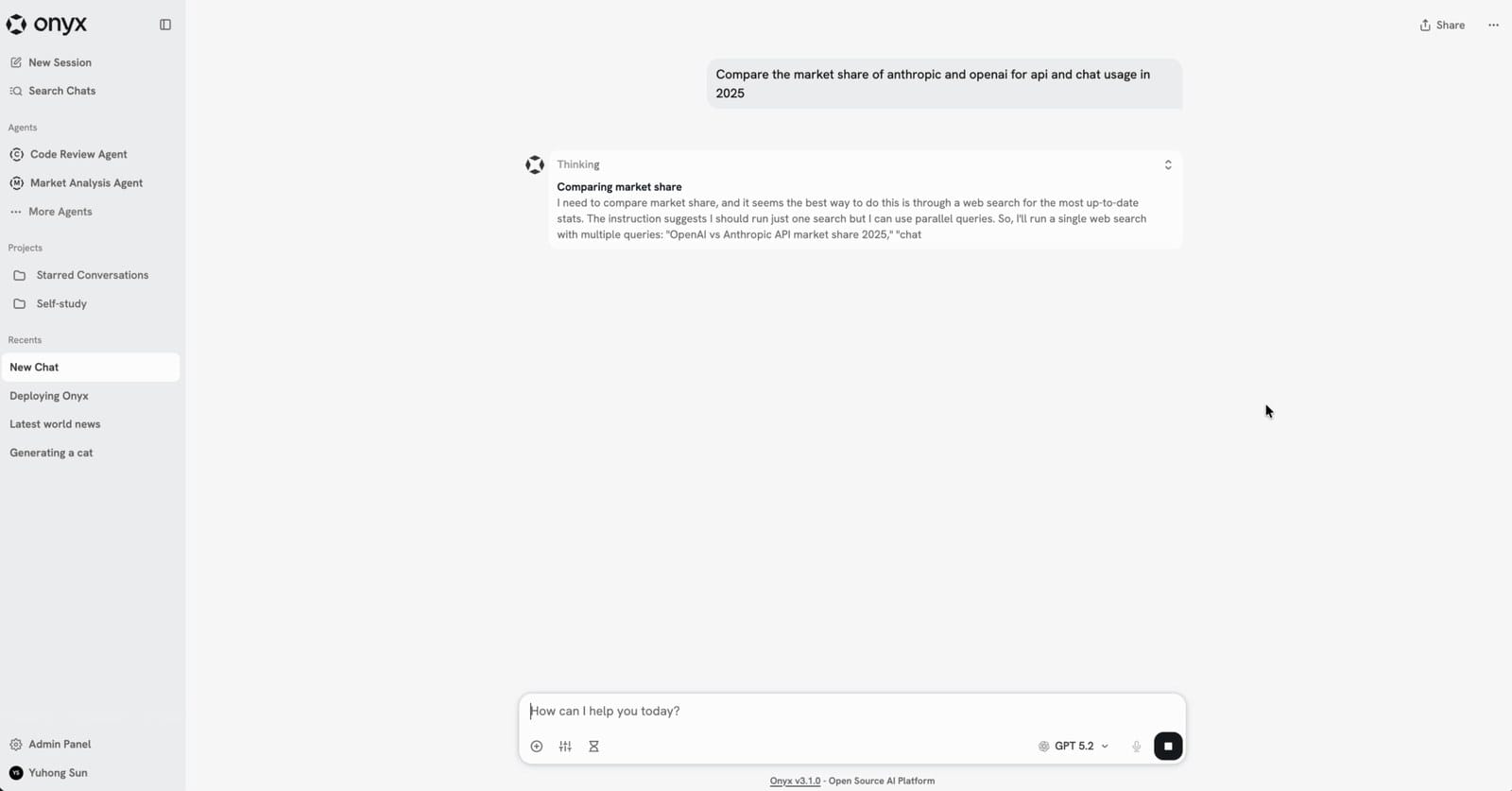
Onyx is the open-source answer to Glean: a complete search and chat application you can run yourself. It ships a chat and search interface, custom agents, actions over MCP and OpenAPI, web search, deep research and a code interpreter, and states 40 or more app connectors. It works across multiple LLM providers rather than binding to one. Version v4.7.1 was released on 8 September 2026, and the repository has roughly 32,000 GitHub stars — the largest community of any open-source product in this category.
Licensing is split, and worth reading before you deploy. Code outside the ee directories is available under the MIT Expat license; everything under ee falls under the separate Onyx Enterprise License. Copyright is held by DanswerAI, Inc., reflecting the product's origin as Danswer. Published pricing is $20 per user per month on annual billing for Business; Enterprise is quote-based and is where SSO via OIDC and SAML, on-premise deployment, region-specific deployment and enterprise SLAs sit. Onyx pairs with extraction tooling — see our intelligent document processing platforms roundup.
Best for: Teams that want a working enterprise search and chat application under their own control, without a six-figure contract.
Pros
- Core is MIT-licensed and self-hostable, so the whole application can run inside your own network
- Published price of $20 per user per month on annual billing, the clearest number in this category
- Roughly 32,000 GitHub stars and frequent releases, indicating an active project rather than an abandoned one
- Model-agnostic, working across major LLM providers instead of a single vendor
Cons
- The
eedirectories are not open source, and capabilities enterprises assume — SSO, on-premise support, region-specific deployment — sit behind the Enterprise plan - 40-plus connectors is a fraction of Glean's stated 250-plus, so long-tail SaaS coverage will have gaps
- Smallest vendor here by a wide margin, which matters for procurement, security review and long-term support
- Self-hosting means you own upgrades, retrieval tuning and the Vespa layer underneath it
How to choose
Employees searching everything by next quarter, budget available. Glean. Connector breadth is why it costs what it costs.
Building your own agents on Azure. Azure AI Search. Treat the preview boundaries and region limits as planning constraints.
You must self-host and already run search infrastructure. Elastic. Check whether the features you need sit in x-pack.
Support ticket deflection is the business case. Coveo. It is built around the service surface, and its financials are public.
An AWS shop that needs a per-seat number. Amazon Q Business, with the Quick Suite transition written into the plan.
Relevance quality is your product. Vespa. Budget engineers, not seats.
The Glean shape without the Glean contract. Onyx, if 40-plus connectors is enough and you have read the enterprise license.
Retrieval sits on warehouse data, not documents. Start at the storage layer — our roundup of cloud data warehouse platforms is the better entry point.
Frequently Asked Questions
What is enterprise AI search?
Enterprise AI search indexes a company's internal content across systems like email, documents, tickets and code, then answers questions using keyword and vector retrieval plus a language model. Unlike web search, it enforces document-level permissions at query time, so each user sees only content they are already authorised to open.
How is enterprise AI search different from RAG?
Retrieval-augmented generation is the technique of fetching relevant documents and passing them to a model. Enterprise AI search is the product category around it, adding connectors, permission enforcement, indexing pipelines, ranking and a user interface. Azure AI Search and Vespa supply retrieval; Glean and Onyx supply the whole application.
Which enterprise search platforms publish real pricing?
As of September 2026, Amazon Q Business publishes per-user rates of $3 and $20 per month plus hourly index pricing. Onyx publishes $20 per user per month on annual billing. Elastic publishes serverless rates per VCU-hour. Glean, Coveo and Vespa Cloud all quote on request.
Can enterprise AI search be self-hosted?
Yes, for some. Vespa is Apache 2.0 and fully self-hostable. Elasticsearch's core is triple-licensed including AGPL 3.0, so self-hosting works, though x-pack commercial features are not open source. Onyx's core is MIT-licensed. Glean, Coveo, Azure AI Search and Amazon Q Business are managed services only.
What happened to Amazon Kendra?
AWS states Amazon Kendra is no longer open to new customers and points prospective buyers to similar capabilities elsewhere. Separately, AWS positions Amazon Quick Suite as the next evolution of Amazon Q Business, with existing customers able to stay on Q Business or use their existing Q index with Quick Suite.
Editor's note — sources:
- Glean pricing, connectors and product pages; the Series F announcement on glean.com
- Microsoft Learn docs for Azure AI Search, including the agentic retrieval concept page; Azure's AI Search pricing page
- Elastic pricing and serverless search pricing pages; the Elasticsearch repository LICENSE.txt and releases
- Coveo pricing page; Coveo's fiscal 2026 fourth-quarter and full-year results release on ir.coveo.com
- AWS Amazon Q Business pricing and product pages; the Amazon Kendra product page
- vespa.ai and docs.vespa.ai architecture overview; the vespa-engine/vespa repository and releases; Vespa's Series A announcement
- onyx.app pricing page; the onyx-dot-app/onyx repository LICENSE, README and releases